
Water-Injected Screw Compressor: Alternative Oil-Free Technology

The oil-free compression technology is getting more and more popular as the industries that need the highest standards of air purity and energy efficiency are the main drivers. Water-injected screw compressors are among the novelties and represent a breakthrough in the domain of non-rotating oil-free systems. Besides being free of oil application, these compressors also increase their capabilities and eco-friendliness which makes them a superb alternative for such industries as food and beverage, pharmaceuticals, and electronics manufacturing.
In this comprehensive guide, we will discuss the working principle of water-injected screw compressors, their advantages, and the reason why they are transforming what was previously thought possible in the field of oil-free technology. If you want to enhance your operations or lessen the negative impact on the environment, this innovative solution could be the one you’ve been looking for.
Introduction to Water-Injected Compressors
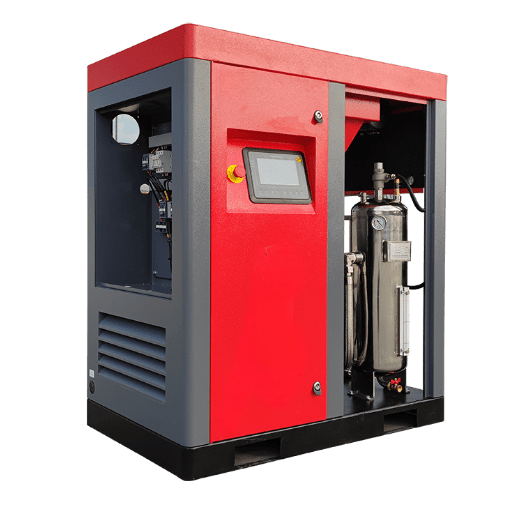
What is a Water-Injected Screw Compressor?
Water-injected screw compressors are a category of oil-free compressors that operate on the principle of water instead of oil. The compressor process of cooling, lubrication, and condensation is done with water. This modern method removes the risk of oil contamination totally in the air output and still provides efficient heat-dissipation and high compression-performance.
Key Insight: These compressors ensure air quality while supporting environmentally friendly and cost-efficient operations. With the design, it is natural that they are used in powders, medicines, and food and drink sectors and electronics where oil-free compressed air is required.
Benefits of Oil-Free Technology
Oil-free technology is the source of countless benefits, especially in the areas where air purity is the top concern. Air contamination with oil has become history because of this technology, thus the air quality that is perfect and to the highest standards for the most sensitive applications like pharmacies, food processing, and electronics manufacturing is provided.
Primary Advantages
- ✓ Cost Reduction: Oil-free compressors reduce the cost of maintenance and the impact on the environment because they do not need oil changes and waste oil disposal
- ✓ Reliable Performance: Almost no risk of compromising the end product
- ✓ Sustainability: An efficient and sustainable choice for businesses emphasizing quality and compliance
Comparison with Traditional Compressors
The traditional compressors depend on oil for lubrication and cooling, which eventually leads to oil contamination in sensitive applications. Whereas oil-free compressors do not only partially but totally eliminate this risk, thereby giving clean and uncontaminated air output.
Understanding Oil-Free Air Compressors
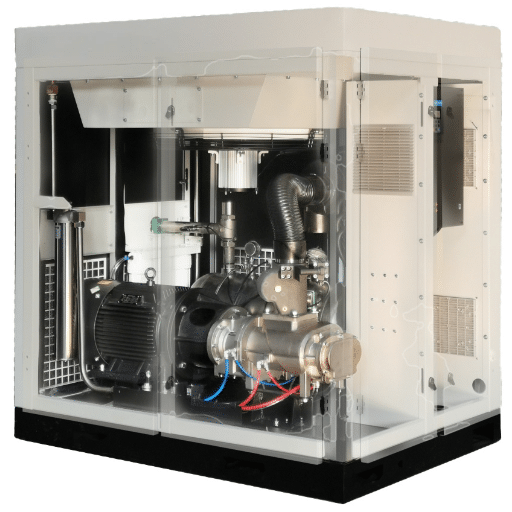
What Makes an Air Compressor Oil-Free?
An air compressor becomes oil-free when it does not require oil for any part of the process including compression. However, compressors, in such cases, still need lubrication and would use other materials like Teflon coatings or specialized engineering designs that help prevent friction and wear. Thus, the risk of the compressed air being contaminated by oil is also prevented and this is one of the reasons these compressors are used in critical areas like food processing, pharmaceuticals, and electronics manufacturing, where air purity is a requirement.
Important Note: For the most part, oil-free air compressors are less demanding when it comes to maintenance, plus they are a great relief in the issue of oil disposal as they are not directly involved in it.
Advantages of Oil-Free Air Compressors
Oil-free air compressors have a plethora of merits to their credit which is why they rank high among the choices in various industries. Their continuous operation has the risk of oil contamination completely ruled out thus granting the same high air purity absolutely necessary for healthcare, food processing, and electronics manufacturing sectors.
Key Benefits Overview
- Reduced Maintenance: The design of the oil-free air compressor significantly reduces the need for maintenance and along with it, the long-term operational costs and downtime.
- Environmental Responsibility: These compressors are eco-friendly as they do not need oil disposal and thus do not have the risk of accidental spills, which is one of the aspects of aligning with sustainable practices.
- Energy Efficiency: As technological advancements have continued to progress, modern oil-free air compressors are also getting more energy-efficient. This not only means providing reliable performance but also lowering energy consumption and thereby making a substantial cost-saving contribution to the company.
- Superior Performance: The combination of these features plus the environmental benefits reinforces the argument that oil-free compressors are cleaner and more efficient than their oil-lubricated counterparts.
Applications of Oil-Free Air
Oil-free air can be found in a number of industries; however, these are the very industries where air purity is of utmost importance.
Food & Beverage
Guarantees that no contamination of products happens during processing and packaging
Pharmaceutical & Healthcare
Indispensable for sterile environments to last and product integrity to be sustained
Electronics Manufacturing
Ensures that no delicate parts get damaged during production processes
Textiles, Automotive & Aviation
Operations done accurately while avoiding the risk of oil-induced defects or contamination
The versatility of oil-free air thus becomes evident as it plays an essential role in both quality and regulation compliance.
Water-Lubricated vs. Oil-Free Compressors

How Water-Lubricated Compressors Work
Water-lubricated compressors are machines that utilize water instead of oil for cooling and lubricant purposes. The water in the process of compression directly cools the air and consequently prevents the development of excessive heat, whereby energy-efficient operation is assured. By using this method, oil is a thing of the past, which in turn greatly reduces the risk of contamination and makes it possible to have compressed air that is clean and of high quality.
Operational Efficiency: A closed-loop system usually serves to recycle the water within the compressor thereby making water usage sustainable and cutting back on operational costs. Such compressors are always a good choice for those industries that could not afford to have air contaminated; thus, they are also eco-friendly due to the great efficiency they express.
The Environmental Impact of Oil-Free Technologies
The impact on the environment by oil-free technologies is a considerable reduction on account of the fact that such technology precludes the use of oil at all stages of the compression process for thus causing to the prohibition of oil spills and that entire matter gets contaminated which impacts the air quality to say the least.
Environmental Benefits
- ● Waste Reduction: Greatly decreases the production of waste since there would be no more need to get rid of burnt oil or materials that got contaminated with oil
- ● Resource Sustainability: The use of water in a closed-loop system helps to bring about resource sustainability as well as reduction in water waste generated
- ● Carbon Footprint: These advancements are in line with the global movement to reduce carbon footprints and operate with less harm to the environment
Comparative Analysis of Efficiency and Performance
In the efficiency and performance comparison, closed-loop systems reveal their strength in operational control that is above all, cutting down resource consumption while still producing top quality at all times. They do not stop the operation for maintenance thus their downtime is very low because traditional practices like changing oil, that is not contaminated, and cleaning of oil have had to be done often.
On top of that, their ability to save water and energy escalates overall efficiency, which ultimately results in cost savings as well as better environmental compliance. By employing such technologies, the industries can set very high-performance levels without sacrificing sustainability goals at all.
The Role of Energy Savings in Compressor Selection
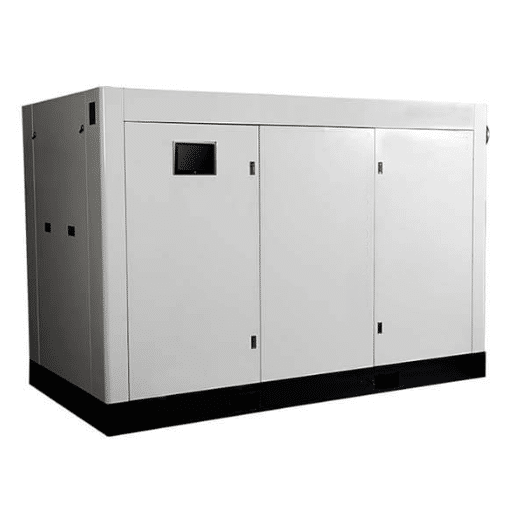
Energy Efficiency of Water-Injected Compressors
Water-injected compressors are the champions of energy efficiency as they work with lower temperatures than the oil-lubricated compressors. The lowering of temperature in the compressor greatly reduces the energy pent-up for compression and thus, leads to considerable energy savings.
Efficiency Highlights
- Water used in the process of compression can be recycled over and over again, reducing waste and enhancing overall efficiency
- These compressors suffer lesser wear and tear which translates to lesser maintenance and a longer lifespan
- Water-injected compressors are a green and cost-effective option for industries that want to save energy without lowering the performance bar
Impact on Operational Costs
Water-injected compressors present a considerable drop in the operational costs that oil-lubricated systems do not. Recent industry sector reports indicate that the use of these compressors can bring an energy expenditure reduction of approximately 20-30% because of high energy efficiency.
VSD (Variable Speed Drive) in Oil-Free Compressors
The Variable Speed Drive (VSD) technology is a major factor that contributes to the energy efficiency and high performance of oil-free compressors. The VSD compressors are nothing like the traditional fixed-speed compressors that run at a constant rate; rather, they vary the speed of their motors according to the exact need for compressed air. This flexibility not only leads to less power consumption but cuts down the electricity bill as the compressor uses only the amount of energy needed to meet the demands of operation.
VSD Technology Benefits
- ► Energy Savings: Studies show VSD technology can result in energy savings as high as 35%-50% depending on equipment usage and load variability
- ► Environmental Impact: VSD oil-free compressors help reduce CO2 emissions thus supporting global sustainability efforts
- ► Air Quality Compliance: Capability to provide clean air without oil guarantees compliance of ISO 8573-1 Class 0
- ► Smart Monitoring: Cutting-edge VSD systems equipped with real-time monitoring and controlling features
- ► Predictive Maintenance: Advanced systems allow for maintenance based on predictions, achieving no downtime and increased equipment lifespan
By using VSD technology, companies will not only enjoy the benefits of a much more energy-efficient and cost-saving operation but also a smaller carbon footprint thus making this technology a sustainable option for industries that place a high emphasis on clean and efficient air compression solutions.
Air Treatment Solutions for Water-Injected Compressors
Importance of Air Treatment Systems
The air treatment systems are at the core of the whole process when it comes to water-injected compressors, making them the most efficient and the longest lasting. They are the first to remove all the pollutants from the compressed air like moisture, oil, and dust. In this way, they avoid a rusting process, and the pipes and equipment are no longer worn out.
Critical Function: Air treatment not only keeps the air quality of the operations safe but also, it improves the performance and cuts the down-time costs which may be greatly caused by failures. A company is able to benefit from clean and dry compressed air when it comes to optimized processes, and quality standards as well as the protection of the sensitive end-use applications.
Integration with Water-Injected Compressors
The combination of air treatment systems with water-injected compressors is the key to getting the maximum efficiency and reliability of compressed air operations. Water-injected compressors are the ones that, through the cooling process and the fact that there is less friction, they do not need the treatment intervention to be precise because of the moisture-related issues that they cause. When the air dryers and filtration systems are high-performance ones, the compressors can control the moisture optimally, consume less electricity, and live longer. This combo not only makes the operation more efficient but also is in line with sustainable and environmental compliance standards as well as the modern industry ones. The air treatment solutions that are out of this world allow the companies to have their water-injected compressors performing up to the mark, without the need to deal with the disruptive costs.
Future Trends in Air Treatment Technology
One of the major air treatment technology trends is real-time, AI and IoT solution-based maintenance and control. Such systems allow accurate detection and perfect maintenance of the moisture and pressure levels; thus, energy is not wasted and reliability is improved. Besides, the use of eco-friendly materials and energy-saving technology are the major trends that not only reduce the carbon footprint but also help to tackle the evolving stricter regulations on sustainability. Furthermore, the deployment of compact and modular systems is also become a trend that offers the industrial applications diversity the wanted flexibility and scalability. All these development efforts are to help in providing higher efficiency, lower costs, and ensuring compliance with the global environmental standards.
References
-
Development of a reciprocating compressor using water injection to achieve quasi-isothermal compression
Read the paper -
The Development and Application of a Water-Injected Twin Screw Compressor
Read the paper -
Experimental Study of a Water-Injected Twin Screw Compressor for Mechanical Vapor Compression System
Read the paper
Frequently Asked Questions (FAQ)
In what way is a water-injected screw compressor different from an oil-free screw air compressor?
Water injected screw compressors rely on water for lubrication and cooling of the compression element, resulting in almost isothermal compression and lower discharge temperatures compared to most oil-free compressions. Oil-free screw air compressors do not allow any liquid in the compression area and instead use material and gaps to “clean” the area so that no pollution enters; however, they are usually hotter and may need cooling or extra stages. Water-lubricated systems can deliver very clean air with negligible oil contamination hazard if set up as oil-free water-lubricated systems, while others still favor dry oil-free screw types for their stringent class 0 requirements. Both technologies may have different operational costs: water-injected compressors usually offer more excellent energy efficiency and cleaner air per kW of power but require water treatment and management. Their service life and maintenance practices diverge as well, with the need to use corrosion-resistant materials, like stainless steel rotors, when going for the water-lubricated approach. Suggested unused terms: vsd, food and beverage, bearing, air treatment.
Can an oil-free screw with water injection meet the requirements of ISO 8573-1 class 0 for pure oil-free air?
A water-injected screw compressor designed correctly can indeed meet ISO 8573-1 class 0 by not allowing oil to get in and making sure that the water quality and separation are up to the standards for purity. The injection of water prevents oil-based contamination but there must be a strong water separator, corrosion-resistant rotors, and proper condensate management in place to maintain Class 0 air quality. Through regular monitoring and automated diagnostics, the system is continuously operated within specification, which lessens the risk of contamination. The majority of manufacturers of the wisair range promote water-lubricated or water-injected designs specifically to achieve pure oil-free air for sensitive industries such as food and beverage and pharmaceuticals. The operators need to check for third-party certification and water treatment maintenance to avoid microbiological or particulate contamination. Suggested unused terms: iso 8573-1 class, stainless steel rotors, continuous operation, compressor room.
What energy savings and high efficiency benefits does water injected compressor offer over an oil-injected screw?
Waterinjected compressors frequently attain almost isothermal compression which leads to a decrease in the specific energy per unit of compressed air translating it to energy savings and better air per kW of power. The outstanding cooling capacity of water results in higher volumetric efficiency and potentially no extra aftercooling equipment or separate compressor rooms required. Water-injected equipment can surpass the traditional oil-injected operations in terms of cost per period of time due to the lower power consumption and less expenditure on oil handling and disposal. The total life cycle efficiency depends on water treatment and extra maintenance for water systems as well. The performance across load profiles can be further optimized by using controllers and optional VSDs that also enhance energy efficiency. Suggested unused terms: operating costs, air per kw of power, variable speed, corrosion-resistant.
In which applications is a water-injected screw compressor appropriate—food and beverage or pharmaceutical?
Water-injected screw compressors can be considered not only to be very suitable for food and beverage and pharmaceutical industries but also can be used to supply pure oil-free air when properly engineered and certified to relevant standards. The lack of oil in the compression chamber makes it impossible for oil to contaminate product contact processes, and near-isothermal compression also helps to keep air quality and stability. High-quality water treatment, condensate management, and validated separation systems, along with documentation and often third-party testing, are typically required for compliance in this type of installation. Many users choose water-lubricated or oil-free water designs from reputable manufacturers like wisair to meet strict class 0 requirements. Careful selection of materials such as stainless steel rotors and corrosion-resistant components not only improves reliability but also extends service life in these challenging environments. Suggested unused terms: class 0, food and beverage, pure oil-free, water-cooled.
What are the differences in maintenance between a water-injected screw compressor and a dry screw compressor?
Water-injected systems may require periodic water quality checks, condensate treatment, and occasional replacement of corrosion-sensitive parts unless stainless steel or corrosion-resistant materials are used. Maintenance of water injected screw compressors focuses on water treatment, separator element replacement, and monitoring for corrosion or deposits, whereas dry oil-free screw compressors emphasize rotor clearances, surface wear, and lubrication-free bearing care. Water-injected systems may require periodic water quality checks, condensate treatment, and occasional replacement of corrosion-sensitive parts unless stainless steel or corrosion-resistant materials are used. Dry oil-free designs avoid water system maintenance but can require tighter tolerance service and more frequent rotor inspections to maintain efficiency and air quality. Both types benefit from intelligent controllers that provide predictive maintenance alerts, but the components inspected and replaced differ significantly.