
Oil-Free Screw Compressor Ultimate Guide: Technology & Applications
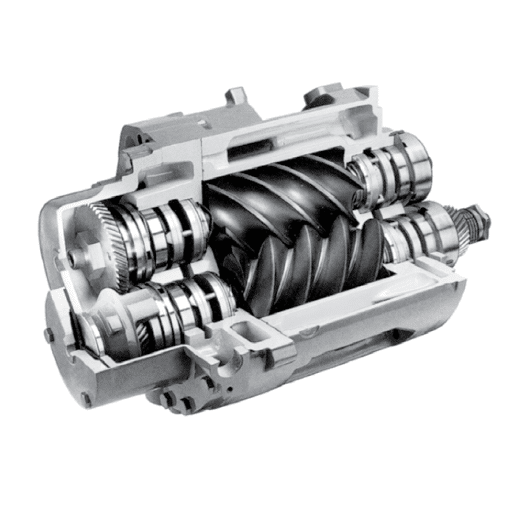
For industrial processes that require the utmost precision, dependability, and contamination-free operation, oil-free screw compressors are the new benchmark. They are highly developed, state-of-the-art machines that, in addition to drastically reducing environmental impact, are also cost-effective. In critical industries, namely pharmaceutical, food and beverage, electronics, and healthcare, the need for absolute cleanliness is essential, and oil-free screw compressors are the right choice for this task. This article is an all-in-one guide to oil-free screw compressors: how they work, the benefits they offer, and the reasons for their popularity in industries with high air-purity requirements. From internal workings to industrial practices, the article provides technical insights and practical wisdom to help you make the right choices about their adoption and use.
Introduction to Oil-Free Screw Compressors

Oil-free screw compressors are sophisticated mechanisms designed to generate pure, oil-free compressed air, eliminating the need for oil in the compression chamber. The mechanism consists of two intermeshed screws, or rotors, that compress the air between them as they rotate against each other. These compressors are built to deliver the perfect level of air purity; hence, they are the preferred choice for applications across many industries, such as food and beverage, pharmaceuticals, and electronic production, where air purity is the most critical factor. Banning the use of oil in the entire process, i.e., in the compression and lubrication, leads to oil-free screw compressors becoming a gateway to fewer maintenance needs, less risk of product contamination, and strict compliance with quality regulations, all of which make co-working with them very efficient and effective.
What is an Oil-Free Screw Compressor?
An oil-free screw compressor is a mechanical device in the category of gas compressors that employs a rotary mechanism specifically made to compress air or gas without the aid of oil in the compression chamber. It is done using modern sealing and cooling technologies that are not dependent on lubricants during the compression cycle, as lubricants are the primary source of contamination. Sintering the screws, the pistons’ roots, or the rotor, among the gas compressor parts, is often done with special coatings such as PTFE or ceramic to reduce friction and increase lifespan.
Oil-free screw compressors are designed to work in immaculate environments with absolute cleanliness and the best air. The operating mode is a two-stage configuration, in which the gas or air is compressed step by step through two rotors to achieve the highest efficiency and uniform pressure levels. The compressor system is designed with smoke cooling as one type of integrated cooling to remove the heat generated during the process without affecting performance.
History and Evolution of Oil-Free Compressors
There is no denying that the development of oil-free compressors occurred during the mid-twentieth century, when industries demanded more specialized, and therefore more costly, equipment to support daily production and meet stringent purity standards in applications such as pharmaceuticals, which were similar to food production and electronics. The first oil-free compressors used dry compression methods and sometimes incorporated mechanical seals to prevent lubricant from entering the compression chamber.
The journey from the archaic oil-free compressors to the present ones has been long and tumultuous, and technological advances in materials science and engineering have marked each turn along the way. The use of Teflon-coated rotors, advanced composite materials, and precision machining techniques has significantly increased the machine’s durability and efficiency. Apart from that, modern oil-free compressor configurations are always focused on reducing heat generation through modern routing profiles and advanced heating systems such as closed-loop water cooling.
Modern oil-free compressors are highly efficient, and the implementation of variable-speed drives (VSDs), which allow on-the-fly load-condition adjustments, is one of the main reasons for that, as well as going beyond just optimizing power consumption. Besides, eco-friendly models have become more prevalent owing to the greater emphasis on sustainability, which has led to the design of energy-efficient models with short lifecycle costs and a smaller environmental footprint. Compressors that are oil-free have indeed become part of industries that require cleanroom air and compliance with the strict ISO 8573-1 air purity standards. The creation of new oil-free compressors indicates the industrial sector’s ongoing demand for better, more reliable, and more eco-friendly solutions.
Key Components of an Oil-Free Screw Compressor
| Component | Description |
|---|---|
| Oil-Free Airends | Core mechanism ensuring zero oil contamination. |
| High-Efficiency Motors | Converts electrical energy into mechanical motion efficiently. |
| Precision Gear Drive | Ensures reliable and synchronized rotor movement. |
| Air-Cooling System | Regulates temperature for consistent operation. |
| Advanced Sealing System | Prevents leaks and enhances compressor efficiency. |
| Dryer Integration | Removes moisture to deliver clean, dry compressed air. |
| Control Unit | Provides operational control and performance monitoring. |
| Noise Dampening System | Reduces sound levels for quieter operation. |
| Cooling Water Circuit | Cools internal components in water-cooled models. |
| ISO-Grade Filters | Ensures compliance with air purity standards. |
How Oil-Free Screw Compressors Work

The working principle of oil-free compressors is based on two rotors that interlock and compress air as they rotate within the compression chamber. Unlike oil-lubricated compressors, oil-free compressors do not use oil for sealing or chamber cooling; instead, they rely on the rotor coatings to reduce friction and keep the process efficient. Air or water cooling is done depending on the model and construction of the compressor. An oil-free process in the chamber ensures the outgoing air is clean and free of contaminants that can harm applications requiring high air purity, such as pharmaceuticals, food production, and electronics manufacturing.
Operating Principles of Screw Compressors
The positive displacement process is used in screw compressors, which apply a pair of helical rotors to compress air or gas. The rotors, usually named male and female, are constructed in such a way that interdigitating lobes and grooves capture one part of the gas. As the rotors turn, the entangled gas is pushed along, and the available space decreases, leading to a gradual increase in gas pressure. The delicate machining of these rotors ensures smooth interlocking and minimizes leakage during rotation, thereby increasing overall efficiency.
To mention just a few modern screw compressor features, they come with variable-speed drives (VSDs) to control rotor speeds based on demand, thereby optimizing energy consumption. The internal cooling mechanism, usually found within the compression chamber, not only directly improves the unit’s operational efficiency by maintaining optimal temperatures during use but also keeps the parts cool, helping them last longer. In addition, many systems have a user interface that controls all aspects of operation—such as pressure, temperature, and load—allowing real-time adjustments and ensuring consistent performance across a variety of industrial applications. All these innovations have made screw compressors reliable and energy-efficient solutions for high-demand operations.
Differences Between Oil-Free and Oil-Lubricated Compressors
| Parameter | Oil-Free Compressors | Oil-Lubricated Compressors |
|---|---|---|
| Lubrication Mechanism | No oil used in the compression chamber | Oil used for sealing and cooling |
| Air Quality | High purity, contamination-free | May contain traces of oil |
| Maintenance Requirements | Lower long-term maintenance needs | Requires regular oil changes |
| Initial Cost | Higher purchase cost | Lower purchase cost |
| Operating Cost | Lower due to no oil consumption | Higher due to oil usage |
| Durability | Less durable under heavy usage | Higher durability under heavy load |
| Applications | Ideal for food, medical, and pharma | Suitable for industrial applications |
| Environmental Impact | More eco-friendly | Oil disposal required |
| Noise Levels | Generally quieter | Can be noisier |
| Efficiency | Slightly lower in certain operations | Higher in heavy-duty applications |
Energy Efficiency in Oil-Free Compressors
The oil-free compressors have piqued the interest of industrialists for various reasons, including providing economically efficient solutions for specific applications without compromising quality. These oil-free systems, unlike oil-lubricated systems, do not produce internal friction. They do this by eliminating the need for lubricants, thereby reducing energy consumption. Considering the modern aspects of the design, such as employing advanced coatings like PTFE or ceramic materials, one can further reduce heat generation and energy loss, thereby enabling a wide range of performance. Besides, oil-free compressors often use a variable-speed drive (VSD), which adjusts motor speed to the required demand, preventing energy waste during low-load operation. Industry statistics show that VSD-type compressors can save 15-30% on energy costs compared to non-VSD compressors, especially in applications where workloads constantly change. This efficiency not only reduces operating costs but also aligns with the growing demand for environmentally friendly, sustainable industrial solutions.
Applications of Oil-Free Screw Compressors

- ●Pharmaceutical Manufacturing – No contamination in drug production and packaging processes.
- ●Food and Beverage Industry – Gives unpolluted air for the packaging, processing, and handling of sensitive products.
- ●Electronics and Semiconductor Production – No contamination will occur in the production of the delicate atmosphere.
- ●Healthcare Sector – It creates pure air under pressure for medical devices, sterilization, and oxygen-generation systems.
- ●Chemical Manufacturing – Clean air of assured quality is the source for precision operations and machines.
Industrial Applications
Compressed air systems are foundational to many industrial applications due to their versatility and reliability. For instance, in the pharmaceutical industry, compressed air is a must for driving equipment used in tablet coating, granulation, and spray drying. The purity of these systems must be very high to prevent product contamination. In addition, in the automotive industry, compressed air powers tools such as impact wrenches, paint sprayers, and robots that assemble parts, thereby providing high precision and efficiency to production lines. The air/space sector uses compressed air for both surface preparation tasks, such as sandblasting aircraft components, and pneumatic testing of critical systems. By catering to the specific demands of every sector, compressed-air technology remains vital in modern industrial processes.
Medical and Pharmaceutical Uses
Compressed air technology is indeed an absolute necessity in the medical and pharmaceutical industries, because it not only sterilizes but also applies very accurately. It continuously supplies ventilators, surgical instruments, and dental devices with very safe, controlled air delivery. Furthermore, in the pharmaceutical industry, compressed air is used for activities such as moving materials, coating tablets, and mechanically operating pneumatic systems on production lines. The necessity of absolute purity in these environments cannot be stressed enough; the compressed air in these areas is highly filtered to the point that it is impossible for any contamination that could eventually harm patients or degrade product quality to get through. Modern compressed air systems are equipped with air-drying and filtration technologies that meet exceptionally high compliance standards, such as ISO 8573-1, which specifies air quality classes for medical and pharmaceutical applications. This degree of precision and dependability makes its use constant across these very tightly controlled sectors.
Food and Beverage Industry Requirements
The food and beverage sector is very strict about air quality, as it directly affects product safety and compliance with the law. Air used for food processing is purified to that extent, as ISO 8573-1 Class 0 or Class 1 standards are strictly followed. All these air quality measures are taken primarily to eliminate risks during processing, which is critical since air contact is unavoidable in applications such as pneumatic conveying, packaging, and product handling.
Furthermore, the FDA and GFSI, as regulatory authorities, recommend the application of Hazard Analysis and Critical Control Points (HACCP) plans to identify potential contamination points in air systems. Filtration and drying techniques have advanced significantly and are indispensable for achieving these hard-to-reach standards; they provide multistage purification processes that eliminate contaminants at every stage. These systems are essential not only for product integrity but also for operational efficiency and compliance with global food safety regulations.
Benefits of Using Oil-Free Screw Compressors

Enhanced Air Quality
Oil-free screw compressors use no oil and, as such, do not need oil as a lubricant in the compression chamber; therefore, the air they deliver is completely free of oil contamination.
Compliance with Industry Standards
These types of compressors make it easier for the industry to comply with government or local authority regulations, such as the ISO 8573-1 Class 0 certification, which requires no oil in the compressed air.
Reduced Risk of Product Contamination
When product quality is no longer at risk of oil transfer into the production lines due to oil-free compressors, recalls are avoided and consumer trust is preserved.
Lower Maintenance Requirements
The absence of oil in the compression chamber prolongs the life of internal parts, hence the need for maintenance gets reduced and operational downtime becomes minimal.
Sustainability and Cost Efficiency
Oil-free plants use less filtration and do not need to dispose of oil-laden condensates, resulting in a gradual reduction of both their environmental impact and operational costs.
Environmental Impact and Sustainability
Installing oil-free systems is one of the most critical steps the industry can take to minimize carbon emissions from its operations. Conventional oil-lubricated technologies generate oil-containing condensates, which can cause soil and water pollution if improperly disposed of. Oil-free systems eliminate oil from the compression process and thus prevent its entry into nature, which in turn not only complies with strict environmental regulations but also facilitates achieving sustainability goals.
Moreover, the energy efficiency of the new oil-free systems is another factor contributing to less energy use. Engineers and scientists have been working together on technological advancements and materials, achieving very efficient operations that cause minimal energy waste and lower greenhouse gas emissions. Reports and industry analyses show that facilities that use oil-free solutions have operational emissions that are up to 20% lower than those that use traditional methods.
Not only do these innovations cater to the growing demand for environmentally friendly industries, but they also offer long-term cost advantages. By reducing waste and dependence on disposable resources, oil-free systems advocate for sustainability and operational efficiency that are no longer mutually exclusive but somewhat interconnected. This gives them a key role in the world’s move toward sustainable industrial practices.
Cost Savings in Maintenance and Operation
Oil-free systems directly reduce operational costs by cutting lubricant use, which is not only pricey but also requires constant checking, replacement, and disposal. There are ongoing costs with traditional oil-lubricated systems, such as purchasing oil, filtering, and managing waste, but all of those costs are eliminated with oil-free technology. Besides, the oil-free machines are built with cutting-edge engineering practices that make them resistant to wear and tear, thus needing fewer and less costly maintenance interventions. Reports show that companies that invest in oil-free equipment have their machines running for longer periods without breakdowns. During these periods, output is at its maximum due to the high operational efficiency. Moreover, these systems generally comply with very stringent environmental regulations, allowing companies to avoid expensive fines and have a better regulatory experience. So, the whole thing about lower maintenance requirements and lower consumable costs makes oil-free systems an excellent financial investment over the long term.
Improved Air Quality and Safety
Oil-free systems are a major contributor to the excellent air quality in industrial applications, as they eliminate the risk of oil contamination in the compressors’ air supply. This is very important for the food and beverage, pharmaceutical, and electronics manufacturing sectors, where even the slightest amount of oil can ruin products and/or break the law. In addition, oil-free systems help reduce airborne particulates and oil aerosols to a point that further reduces workers’ risk and, in doing so, contributes to creating a safe working environment.
The latest developments in filtration and air purification technology go hand in hand with oil-free systems, ensuring that nuisances such as dust, humidity, and residual particulates are entirely removed. This not only enhances operational safety but also reduces equipment wear, thereby increasing reliability even further. By providing a clean air supply, businesses can achieve ISO 8573-1 Class 0 certification, which is the highest air-purity standard, ensuring compliance with global operational guidelines.
Recent Advancements in Oil-Free Technology
The direction of the latest research in oil-free technology has mainly focused on the desired characteristics of greater efficiency, sustainability, and longer operational life. Modern compressor designs have adopted new approaches, such as machine coatings and superalloys, that are both low-friction and resilient to temperature spikes resulting from continuous operation. Moreover, the state-of-the-art technologies in air-purifying systems have developed multi-purpose filtration systems with very high purity, resulting in virtually no contamination. Moreover, energy-efficient components such as variable-speed drives (VSDs) allow systems to dynamically adjust their output, which can have a significant impact on energy savings while still providing consistent performance. The technologies mentioned above not only meet the strictest environmental and operational standards but also exceed them, making oil-free solutions the number one choice for industries requiring high-performance, clean-air systems.
Innovations in Rotary Screw Air Compressors
Amongst the top developments in rotary screw air compressors is the inclusion of high-tech sensors. Today’s compressors are equipped with IoT-compatible sensors that continuously monitor essential parameters, such as pressure, temperature, and vibration. These sensors facilitate instantaneous data collection and evaluation, enabling predictive maintenance strategies that prevent unexpected service interruptions. Predictive maintenance involves deploying machine learning algorithms that analyze operational data to pinpoint the exact time of potential equipment failures. This not only reduces repair expenses but also prolongs the equipment’s life while maintaining it at optimal productivity levels.
The helical rotary screw air compressor in the dual-stage version has introduced an emerging, efficient energy-use technique. The two-stage process, in which air is compressed twice, results in less heat being emitted and hence less energy being used. Along with a high-efficiency motor and rotor profile, a dual-stage compressor delivers significant energy savings to the industrial sector without sacrificing output capacity. This breakthrough is essential not only for plants seeking to reduce their carbon emissions but also for those that must comply with stringent energy regulations.
Smart Technology and IoT Integration
The union of innovative technology and IoT (Internet of Things) has transformed industrial operations and organizations, making them more autonomous, efficient, and data-driven. Advanced sensors located in machines continuously monitor their performance by tracking metrics such as temperature, pressure, and flow rate and providing real-time data that can be analyzed to predict failures or inefficiencies. Further, IoT platforms significantly enhance the functionality of the existing system by connecting equipment to the centralized control system, enabling remote monitoring and diagnosis. These have been the main reasons for improvements in uptime, reductions in operational costs, and the facilitation of the adoption of preventive maintenance strategies in the industry. The processing and analysis of critical data are done with minimal delay using cloud-based platforms and edge computing, which help maintain precision and reliability in every operation. The partnership between innovative technology and IoT ensures that operations can meet the constantly changing needs of modern industries, such as energy efficiency and downtime reduction.
Future Trends in Oil-Free Compression Technology
Among the most critical trends in oil-free compressors that will last longer is the material science innovations. Breakthroughs in advanced polymers and composite materials are enabling the development of oil-free compressors that excel in durability and performance, even in harsh conditions. Such materials have a higher wear and friction resistance; hence, they can last longer without lubrication, and, at the same time, the life of the components will be substantially increased. Moreover, developments in nanotechnology enable manufacturers to create a product’s surface at the atomic level, ultimately reducing energy loss from friction. Hence, the system’s efficiency increases overall.
Another significant trend is the fusion of artificial intelligence (AI) and predictive analytics into the oil-free compression systems. The algorithms powered by AI can continuously monitor operating parameters, detect inefficiencies, and even foresee component failures far in the future. This facility not only enhances the system’s reliability but also reduces maintenance costs and unplanned downtime. The compressors also incorporate highly sophisticated sensors that provide real-time data, which are then used for precision control, generally, and performance optimization, particularly. In fact, these vicissitudes are closely linked to the fast-growing demand for more intelligent, self-regulating industrial systems.
Reference Sources
Development of an oil-free water-lubricated twin-screw air compressor
This paper explores a water-lubricated twin-screw air compressor as an alternative to traditional oil-lubricated systems. The research emphasizes the environmental and operational benefits of using water as the sole lubricant, ensuring completely oil-free air.
Comparison of energy-efficiency and size of portable oil-free screw and scroll compressors
This study compares the energy efficiency and size of portable oil-free screw compressors with scroll compressors. It evaluates the potential of conical screw compressors as a preferred alternative for small-scale, oil-free applications.
Frequently Asked Questions (FAQs)
What is an oil-free screw compressor, and how does it work?
An oil-free screw compressor, as the name suggests, is an air compressor that operates without oil, producing high-quality air for various applications. Regular compressors that need oil for lubrication are not the only ones in the market; oil-free screw compressors use modern technology to operate at a cost-efficient level. As a result, they are perfect for the industries that demand clean, oil-free air, such as food and beverage, pharmaceuticals, and electronics. These compressors’ rotary-screw design causes very little wear and tear, resulting in a longer lifespan and lower maintenance costs. Hence, with their dependable, high-quality compressed air output and energy efficiency, these compressors have won the favor of many businesses.
What are the benefits of using an oil-free air compressor?
It is a significant plus to use an oil-free air compressor, not only for air quality but also to maintain it. Their operation is also left completely oil-free, which means that the air will not in any way be contaminated with oil coming from the compressor, a necessity for sensitive applications such as medical and food processing. Also, oil-free compressors require less maintenance, which, in the long run, costs less to own. In addition, their design allows for energy efficiency, usually through a variable-speed controller that harmonizes the compressor’s operation with demand. The result is not just energy savings but also increased machine longevity. In addition, oil-free air compressors are known for their quiet operation, making them suitable for use in areas where noise cannot be tolerated.
What industries benefit from using oil-free rotary screw air compressors?
Oil-free rotary screw air compressors are essential across many sectors, producing clean, contaminant-free air. Food and beverage processing, pharmaceuticals, and electronics manufacturing are examples of carve-out air along their entire production lines, which is potent, so those products are at least very safe to consume and not harmful to the environment. Moreover, compressors are used in the automotive industry to produce and maintain tools and machines that require a reliable air supply. Also, sectors characterized by a quest for energy efficiency and eco-friendliness are shifting to oil-free solutions to reduce their environmental footprint. Because they can meet specific airflow and pressure requirements, oil-free rotary screw air compressors are increasingly becoming the preferred option for many companies.
What are the key features of an oil-free compressor?
One of the main features of an oil-free compressor is the provision of clean, oil-free air, achieved by preventing contaminants from entering the air supply. The compressor designs include advanced cooling systems to ensure peak performance while maintaining energy efficiency. It usually has variable-speed operation, which can be adjusted according to demand, resulting in significant energy savings. Moreover, these compressors tend to incorporate controllers that reduce operational and monitoring complexity. Overall, oil-free compressors are regarded as long-lasting products and are designed to withstand heavy-duty cycles, making them suitable for a wide range of industrial applications.