
15-30 HP Screw Compressor Buying Guide for Mid-Size Operations

A dependable screw compressor, among the options of mid-size powering solutions, can be a decisive factor. The 15-30 HP category in particular is best for factories that need a steady supply of compressed air and at the same time, not burden their budget or space too much. Yet, how to pick one for your requirements out of a great number of models, features, and technical specifications? This purchase guide is here to facilitate your task. In case you are replacing your current arrangement, or if you are getting a new system, then we would be more than happy to share our insights with you so that you could form a confident and well-informed choice. The performance metrics up to understanding the energy efficiency options would get to you gradually, and thus, you would not only find the perfect solution to keep your operations running effortlessly but also learn about the whole process.
Understanding the Basics of Compressors
What is a Rotary Screw Air Compressor?
A rotary screw air compressor is a compressor type that makes use of two helical rotors that turn in opposite directions to compress air. Rotary screw compressors are different from piston compressors because they are more efficient and operate continuously, providing a constant supply of air pressure. They are popular in industry because they are dependable, quieter, and can deliver more air than other types. These compressors are built for long-term use and have an energy-efficient performance all through, thus they are an ideal option for manufacturers requiring a constant air compression.
Key Features of 15 HP Rotary Screw Compressors
15 HP rotary screw compressors are specifically designed to provide maximum performance and efficiency in various industrial applications. The following are the main features of these units, which are powered by the latest compressor technology:
Continuous Operation: These air compressors do not require any stoppage. They have an uninterrupted air supply and do not need to take any breaks and this ensures that the operational workflows are smooth.
Energy Efficiency: The compressors utilize variable speed drives (VSD) and advanced motor technology to reduce energy consumption along with operational costs by adjusting power usage based on demand.
Low Noise Levels: These compressors run much quieter than piston compressors, which makes them appropriate for those factories that prioritize noise reduction.
Compact Design: Even with 15 HP rotary screw compressors’ power, they usually have a space-saving design and can be installed easily in areas with less space.
Integrated Air Treatment: A lot of models come with air filters and dryers, besides providing high-quality clean compressed air that is very important for sensitive applications.
High Durability: These compressors are made of strong materials and are built to last; thus, they do not have frequent maintenance and deliver reliable performance for a long time.
Advanced Control Systems: Smart monitoring capabilities and digital controls enable the user to see the performance indicators and make setting changes for maximum efficiency.
All of the aforementioned characteristics contribute to making 15 HP rotary screw compressors a reliable option for the process of air delivery that is not only consistent but also efficient, while at the same time their design reduces the operational overhead that leads to increased productivity and, thus, sustainability.
Advantages of Using a Rotary Screw Compressor
High Efficiency: Provides a steady air output with minimum energy waste, thereby lowering the cost of operation.
Reliability: Built for uninterruptible service, thus guaranteeing excellent output in hard conditions.
Low Maintenance: Fewer movements of parts mean little wear and tear, which in turn results in a lessening of maintenance requirements throughout the lifespan of the compressor.
Quiet Operation: Noise generated is comparatively low, hence, by using the compressor one can operate in noise-sensitive areas without any disturbance.
Compact Design: The smartly designed construction takesup less space thus allowing installation in various places.
Energy Savings: The systems that are in place are very effective at using energy which automatically means that a reduction in operational costs is realized.
These advantages make rotary screw compressors the preferred option for companies that are looking for the best combination of durability, efficiency, and smoothness in their daily operation.
Choosing the Right HP Air Compressor
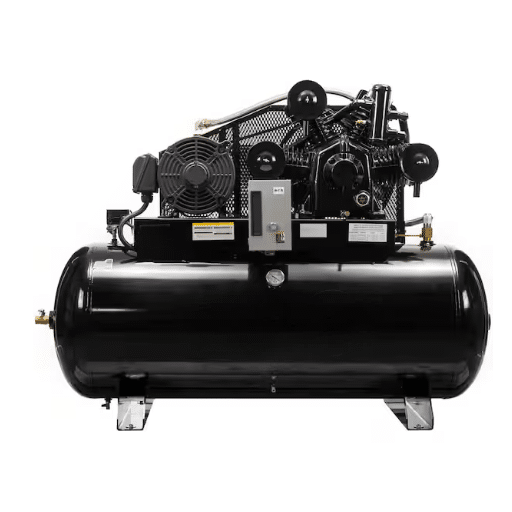
Comparing 15 HP and 20 HP Compressors
The selection of either a 15 HP or a 20 HP air compressor will be mainly based on your requirements and financial capacity. Their specifications clearly separate the two models, and it is a good idea to have a peek at their differences before making the selection.
The compressor of 15 HP is usually meant for the small to medium range of operations. The power delivered is, however, enough for the simultaneous use of pneumatic tools, moderate spray painting, and powering of workshop machines. The energy consumption and running costs in the case of the 15 HP models are usually lower and thus they perfectly fit into budget and whitespace control of the small and medium businesses. Plus, even when they are sometimes less powerful than the other models, they still manage to be energy-efficient, through consuming less power for their operation. Moreover, their smaller size makes them easy to install and requires less space.
On the contrary, a 20 HP compressor is meant for heavy-duty industrial applications or high-power demand operations. This compressor not only provides higher air volume and pressure but also guarantees smooth and trouble-free operation for continuous or high-demand use. With heavy-duty machines, large manufacturing areas, and companies needing consistent airflow without interruption, these compressors are the ones to go for. Besides the higher initial and running costs, the support for tough tasks and the enhancement of the organization’s operational efficienc,y respectively, still outweigh the cost.
Key Considerations:
Operational Demands
Analyze the functionality of the tools and machines in your operation. For rotational use and lower air demands, a 15 HP model may be enough. However, more complicated or continuous operations usually deserve a 20-HP unit.
Energy Consumption
Where energy savings is a big story, the 15 HP model usually shows lower operating costs. But, as a matter of fact, buildings for 20 HP compressors are already provided with the newest energy conservation technologies and this may lead to the drawing of the scales.
Budget
For the firms with less finance and direct efforts on maximizing ROI, the 15 HP compressors are very useful. The capability of investing in a 20 HP compressor due to bigger budgets or the necessity of long-term effectiveness goals may be the reason behind the purchase.
Future Growth
Growth potential is the aspect to consider; a 20 HP compressor might make the company’s future growth easier since there will be no additional equipment needed at the time of scaling up, thus it becomes a wise choice for the business that is growing.
While considering these factors, also consider your current needs and your long-term goals. Matching your selection with operation objectives and budgets means you will have uninterrupted productivity and performance that is cost-effective in your workplace.
When to Opt for a 30 HP Screw Compressor
A 30 HP screw compressor is perfect for those situations where high air pressure and continuous duty cycles are demanded, such as in manufacturing, automotive, or even large-scale productions. If your company is among those with very high air usage, then a 30 HP compressor will be the one that provides the power and efficiency for continuous operation and thus, the whole process will be faster due to fewer downtimes and more productivity. Moreover, for small or medium-sized businesses that are growing and may soon have more demand, the 30 HP machine will give you the option to scale up which means that your machine will still be adequate when your operations expand. Also, you will not be worrying about the cost of electricity and energy efficiency because with larger screw compressors, the manufacturers will most often use advanced technology for optimizing power consumption.
Factors Influencing Your Choice of HP
The following are the main factors to consider when determining HP for your screw compressor:
Demand Requirements – Measure the regular air demand of your operations. Higher HP models are a good choice for those industries where the demand is either continuous or very large.
Size of Facility – Find out how big your area of operation is going to be. More powerful compressors are usually required to perform consistently all over the space in larger facilities.
Energy Efficiency – Look at energy efficiency in order to find the right spot between the costs of running and the output. Going for a model with cutting-edge power-saving features can make energy bills a lot less in the long run.
Potential Growth – Include future expansion in your considerations. It is good to choose a higher HP now because it allows you to avoid the hassle of upgrading once your business grows.
Budget Constraints – Match your choice up to your budget while taking into consideration long-term benefits such as savings on maintenance and energy consumption.
Once you keep these major factors in mind, you will be able to confidently pick the right HP for your operational needs.
Compressor Specifications to Consider

Understanding Receiver Tank Sizes: 80 Gallon vs. 120 Gallon
The size of the receiver tank you are going to use, among the 80-gallon and 120-gallon ones is mostly determined by the pneumatic demand in your facility. An 80-gallon tank is usually enough for small applications with light tools where the use of air is not constant, giving the user a more compact and economical option. In contrast, a 120-gallon tank would be the best option for a large operation or a continuous air application. It gives you more airborne reserves and it also lessens the compressor’s cycling. Also, it is nice to have space limitations and budget considerations since a 120-gallon tank will take up more space and come at a higher price tag initially. Selecting a tank that matches your workflow size will result in an efficient and long-lasting compressed air system.
Significance of 3 Phase Power Supply
High-demand power supply systems mainly rely on a 3 phase power supply due to its high efficiency and reliability characteristics. The 3-phase power supply does not only ensure quality power by transmitting the electrical load through three phases but also lowers the chances of interruptions and gives a more gentle operation of the machines. The setup is very suitable for heavy industries and the commercial sector because it can handle large power loads while at the same time being smaller in wires and less costly than single-phase systems. In addition, it increases the life span of the machines due to the balanced and stable energy supply that it provides to the motors, compressors, and other equipment of such size.
Different Filtering Methods and Their Performance
When measuring the performance of various filters, one must first consider their intended design and how they work with contemporary systems. Filters to name a few, low-pass, high-pass, band-pass, and notch filters, each have different applications and accordingly, their own demand for controlling and optimizing electrical signals which means they are key designers in the systems. To give an example, low-pass filters are employed to the greatest extent to get rid of high-frequency noise, thus allowing smooth transmission of signals for delicate apparatuses. High-pass filters, in contrast, do the opposite, such that they allow higher frequencies to go through while barring lower frequencies which thus enable communication and audio systems to be clear.
Trends data shows that there is a great demand for “efficient signal filters” and “best filters for noise reduction,” which means that the industries and the engineers have become more interested in refining of system performance. Furthermore, the combining of these individual filters with advanced analytics and control systems has brought about their effectiveness. For applications necessitating exact filtering like audio processing, wireless communication, or even power systems, the incorporation of optimized filter solutions can lead to noise suppression being better, higher signal clarity and therefore gaining more reliability and efficiency in the system.
Companies have the opportunity of providing the right kind of filtration and applying supportive technology such as predictive modelling or AI-enhanced designs making sure that their systems are operating at maximum potential. Not only will the process be specific but it will also be cost-effective in terms of energy consumption and equipment lifespan, thereby serving the dual purpose of operational excellence and sustainability goals.
Installation and Maintenance Tips

Optimal Placement for Rotary Screw Compressors
The site of installation for rotary screw compressors must be clean, dry, and air-flow good to arrive at the ideal position. Airflow of proper quality and quantity is a must for the overheated territory prevention and efficient maintenance. That is why the compressors should be sited in a manner that enables easy access for maintenance and provides unhindered ventilation on all sides. The floor on which compressors are mounted must be both level and sturdy. This will help to minimize vibrations and ensure the compressors’ stability during operation. In addition, the compressors which are the source of the noise can have their positioned so that sound-dampening enclosures are used, or they can be placed in a different room that is sound-proofed for insulation and improved working conditions.
Routine Maintenance for Longevity
Follow these routine maintenance steps to lengthen the life of your compressor:
Inspect and Replace Filters: Check air filters regularly and replace them if clogged or worn to stop dust and debris from entering the system.
Check Oil Levels: Monitor oil levels for lubricated compressors and change the oil according to the manufacturer’s recommendations to maintain the best performance.
Drain Moisture: To prevent rust and maintain smooth operation, drain the moisture from the tank every day.
Tighten Connections: Regularly check and tighten all belts, bolts, and connections to prevent leaks or mechanical failure.
Clean Cooling Surfaces: To avoid overheating and keep efficient operation, cooling fins and vents should be cleaned regularly.
If these basic maintenance practices are followed, the compressor will be kept efficient, be less downtime-prone and have its service life extended. Always refer to the user manual for specific equipment-related advice.
Common Issues and Troubleshooting
When it comes to common compressor problems, troubleshooting them I prefer to start from checking the most evident problems. In case of compressor not start, I check the power supply, switches, and fuses to make sure that everything is connected properly. For strange sounds or vibrations, I inspect the parts inside the compressor for any wear, clean possible obstructions, and tighten loose parts. When the pressure is not up to required levels, I check the air inlet, filters, and valves for blockages or leaks. Frequent cycling indicates either a defective pressure switch or tank leaks, which I rectify immediately. I always make it a point to go back to the user manual for particular troubleshooting tips, as it is an invaluable guide for quick problem-solving. Most of these issues are, however, prevented by proper maintenance in the first place.
References
-
Design Considerations For A 66,000 HP Motor Driving An Air Compressor
Read more here -
Heat Pump and Air Conditioning System Analysis Based on Variable Speed Compressor
Read more here -
Compressor Selection and Equipment Sizing for Cold Climate Heat Pumps
Read more here
Frequently Asked Questions (FAQ)
Is a 15hp rotary screw air compressor suitable for my light industrial activities?
If you need a continuous supply of compressed air, a 15 hp rotary screw air compressor will suit many light industrial and workshop applications perfectly. If the system is properly sized, you can be sure to get a reliable and efficient airflow. Generally, 15 hp units are able to supply up to around 50 cfm from 100 psi and up which depends on the model and airend. So match your output with your aeration demand and the required tools. Also consider if you want a base mount or horizontal receiver configuration and check what voltage choices are available like 230v or 460v for three-phase power. Most 15 hp screw compressors come pre-wired, have energy-efficient cooling, and maintenance-reduced features to help lower operating costs. If your application requires long life and heavy-duty cycles, then prefer cast iron airends from proven brands like Schulz or Chicago Pneumatic. Suggested unused terms: 125 psi, 1-year warranty, 55 cfm, gallon air.
What is the output of a 15 hp rotary screw air compressor at 150 psi and 175 psi?
The compressor’s performance at higher pressures like 150 psi or 175 psi actually depends on the model’s rating and design of cfm; thus a 15 hp screw compressor may be able to deliver lower cfm at 175 psi than at 100 psi, hence verify the compressor curve as per your operating point. Working at 150psi generally needs more power and might impact the refrigerate dryer choice and condensate handling, thus ensure quality filtration and a receiver tank sized as per your duty cycle (e.g., 80 gallon or 120 gallon). Also check if the model is designed for continuous operation at elevated pressure and if warranty coverage is applicable for high-pressure service. The compressors having good cooling and a durable airend will keep their performance level while with less maintenance. Suggested unused terms: 125psi, duplex, gal, valve.
Can I place a 15 hp screw compressor in a horizontal or base mount position in my shop?
Flexible installation options are available for many 15 hp screw models; horizontal configuration, in base mount (base mount) setups which take up little space and fit in specific shop layouts. Mounting horizontally with an adjoining receiver tank or an external 80 gallon/120 gallon tank can enhance condensate separation and assure a stable air supply for pneumatic tools. Check the manufacturer’s recommendation regarding mounting orientation so as to protect the airend and lubrication system; mounting incorrectly can void warranty or reduce long life. Also, double-check electrical requirements such as 230v or 460v three-phase power and if the unit is pre-wired for easy installation. Suggested unused terms: 16 cfm, 230, workhorse, filter.
What are the maintenance requirements for a 15 hp rotary screw compressor to achieve long life and less maintenance?
The general maintenance of a 15 hp rotary screw compressor comprises of regular filter replacement, checking condensate drains, oil and oil filter changes, and examining the airend and valves to keep them efficient and long-lasting. Fulfilling the manufacturer’s recommended schedule helps to keep performance efficient and it may reduce the length of intervals between major component service, thus cutting operating costs. Prudent refrigerate dryers and post-filters will guard the tools and processes from moisture and particulate contamination. Warranty compliance will require record-keeping, and you might want to consider service contracts for heavy-duty or continuous applications to ensure minimum downtime. Suggested unused terms: 16 cfm, 175 psi, pre-wired, 100 psi.
Is the Schulz 15 hp rotary screw compressor suitable for my existing receiver and dryer setup?
Compatibility is dependent on the receiver’s capacity (gallon or tank size, for example, 80 gallon or 120 gallon), pressure settings (125 psi, 150 psi, or the required 175 psi), and the dryer capacity for the compressor’s discharge cfm corresponding to the Schulz model’s air flow ratings and connector sizes. Several Schulz 15hp units are specifically constructed to pair with popular dryers and filtration systems, yet make sure that valves, piping, and condensate traps are appropriately sized to maintain proficiency and prevent pressure loss. Confirm electrical requirements—230v or 460v three-phase—and the necessity of phase power modifications at your location. If you are going for duplex or adding a second compressor for redundancy, make sure that the controls are compatible for sharing loads and sequencing. Suggested unused terms: airend, 55cfm, warranty, heavy-duty.