
Single-Phase Air Compressor for Small Shops and Garages

When it comes to using pneumatic tools, inflating tires, or performing delicate tasks in a workshop, the choice of air compressor is a really important factor. A single-phase air compressor can be considered as an effective and dependable choice for small workshops and garages. This is going to be a machine with powerful features and yet low power requirement and high efficiency at the same time. In this article, we will explore the single-phase compressor’s features, the reasons why it is so suitable for small workshops, and the major factors to consider when choosing the perfect model. The selection of the right air compressor can do wonders for the professional mechanic or DIY person by reducing the amount of time spent on the job and thus increasing productivity. Continue reading to find out the reasons why a single-phase air compressor is probably the best investment for your shop or garage.
Understanding Single-Phase Air Compressors
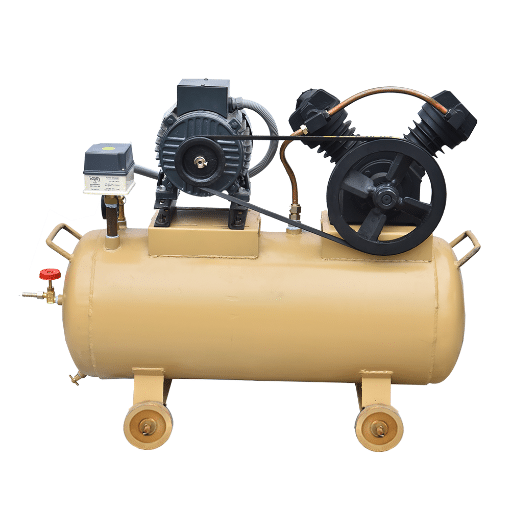
What is a Single-Phase Compressor?
A single-phase air compressor is an air compressor that operates on the single-phase power supply of alternating current (AC), which, in the case of residential and light commercial areas, is mostly the situation. It obtains the power from a single-phase supply just like single-phase power compressors do, whereas the three-phase compressors are mainly for large-scale applications and power control. They change the electric energy into movement and thus making the compression process happen and indirectly powering up the tools and machines. Pneumatics are the main air compressor applications which are inflating tires, operating pneumatic tools and light industry processes. With their simple construction and the fact that they consume just the normal socket’s energy means they are a good choice and have got a wide acceptance from various user groups.
Advantages of Using Single-Phase Air Compressors
Single-phase air compressors are equipped with various advantages which make them a nice and effective selection for both domestic and industrial applications. Their dependence on simple phase power makes the user interaction with the basic electrical system, which is used by most homes and small businesses, easy; therefore no special wiring or installation is required. Moreover, their small and lightweight design enables them to be easily transported.
In terms of efficiency, the single-phase air compressors are powerful enough to operate different kinds of pneumatic tools like nailers, sprayers, and wrenches etc., which are good for light to moderate work areas. This power ensures there is no drop in the quality of the performance required for the specific tasks. These compressors are also cheaper and less complicated to maintain than the three-phase ones because of their less frequent breakdowns and simpler design.
Recent reports indicate that single-phase air compressors are one of the most popular products among contractors and DIYers, which reflects their significant presence in daily life. They are the most sought-after in the market not only because they are affordable but also because they can deliver high performance without the hassles that typically come with large, industrial-grade systems. After all, the single-phase air compressors come with the perfect combination of low-cost and high-efficiency, hence serving a broad spectrum of user needs.
Typical Uses in Small Workshops
Single-phase air compressors have been quite common in small workshops due to their versatility and practicality. They can be used for a number of different tasks, and one of them is to power pneumatic tools like nail guns, spray painting, and pneumatic wrench tools which are essential for the woodworking, automotive, and metal working repair industries respectively. Besides that, the compressors are good at tire inflation, cleaning surfaces, and providing air for small machines. Their reliability together with small size and the fact that they are easy to maintain has turned them into a must-have in small workshops where space is limited, and efficient use of resources is a priority.
Types of Air Compressors for Small Shops

Rotary Screw Air Compressors
The rotary screw air compressors continuously compress the air with the help of the two interlocking helical screws which make them very effective and trustworthy even for a long duration. These are the compressors suitable for small workshops where constant and steady supply of compressed air is needed for rough tasks. They are designed to run quietly which is a significant advantage over piston compressors; besides, they have the ability to deliver large amounts of air with hardly any pulsation. Moreover, the rotary screw compressors are mostly made with fewer moving parts which means they require less maintenance and their life span is longer, which is a plus for small shops that want to enhance productivity and reduce downtime.
Single-Stage vs. Two-Stage Compressors
The chief distinction between single-stage and two-stage compressors is that the former does one compression cycle only, while the latter does two to aid the delivery of compressed air. A single-stage compressor performs the entire compressing process in one go, which makes it more appropriate for light to medium-duty applications where lower pressure requirements, usually around 120 PSI, are sufficient. They are generally smaller, less expensive, and easier to service but are not as efficient as the two-stage compressors in terms of energy saving during prolonged operations or in pressure demanding tasks.
On the contrary, two-stage compressors go through a two-step process wherein the air is first compressed to an intermediate pressure, then cooled, and finally compressed a second time to obtain a higher final pressure, which can be as much as 175 PSI or higher. The overall design of the compressor leads to better efficiency, lower heat production, and consistent performance for heavy-duty industrial or commercial use. Two-stage units are well-suited for continuous high-pressure operations or air storage with large capacity.
Data indicates that two-stage compressors are gaining more acceptance in the competitive markets due to their low power consumption and high-demand handling capabilities. Nonetheless, single-stage units remain the preferred choice for small workshops and hobby users who are on a tight budget, look for easy operation, and favor performance that is well-balanced with price. So the choice of compressor basically depends on the specific operational requirements and the respective long-term cost considerations.
Choosing Between 5 HP and 7.5 HP Models
The picking of the 5 HP and 7.5 HP compressor models is mainly dependent on the operational load and the intended application. The compressor of 5 HP power is generally enough for smaller factories or tasks that are not frequently done and need moderate air supply. Conversely, a 7.5 HP compressor is suitable for large operations, continuous use, or areas where the air demand is so high that several tools can be operated simultaneously. Furthermore, the initial investment might be higher for a 7.5 HP unit but its ability to handle high workloads may result in long-term productivity and less downtime savings. It is of utmost importance to carefully assess your individual operational needs and budget constraints in order to select the correct compressor.
Technical Specifications and Performance
Understanding CFM Ratings
CFM (Cubic Feet per Minute) ratings are key measures of an air compressor’s ability to provide maximum airflow, hence determining the range of power tools that can be used with it, i.e. the higher the rating, the better the power tools can be used effectively. The CFM rating needed is dictated by the nature of the tools being used as each tool carries a minimum CFM setting that will allow it to function properly. For instance, while sanders and grinders which are considered heavy-duty tools will demand more CFM, less demanding ones like airbrushes and nail guns will require less. Moreover, the CFM requirement is exacerbated by the surrounding conditions as well as the simultaneous use of tools. The performance will not be affected when the CFM rating of a compressor is greater than the total of all the tools that are being used at the same time, and the operation will continue to be efficient.
Comparison of 110V and 220V Air Compressors
The fundamental distinction between 110V and 220V air compressors lies in the manner of power delivery and the performance ranges. A 110V compressor works on the standard household voltage which makes itcompatible with almost all domestic power outlets. Therefore, they are normally of a small size, portable, and suited for light to medium applications like inflating, operating nails guns, or using small air tools, etc. But again, owing to the limited power output the compressor is frequently low-horsepower and CFM ratings bound which again restricts its use in high-demand applications.
Conversely, a 220V compressor requires a heavy-duty outlet that may only be found in commercial or industrial settings. This high voltage allows a larger amount of electricity through the wire which, in turn, allows the compressor to power heavy-duty machines and keep operating the high-demand tools such as impact wrenches, spray guns, and sand blasters. In addition, these compressors have bigger tanks and higher CFM ratings which make it possible for them to work on projects that require continuous operation for long hours. Although 220V compressors deliver top performance, they will mostly need an electrician to do the installation which, in turn, translates into hiring labor and incurring costs.
When it comes to the decision of selecting either 110V or 220V air compressors, a number of factors will have to be weighed such as the power requirements for the workspace, the environment and the type of electric infrastructures that are already in place. A user with minimum requirements and a regular voltage outlet as their only power source will find a 110V compressor the best in terms of performance and convenience. On the other hand, a professional user requiring breaking and higher CFM output will definitely benefit from the 220V compressor’s greater capacity.
How Motor Power Affects Performance
The power rating of the motor in the air compressor has a one-to-one relationship with the performance, output, and reliability of that compressor. The motor with higher RPM will result in the compressor working faster and thus the compressor unit being suitable for industrial and heavy-duty operations due to delivering more CFM with higher pressure. Units with lower motor power, on the other hand, will be for less powerful and less frequent applications. The interrelation of motor power and performance also determines the operation time since proper power use on the motor leads to less stress on it and consequently less wear and tear in the long run. Determining the right motor power involves evaluating the needs of the tools and the frequency of use, which in turn gives the best mix of performance and energy efficiency as the result.
Air Dryers and Their Importance

Types of Air Dryers for Compressors
Air dryers are essential components in compressed air systems, moisture and impurities are removed by them which prevent rusting and ensure smooth operations. There are mainly four kinds of dryers which are the refrigerated dryers, desiccant dryers, membrane dryers, and deliquescent dryers. In the case of refrigerated dryers, the air is cooled to condense and the water vapor is removed hence making them suitable for the usual applications. On the other hand, the desiccant dryers use absorbent material that can achieve very low dew points thus being ideal in a case that requires ultra-dry air. The membrane dryers are based on selective permeable membranes for moisture removal and this provides an energy-efficient solution requiring minimal maintenance. Last but not least, the deliquescent dryers employ hygroscopic salts for moisture absorption and they are mainly used for a low flow rate system. The proper air dryer is determined by the humid condition, flow rate, and operating situation to ensure both effective and reliable performance.
Benefits of Air Dryers using
Air dryers are full of benefits and among them, the most important are energy-efficient systems, extended equipment life, and consistency in product quality. They remove the water vapor from the air systems leading to the prevention of corrosion, the minimization of equipment failure risk, and the lowering of maintenance costs. In addition, air dryers are the essential tools for the applications where the dew points are the cause of condensation-related problems and therefore they guarantee the reliability of the system’s performance. Also, the air that has been correctly dried will enable the safeguarding of delicate controls and instruments, the enhancement of energy efficiency, and the compliance with industrial standards. The process of selecting the right air dryer does not only entail convenience but also the security of critical systems.
Integrating Air Dryers Into Your Air System
In case you intend to add an air dryer to your compressed air system, it is highly recommended to do it in a systematic way in order to maximize its benefits and save energy at the same time. My first recommendation would be to highlight the specific air quality requirements of your application, including the desired pressure dew point and the effect of moisture in the connected equipment on its performance. Afterward, you can categorize the type of dryer that best meets these requirements, such as in the case of multi-purpose use, a refrigerated dryer or a desiccant dryer for ultra-low dew points. The air dryer should be installed in the system after the compressor and pre-filters to effectively get rid of moisture before it flows into the downstream components. It is absolutely vital to perform routine maintenance through filter replacements and operational parameter monitoring to keep the performance high and avoid any problems in the system. Your industry standards will be maintained if you periodically audit the system and make changes to the components to adapt to any changes in the environment or operations.
Choosing the Right Compressor for Your Shop

Factors to Consider When Selecting a Compressor
When selecting a compressor for your workshop, it is necessary to pay attention to the main factors such as the airflow in CFM (cubic feet per minute) that the compressor will supply, the pressure in PSI that it can operate at, the types of tools or machines that it will drive, and so on. Mark and highlight the specific application that you will use the compressor for and confirm that its capacity corresponds to the peak demand. Additionally, consider the energy efficiency, the duty cycle and the noise levels of the compressor in order to ensure getting the best performance while saving on operational costs. Besides, the power supply at your location, the area for installation and the planned maintenance for the future should be additional factors that you will not forget. Not only will the compressor be trustworthy but also selecting the one that satisfies these conditions will minimize both downtime and energy waste.
Space Analysis and Installation Requirements
In analyzing the space and installation requirements, the first move would be to measure the space that is available and check if it is large enough for the compressor and at the same time make sure there is easy accessibility for ventilation and maintenance. Besides, the location should provide the necessary power supply and fulfill the electrical requirements with respect to voltage and phase compatibility. In addition to that, factors such as the airflow that cools the compressor should be sufficient enough to direct the cool airflow towards the compressor and the dust, moisture and temperature extremes should be on the performance side, thus preserving the proper functioning of the equipment. If the placement and layout are right, operation will be more straightforward and noise affecting nearby areas will be less. The location for the installation that will lead to the compressor being both efficient and dependable will be determined by considering all these factors.
Financial Concerns and Budgeting
When it comes to assessing cost inputs and planning around the compressor installations, it is critical to accumulate both the initial capital costs and the ongoing operational costs over the system’s lifetime. The first costs comprise the compressor’s price, installation charges, and the costs for any other necessary machines, which all fall under initial costs. Energy consumption, maintenance, and finally, replacement are long-term costs that are usually very significant contributors to the total expense. Additionally, energy efficiency should be a concern as it plays a major role in lowering the operating costs of the system during its money-making years. It is also wise to keep a budget for unanticipated costs, such as installing new parts or facility upgrades to meet future demands. Concrete thinking through these dimensions assures that the selected system will be both up to performance and financial standards.
References
-
HEAT PUMP AND AIR CONDITIONING SYSTEM ANALYSIS BASED ON VARIABLE SPEED COMPRESSOR – Discusses energy-saving benefits of variable speed compressor systems.
-
Some recent research in gas dynamic modelling of multiple single stage reciprocating compressor systems – Explores gas dynamic modeling techniques for compressors, including single-cylinder systems.
-
Topology Optimization Of Single-Phase Induction Motor For Rotary Compressor For Reducing OCR – Analyzes the optimization of single-phase induction motors in rotary compressors.
Frequently Asked Questions (FAQ)
Routine Maintenance for a Single Phase Compressor to Ensure Reliable Service?
A single-phase compressor performs tasks such as checking oil levels, changing filters, inspecting intake and outlet valves, and cleaning the pump and cylinder of dust as routine maintenance activities. The process of draining water from tanks often with an auto drain, or using refrigerated air dryers helps to maintain moisture and thus, prevent rust and improve cfm performance. In addition to this, monitoring the tension of the belt and checking the connections of the electric motor on 230v or 208 systems can prevent the overheating of compressors used in stationary or workshop air installations. Likewise, in some instances, checking pressure lubricated parts and servicing valves can help maintain the working pressure between 100 psi and 150 psi. Keeping maintenance records and indicating repairs for repair shops or fabrication environments will not only increase the longevity of compressors but also decrease downtime.
What is the impact of the electric motor on the performance of a single-phase compressor?
The electric motor is a key factor in determining the starting torque, running efficiency, and the compatibility with the 230 or 230 voltage supply in single-phase systems; a motor that is too weak will cause frequent unloading and result in poor performance. Motors used with the reciprocating air compressor designs must be correctly sized according to the required hp air ratings like 2 hp, 3 hp, or 5 hp. This is done to ensure that the airflow and pressure generated are sufficient. Variable speed rotary motors can provide more power and lower energy consumption compared to fixed-speed motors in certain applications. Motor maintenance, along with the correct wiring, will help in avoiding stalls and will extend the lifespan of the motor. Furthermore, it is essential to use a motor that is continuous duty rated in a fabrication or repair shop. If you plan to use large tools or a 10 hp 120 gal setup, then it is advisable to get motors that can start under load for single-phase use.
Is the emax 10 hp model usable for shop air and for light fabrication tasks?
The emax 10 hp model has a high capacity and long-running time for shop air and light fabrication applications. It very often can deliver a sufficient air flow of 18 cfm or above, depending on the tank size and layout. When the compressor is matched with a 10 hp motor and the right tank such as a 10 hp 120 gal, these units can operate several pneumatic tools without frequent unloading cycles. In case of using moisture-sensitive tools or during painting processes, make sure to supply the corresponding air compressor with a dryer or refrigerated air treatment for the system along with the appropriate air compressor. Additionally verify the emax 10 hp concerning pressure lubrication and if the intake valves and cylinder sizing are compatible with the expected workload to ensure the consistent output of 100 psi to 150 psi. Dealers may suggest among the features auto-drain and valve service access that might make maintenance easier in repair shops.
In what ways do single-stage air compressors outperform 2-stage units?
Compressing air in one stage, single-stage air compressors are generally cheaper, lighter, and simpler than two-stage or 2-stage compressors, thus they are ideal for small shop air or hobby fabrication applications. Their performance is considerably limited to around 100 psi, and single-stage configurations, like 5 hp or 7.5 hp 80 gal, are readily available. The 2-stage compressors operate under higher psi or continuous heavy-duty situations where they offer better efficiency, higher maximum. The distinction between products can be from 1-2 stages, i.e., single-stage units are less complicated, using fewer valves and simpler arrangements of cylinders. Moreover, they might not provide the higher cfm even if multiple tools are being used at the same time. Before making a choice on single-stage and 2-stage systems, assess if your operations necessitate stationary, high cfm, or high-capacity solutions.
Can a 10 hp single-phase compressor operate on 230V and what are the installation issues?
A 10 hp single-phase compressor running at 230V will provide more than sufficient hp air and capacity, but only if it is wired correctly, has the right breaker size, and the right starter systems. This is because 10 hp consumes a lot of current on a single-phase supply. Make sure that the electrical service at your site can support the load and that the voltage drop over long runs is kept to a minimum so that overheating or nuisance tripping of the motor does not occur. Establish the required disconnects and thermal protection and think about using a soft starter or variable frequency drive if the motor can stand rotary operation to lessen inrush. Moreover, there should be considerations for proper ventilation, stationary operation mounting, and intake of non-recirculated and cool air that is free of hot air. For large tanks such as 10 hp 120 gal, or systems that are used in repair shops, it is best to collaborate with an electrician to ensure adherence to local