Diesel Air Compressor Emissions Compliance: Tier 4 Final, CARB, and Stage V Explained
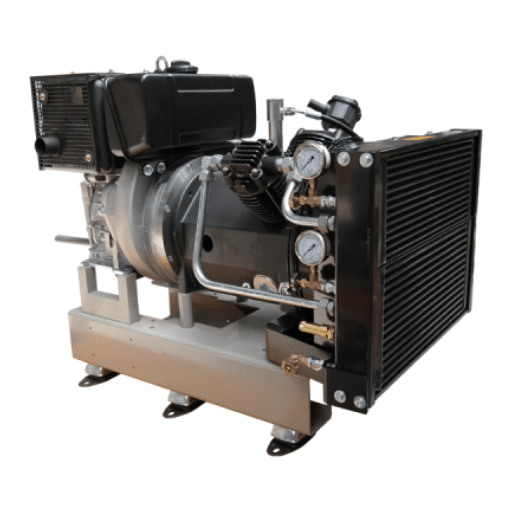
A construction manager in Southern California learned this the hard way. His crew rolled a portable diesel air compressor onto a public works site, only to have the project inspector reject it within minutes. The unit ran fine, but the engine label showed Tier 3 certification. The site required Tier 4 Final and CARB compliance. The crew lost half a day, the rental had to be swapped, and the project schedule slipped.
That one piece of paperwork, an emissions label most buyers never think to check, can stop work cold. For contractors, miners, and industrial operators, diesel air compressor emissions compliance is no longer a background detail. It affects which job sites you can access, what your equipment costs to run, and how much your fleet is worth at resale.
In this guide, we break down the three regulatory frameworks every diesel compressor buyer needs to understand: EPA Tier 4 Final in the United States, CARB rules in California, and EU Stage V in Europe. You will learn what each standard limits, how manufacturers meet them, what operating costs are easy to overlook, and how to verify compliance before you buy.
For a comprehensive and in-depth understanding of diesel screw compressors, please check out our diesel screw compressor guide.
Why Emissions Compliance Matters for Diesel Air Compressors

Diesel-powered air compressors are workhorses on remote and mobile job sites. They deliver compressed air where grid power is unavailable or unreliable. However, their engines also emit nitrogen oxides (NOx), particulate matter (PM), carbon monoxide (CO), and hydrocarbons. Over the past two decades, regulators have tightened limits on these pollutants dramatically.
Today, compliance matters for four practical reasons:
- Legal operation. In many U.S. states, California, and the European Union, non-compliant diesel engines cannot be sold or operated on regulated sites.
- Job-site access. Urban infrastructure projects, government contracts, and environmentally sensitive sites increasingly require proof of Tier 4 Final, CARB, or Stage V certification.
- Resale value. A Tier 4 Final or Stage V unit holds value far better than an older Tier 3 machine that buyers cannot use everywhere.
- Operating cost control. Newer compliant engines often use less fuel, but they also add aftertreatment systems with their own maintenance needs.
For procurement teams, the question is no longer whether emissions matter. The question is which standard applies and how to avoid the hidden costs that come with it.
EPA Tier 4 Final: The U.S. Federal Standard
The U.S. Environmental Protection Agency regulates nonroad diesel engines under 40 CFR Part 1039. The current standard is known as Tier 4 Final. It was fully phased in by 2015 and applies to new nonroad compression-ignition engines, including those in portable air compressors.
Compared with 1996 Tier 1 levels, Tier 4 Final has reduced PM and NOx emissions by approximately 99%. The limits vary by engine power class. For the engine sizes most common in portable diesel compressors, the key numbers are:
| Engine Power | PM (g/kWh) | NOx (g/kWh) | NMHC (g/kWh) |
|---|---|---|---|
| 19–56 kW | 0.03 | — | 4.7 (combined NMHC+NOx) |
| 56–130 kW | 0.02 | 0.40 | 0.19 |
| 130–560 kW | 0.02 | 0.40 | 0.19 |
| Above 560 kW (non-generator) | 0.04 | 3.50 | 0.19 |
To meet these limits, manufacturers rely on exhaust aftertreatment. The four main technologies are:
- Selective Catalytic Reduction (SCR). Uses Diesel Exhaust Fluid (DEF), a urea solution, to convert NOx into nitrogen and water vapor.
- Diesel Particulate Filter (DPF). Traps soot particles in a ceramic filter and periodically burns them off through regeneration.
- Exhaust Gas Recirculation (EGR). Recirculates a portion of exhaust back into the combustion chamber to lower peak temperatures and reduce NOx formation.
- Diesel Oxidation Catalyst (DOC). Converts CO and hydrocarbons into less harmful gases.
Not every engine uses all four. Some manufacturers meet Tier 4 Final with SCR plus EGR and no DPF. Others use DPF plus SCR. The specific configuration depends on engine design, power rating, and application.
Tier 4 Final Air Compressor Examples
Several major manufacturers offer Tier 4 Final portable diesel compressors:
- Atlas Copco XAS 185. Uses a 49 hp Kubota engine and is designed for general construction and utility work.
- Kaeser MOBILAIR M255. A 900 CFM unit powered by a Cummins Tier 4 Final engine with both DPF and SCR.
- Sullair 375H. Uses a Perkins 1204F-E44 Tier 4 Final engine and delivers 375 CFM at 150 psig.
- Aggreko oil-free fleet. Powered by mtu 6R 1500 engines using SCR and cooled EGR without a DPF, demonstrating that there is more than one compliant path.
For U.S. buyers outside California, Tier 4 Final is the baseline certification to request when evaluating a diesel screw compressor.
CARB: California’s Stricter Path
The California Air Resources Board (CARB) generally aligns with EPA Tier 4 Final for current off-road diesel engines. However, California often adds its own enforcement, testing, and labeling requirements. If you operate in California, the engine should carry a CARB Executive Order (EO) number and the correct emissions label.
CARB certification documents list compressors among typical equipment applications. For example, engine family certifications for Cummins, Kubota, and other manufacturers explicitly cover compressors, pumps, and generator sets. The emission limits shown in these documents match the EPA Tier 4 Final figures for the relevant power class.
CARB Tier 5 Is on the Horizon
In February 2026, CARB released a draft proposed Tier 5 regulation for off-road diesel engines. The proposal, if adopted, would phase in from 2031 to 2036 and would be significantly stricter than Tier 4 Final.
Key elements of the draft proposal include:
- Up to 90% reduction in NOx for engines 56–560 kW.
- Up to 75% reduction in PM for many power classes.
- New low-load certification cycles.
- In-use NOx and PM testing.
- Longer useful life and warranty requirements.
- Expanded onboard diagnostics (OBD).
- SCR inducement and idle-reduction provisions.
One important complication is federal preemption. Under the Clean Air Act, California cannot set its own standards for new engines below 175 hp used in construction or farm equipment unless EPA grants a waiver. For those compressor applications, CARB is relying on EPA to adopt aligned federal standards. If EPA does not align, California-only Tier 5 would have limited direct effect on smaller compressors brought in from other states.
For buyers, the practical message is clear: Tier 4 Final/CARB compliance is required now, and Tier 5 is something to monitor for fleet planning.
EU Stage V: The European Standard
In the European Union, diesel-powered air compressors fall under Regulation (EU) 2016/1628, which sets emission standards for non-road mobile machinery. The current stage is Stage V, which introduced a critical change from the previous Stage IV: a limit on particle number (PN), not just particle mass.
For engines from 19 kW to 560 kW, Stage V sets a PN limit of 1 × 10¹² particles per kWh. Because controlling particle number effectively requires a Diesel Particulate Filter, Stage V makes DPF effectively mandatory for most affected compressor engines. The key Stage V limits for typical compressor power ranges are:
| Engine Power | CO (g/kWh) | HC (g/kWh) | NOx (g/kWh) | PM (g/kWh) | PN (#/kWh) |
|---|---|---|---|---|---|
| 19–37 kW | 5.00 | 4.70 (combined HC+NOx) | — | 0.015 | 1 × 10¹² |
| 37–56 kW | 5.00 | 4.70 (combined HC+NOx) | — | 0.015 | 1 × 10¹² |
| 56–130 kW | 5.00 | 0.19 | 0.40 | 0.015 | 1 × 10¹² |
| 130–560 kW | 3.50 | 0.19 | 0.40 | 0.015 | 1 × 10¹² |
Stage V vs. Tier 4 Final: What Buyers Need to Know
Stage V and Tier 4 Final are similar in intent but not interchangeable. Three differences stand out:
- DPF requirement. Stage V generally requires a DPF for PN control. Tier 4 Final can sometimes be met without one, depending on engine design.
- Certification authority. A U.S. EPA certificate does not satisfy EU type-approval, and vice versa.
- Machinery directives. Compressors sold in the EU also need CE marking under the Machinery Directive, EMC, and other product-safety rules.
If you export equipment to Europe or operate an EU-based fleet, Stage V type-approval is essential.
Aftertreatment Technologies in Plain Language
The hardware that makes Tier 4 Final and Stage V possible can sound complex. Here is what each component does on a practical level.
Diesel Particulate Filter (DPF)
A DPF traps soot in a ceramic honeycomb. Over time, soot builds up. The filter then regenerates, burning off the soot at high temperature. Regeneration can be passive (triggered by normal high-load operation) or active (initiated by the engine control system).
For compressor operators, the key concern is downtime. If a DPF cannot complete regeneration because the machine runs at low load or short cycles, it may require a forced regeneration or cleaning.
Selective Catalytic Reduction (SCR) and DEF
SCR sprays Diesel Exhaust Fluid into the exhaust stream. The fluid, a mix of 32.5% urea and 67.5% deionized water, reacts with NOx in a catalyst to form nitrogen and water.
DEF consumption is typically 2–5% of diesel fuel consumption for Tier 4 Final SCR engines. A compressor burning 50 liters of diesel per hour might use 1 to 2.5 liters of DEF per hour. Tank sizing and on-site DEF storage become part of operational planning.
For a deeper look at fuel and fluid costs, see our guide to diesel air compressor fuel consumption.
Exhaust Gas Recirculation (EGR)
EGR sends a portion of exhaust gas back into the engine cylinders. This lowers combustion temperature, which reduces NOx formation. Some engines combine EGR with SCR and avoid a DPF entirely. Others use EGR alongside DPF and SCR.
Diesel Oxidation Catalyst (DOC)
A DOC converts carbon monoxide and hydrocarbons into carbon dioxide and water. It often sits upstream of the DPF and helps generate the heat needed for DPF regeneration.
Operating Costs Buyers Often Overlook

The purchase price of a Tier 4 Final or Stage V compressor is only part of the equation. Operating costs can differ significantly from older units.
DEF and Urea Costs
If the compressor uses SCR, you will need a steady supply of DEF. Prices vary by region, but budgeting 2–5% of diesel volume is a safe starting point. You also need clean storage; contaminated DEF can damage the SCR system.
DPF Cleaning and Replacement
DPFs require periodic cleaning to remove ash that cannot be burned off. Cleaning intervals depend on duty cycle and fuel quality. Eventually, a DPF may need replacement. Both cleaning and replacement add cost and downtime.
Ultra-Low-Sulfur Diesel (ULSD)
Tier 4 Final and Stage V aftertreatment systems are designed for ultra-low-sulfur diesel, typically 15 ppm sulfur or less. Higher-sulfur fuel can poison catalysts and shorten filter life.
Maintenance Intervals and Service Access
Aftertreatment systems add sensors, injectors, and catalysts that need inspection. Before buying, confirm that your region has authorized service technicians and available parts for the specific engine and aftertreatment brand.
These factors all feed into total cost of ownership. A unit with a lower sticker price but expensive aftertreatment maintenance may cost more over its life than a better-designed alternative.
How to Verify Compliance Before You Buy
A compliance label on the engine is not just paperwork. It is proof that the equipment can legally operate where you need it. Before purchasing or renting a diesel air compressor, run through this checklist:
- Confirm EPA Tier 4 Final certification for U.S. use. Ask for the engine family name and check the emissions label.
- Check CARB Executive Order if operating in California. Look for the EO number on the engine or in the certification documents.
- Confirm Stage V type-approval for EU use. Request the type-approval certificate and CE marking documentation.
- Match engine power class to the standard. Limits vary by kilowatt rating, so the same engine family may have different requirements in different power bands.
- Ask about aftertreatment maintenance. Know whether the unit uses DPF, SCR, or both, and what service intervals are recommended.
- Verify DEF availability and storage. If SCR is used, confirm you can source and store DEF on site.
- Check local job-site rules. Some sites impose stricter requirements than federal or state law.
- Request documentation. Keep copies of certificates of conformity, emissions labels, and technical files for audits.
If you are unsure which power class or certification your application needs, our team can help you select a portable diesel air compressor sizing configuration that matches your job-site requirements.
Diesel vs. Electric: When Emissions Drive the Decision

Sometimes the cleanest emissions compliance strategy is to eliminate exhaust emissions. Electric air compressors produce zero point-of-use emissions, run more quietly, and convert energy more efficiently than diesel engines. Electric motors typically operate at 85–92% efficiency, while diesel engines convert fuel to useful work at roughly 35–40% efficiency.
However, electric compressors are not always practical. They need grid power or a large generator, which limits their use on remote construction sites, in mines, or on mobile pipeline crews. Diesel remains the better choice when mobility, off-grid operation, or high altitude and dusty conditions make electrical supply unreliable.
Atlas Copco has reported that its E-Air portable electric compressor emits 46% less CO₂ than an equivalent diesel unit. For sites with stable power and strict emissions rules, electric is increasingly attractive.
If you are weighing the two options, our diesel vs. electric air compressor comparison covers efficiency, operating costs, and use cases in more detail.
What Happens If Your Compressor Is Not Compliant?
Operating a non-compliant diesel compressor can lead to real consequences. Fines vary by jurisdiction, but they can be substantial. More commonly, the penalty is operational: a project inspector, environmental officer, or rental customer refuses to allow the unit on site.
For rental fleets, non-compliance also affects resale. Older Tier 3 or Tier 2 compressors are increasingly restricted to regions with looser rules or to private sites with no enforcement. That shrinks the buyer pool and lowers the resale price.
The earlier you build compliance into your fleet strategy, the easier it is to avoid these problems.
Conclusion: Make Compliance Part of Your Buying Decision
Diesel air compressor emissions compliance is not just a regulatory box to check. It shapes where you can work, what you spend on fuel and fluids, and how much your equipment is worth years from now.
For the U.S. market, EPA Tier 4 Final is the current federal requirement. In California, CARB compliance is essential, and a stricter Tier 5 proposal is moving through the rulemaking process. In Europe, EU Stage V adds particle number limits that typically require a DPF.
The key takeaways are simple:
- Match the engine certification to your region and job site.
- Understand the aftertreatment system and its maintenance needs.
- Factor DEF, DPF service, and ULSD into your operating budget.
- Keep documentation on hand for inspections and audits.
If you need a diesel screw compressor built for your market’s emissions standards, contact our team. We can help you choose a configuration that balances compliance, performance, and long-term operating cost.