
Industrial Single-Stage Screw Compressor: Reliable & Cost-Effective
For demanding industrial environments, you need an air compressor that just works. Our Single-Stage Screw Compressor is engineered for simplicity and endurance, providing a steady, reliable source of compressed air to keep your operations running smoothly. Designed for applications with consistent air demand, it delivers exceptional performance without the complexity of multi-stage systems.
Cost-Effective
Proven Technology
Easy Maintenance
Continuous Operation
What is a Single-Stage Screw Compressor?
A Single-Stage Screw Compressor is the most common type of rotary screw air compressor used in industrial applications. It is a machine that uses a single pair of intermeshing helical screws—known as a rotary screw air-end—to compress a volume of air in one single step or stage. Its primary function is to draw in ambient air, trap it in the pockets between the screw rotors, and then reduce the volume of those pockets as the screws turn, thereby increasing the air pressure to the desired level. It is the industry standard for providing a continuous, reliable supply of compressed air for a vast range of applications.

Key Features of Our Single-Stage Screw Compressors
Get Consistent, High-Performance Compressed Air with Unmatched Uptime and a Lower Total Cost of Ownership.
With fewer moving parts compared to reciprocating compressors and a simpler design than two-stage systems, the Single-Stage Screw Compressor is inherently more reliable. This results in reduced downtime for maintenance and ensures continuous operation, making it a dependable choice for industrial applications.
The integrated design combines the motor, compressor, and air-end into one compact unit, saving valuable floor space. Ideal for facilities with limited space, the compressor offers powerful output without taking up unnecessary room.
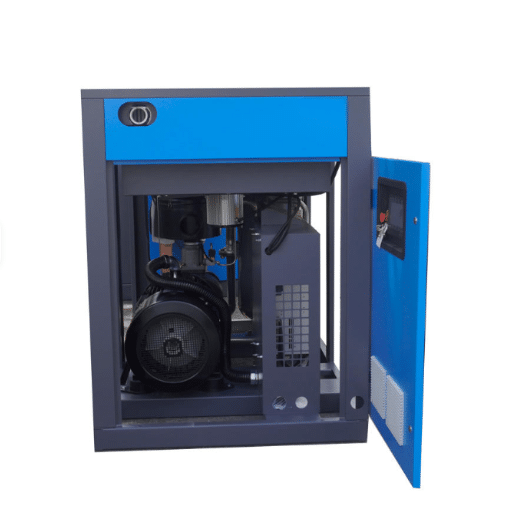
Engineered to deliver more cubic feet per minute (CFM) per horsepower, this compressor optimizes energy usage. The efficient design translates to lower energy bills and a faster return on investment, making it an eco-friendly and cost-effective solution.
Designed for a 100% duty cycle, the compressor ensures uninterrupted operation throughout the day. The rotary screw mechanism delivers smooth, pulsation-free airflow with significantly lower noise and vibration, creating a safer, more pleasant work environment.
Single-Stage Screw Compressor Specifications and Performance Data
| Model | Motor Power | Free Air Delivery (CFM) | Working Pressure | Noise Level (dB) | Cooling System | Dimensions (mm) | Weight (kg) |
|---|---|---|---|---|---|---|---|
| SS-7.5A | 7.5 kW | 36 | 7-8 bar | 67 | Air/Water | 1100×750×1120 | 400 |
| SS-15A | 15 kW | 75 | 7-8 bar | 69 | Air/Water | 1450×950×1280 | 650 |
| SS-22A | 22 kW | 112 | 7-8 bar | 72 | Air/Water | 1650×1050×1350 | 890 |
| SS-30A | 30 kW | 155 | 7-8 bar | 74 | Air/Water | 1900×1150×1550 | 1200 |

Factors to Consider When Selecting a Single-Stage Screw Compressor
Airflow (CFM)
This is the volume of air required. Calculate the total CFM needed by all the tools and machines that will be running at the same time, then add a 25-30% buffer for future growth and system efficiency. This is the most important step in sizing your compressor.
Pressure (PSI)
This is the force of the air. Identify the single tool in your facility with the highest PSI requirement. Your compressor must be able to meet this demand. Most standard industrial applications need 100-150 PSI, which is the perfect range for a single-stage compressor.
Duty Cycle
A single-stage screw compressor is designed for a 100% duty cycle, meaning it can run continuously, 24/7. If your air demand is constant or runs for long periods, a screw compressor is the correct choice over a piston model.
Drive Type
Fixed Speed: Choose this for a simple, cost-effective solution if your air demand is stable and consistent.
Variable Speed Drive (VSD): Choose this for maximum energy savings if your air demand fluctuates throughout the day. It adjusts its speed to match demand, which can cut energy costs by 30-50%.
Air Quality
For most applications, the answer is yes. To protect your tools and products, it is highly recommended to choose a “Total Air System” package that includes an integrated air dryer and filters to remove harmful water, oil, and dust.
Applications for a Single-Stage Screw Compressor
Industrial Uses
The industrial sector benefits significantly from Single-Stage Screw Compressors. These compressors are commonly used in manufacturing plants to power pneumatic tools, control systems, and conveyor belts. With their ability to deliver high CFM and PSI, they ensure reliable performance, making them indispensable in environments where consistent air pressure is crucial for operational efficiency.
Commercial Applications
In the commercial realm, Single-Stage Screw Compressors play a pivotal role in various applications. They are often integrated into systems that require continuous airflow, such as HVAC systems in large buildings or facilities. Their compact design, coupled with features such as a variable-speed drive, allows businesses to achieve energy savings while maintaining optimal performance.
Integration with Dryers
Integration with air dryers is a key feature of many Single-Stage Screw Compressors. By incorporating a refrigerated air dryer, these compressors can deliver dry, clean air, essential for applications that require high-quality output. This integration minimizes moisture in the air system, preventing damage to tools and machinery, and ensuring the longevity and reliability of the entire compressed air system.
Maintenance and Care of Single-Stage Screw Compressor
Daily Checks (Before Start-Up)
Check the Oil Level: Ensure the compressor’s oil level is within the normal range on the sight glass. Low oil is the fastest way to destroy an air-end.
Drain Condensate: Manually drain any accumulated water from the air receiver tank and any filtration drip legs to prevent rust and moisture from entering your air lines.
Check for Leaks: Visually and audibly inspect for any signs of oil or air leaks. An air leak is a direct waste of energy and money.
Review the Control Panel: Check the display for any fault codes, warnings, or abnormal temperature and pressure readings.
Listen for Unusual Noises: Be attentive to any new or unusual sounds, such as grinding or knocking, which could indicate a developing mechanical issue.
Weekly Checks
Clean the Air Intake Filter: The intake filter protects the heart of your compressor (the air-end) from dust. In a dusty environment, check and clean it daily. A clogged filter restricts airflow and makes the compressor work harder, wasting energy.
Clean Cooler Fins: The oil cooler and aftercooler are critical for temperature regulation. Use compressed air (at a low pressure) to blow any dust or debris out of the cooler fins to ensure efficient heat exchange.
Wipe Down the Machine: Keep the exterior of the compressor clean to allow for easier visual inspection and to prevent buildup on critical components.
Monthly Checks
Inspect Belts (for Belt-Drive Models): Check the drive belts for any signs of cracking, fraying, or wear. Check the tension to ensure it is within the manufacturer’s specifications to prevent slippage and ensure efficient power transfer.
Test the High-Temperature and High-Pressure Safety Shutdowns: Verify that the safety circuits are functioning correctly to protect the machine from critical failure.
Check Hoses and Fittings: Inspect all hoses and connections for tightness and signs of wear or degradation.
Semi-Annual or Annual Service
Change the Compressor Oil: The oil lubricates, seals, and cools the air-end. Over time, it degrades. Always replace it with the manufacturer-specified synthetic lubricant.
Replace the Oil Filter: A new oil filter ensures that the lubricant circulating through the air-end is free of contaminants that could damage the rotors and bearings.
Replace the Air Intake Filter Element: While it can be cleaned weekly, the filter element should be completely replaced at regular intervals.
Replace the Oil Separator Element: This is a critical but often overlooked filter. It is responsible for removing the oil from the compressed air before it leaves the compressor. A clogged separator will decrease efficiency and can lead to oil carryover into your air lines.

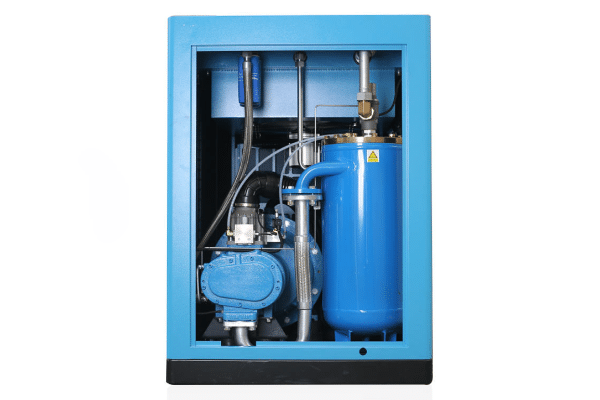
Working Principle of the Single-Stage Screw Compressor
- Air Inlet: Air is drawn into the compressor through an intake filter, which removes dust and other airborne particles.
- The Air-End: The filtered air enters the air-end, which is the heart of the compressor.
- Trapping the Air: As the rotors turn, they draw air into the spaces or “pockets” that form between the lobes of the male rotor and the flutes of the female rotor.
- The Single Stage of Compression: As the screws continue to rotate, the point of intermeshing moves along the length of the rotors. This entire compression process occurs in a single, continuous, smooth motion from the inlet to the outlet of the air-end.
- Discharge and Separation: The high-pressure mixture of air and oil is then discharged from the air-end into a separator tank. Here, the oil is removed from the air, cooled, filtered, and then recirculated back into the compressor.
Our Latest News
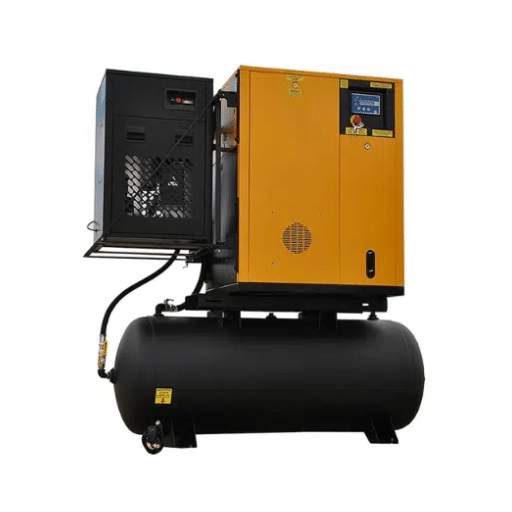
Screw Compressor Oil Carryover: Causes, Diagnostics, and Fixes
Read MoreScrew Compressor Oil Carryover: Causes, Diagnostics, and Fixes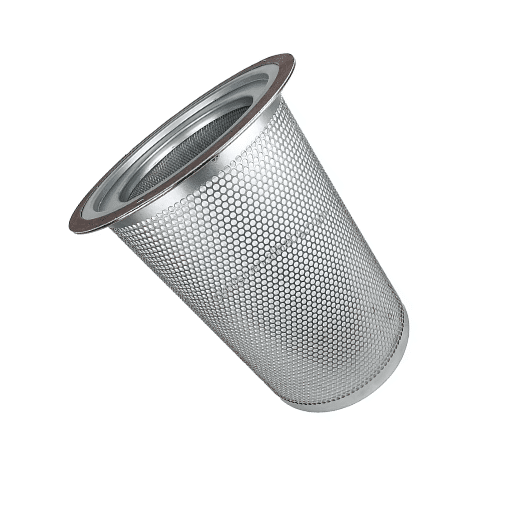
Screw Compressor Air Oil Separator: Replacement Guide
Read MoreScrew Compressor Air Oil Separator: Replacement Guide
Rotary Screw Compressor Oil: Types, ISO Grades, Intervals
Read MoreRotary Screw Compressor Oil: Types, ISO Grades, Intervals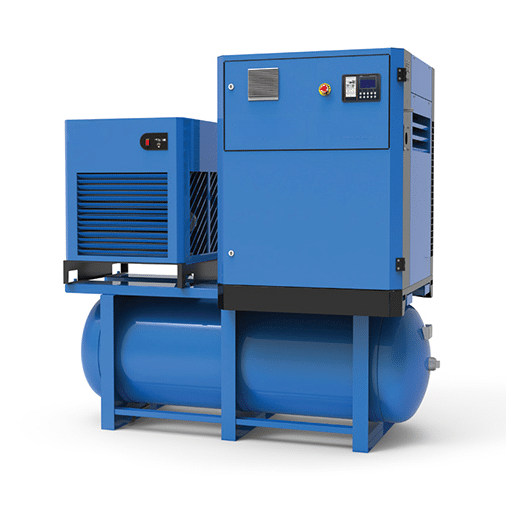
How Does an Oil-Injected Rotary Screw Compressor Work?
Read MoreHow Does an Oil-Injected Rotary Screw Compressor Work?Request a Quote for Your Single-Stage Screw Compressor
Stop overpaying for complex systems you don’t need. The Single-Stage Screw Compressor offers the perfect balance of performance, efficiency, and reliability for your critical applications. If you are interested in learning more about our single-phase rotary screw compressors or wish to discuss custom solutions, please reach out to our sales team. Let our experts help you configure the ideal system for your facility’s needs. Power your work with confidence.
Frequently Asked Questions (FAQs)
Thanks to advanced engineering, a Single-Stage Screw Compressor can deliver significant energy savings—up to 30% compared to older piston models—by optimizing output and reducing power consumption.
Yes, each Single-Stage Screw Compressor is designed for 100% duty cycle operation, meaning it can run continuously without overheating or performance loss.
Absolutely. You can customize your Single-Stage Screw Compressor with inverter drives (VSD), integrated air dryers, water or air cooling, and smart controllers for tailored optimization.
The Single-Stage Screw Compressor operates at low noise levels (typically 67–74 dB depending on the model), making it suitable for indoor installation and reducing workplace noise.
Our Single-Stage Screw Compressor comes in multiple models, ranging from 7.5 kW to 30 kW, with various flow rates and pressure settings to fit different process requirements.
Contact our sales team directly through the quote request link or call us for personalized assistance. We help with model selection, provide detailed specifications, and offer full technical support throughout the purchasing process.