
Air Compressor Maintenance Schedule for Factory Operations

A plastic extrusion plant in Indonesia skipped its quarterly oil change on a 75 HP screw compressor because production was too busy. Six weeks later, the airer seized during a peak order run. Downtime: 14 hours. Emergency air end replacement: 12,400. Lost production revenue:38,000. The oil change would have cost $280 and taken 45 minutes on a scheduled weekend.
Most factories treat compressor maintenance as an afterthought. The equipment runs in the background, the maintenance budget gets cut first when orders surge, and nobody questions whether a 200 service task could prevent a 40,000 failure. A reactive approach feels cheaper until it is not.
This guide provides a complete air compressor maintenance schedule for factory operations. You will find exact tasks for every interval from daily to annual, time estimates for labor planning, component replacement costs, and annual preventive maintenance budgets organized by compressor size. Every recommendation connects maintenance discipline to equipment longevity, energy efficiency, and factory uptime.
Want more information? Our complete guide on how to choose an air compressor for your factory covers the full selection framework from demand audit to total cost of ownership.
Why Preventive Maintenance Matters in Factories
The True Cost of Reactive Maintenance
Compressor maintenance costs around 5% to 10% of the compressor price every year for preventative measures. As a fearful reminder, the costs of buying new equipment are anything to prevent emergency labor, expedited parts, and lost opportunities, including would be three to ten times more. PM approaches have been shown to be as outstanding as they are effective when they are able to reduce any unplanned stoppages by a factor of 96% and more so if you consider that a factory that does have a planned and organized maintenance in place is nonetheless 42% closer to zero unplanned failures of compressors.
The math is simple. A 100 HP rotary screw compressor purchased for 25,000 should receive roughly 1,250 to 2,500 in scheduled maintenance each year. One unplanned bearing failure can cost 15,000 in emergency repairs plus 25,000 to 260,000 per hour in lost production, depending on your industry.
How Maintenance Neglect Destroys Energy Efficiency
A poorly maintained compressor wastes energy in ways that show up on your electricity bill before they show up as failures. Dirty intake filters increase energy consumption by 3% to 5%. Clogged separators force the motor to work harder. Worn unloaders extend blow-off periods. Air leaks in neglected distribution systems waste 20% of total compressed air capacity in the average factory.
If you already have a new and energy-saving system in your company, maintenance will be the one thing that will make sure that system does not lose that energy. For when the most effective power in the compressed air system is there without failure, it deteriorates in good time.
Daily Maintenance Tasks (5-10 Minutes)
Daily checks will help prevent small issues from materializing into costly faults. This should be assigned to the shift operator and required to sign-off.
| Task | What to Check | Acceptable Condition | Time |
|---|---|---|---|
| Oil level | Sight glass on oil-lubricated units | Between min and max marks with unit off | 1 min |
| Condensate drains | Receiver tank, dryer, filter traps | No standing water; drains open freely | 2 min |
| System pressure | Discharge gauge | Within normal operating range | 30 sec |
| Operating temperature | Discharge temperature display | Below manufacturer maximum | 30 sec |
| Air and oil leaks | Hoses, fittings, seals | No visible leaks or hissing | 2 min |
| Unusual noise or vibration | Motor, belts, airend casing | Normal operating sound only | 1 min |
| Safety devices | Emergency stop, relief valve, alarms | Functional indicators, no weeping | 1 min |
| Visual inspection | Exterior, surroundings, ventilation | Clean, unobstructed, no debris | 1 min |
Drain condensate first thing every morning. Water in the receiver tank causes internal corrosion and contaminates downstream equipment. In humid climates, drain twice daily. One minute of draining prevents a tank replacement that costs thousands.
Go to only one place – the room where your guy is standing. The compressor is located here; listen to it. An audible warning system will save the bearing or the belt or the valves, in which case the operator would hear the problem weeks before the breakdown of the latter. Instruct the operator to pay attention to any change of sound immediately, particularly vibration.
Weekly Maintenance Tasks (15-30 Minutes)
Weekly tasks go deeper than daily checks. Schedule these during a planned production break or at shift change.
| Task | What to Do | Time |
|---|---|---|
| Inspect air intake filters | Check for dust, clogging, damage; clean or replace if heavily soiled | 5 min |
| Clean cooling system | Remove dust and debris from coolers, radiators, fan blades | 5 min |
| Inspect belts and couplings | Check tension, wear, cracks, fraying; adjust or replace as needed | 5 min |
| Test safety and relief valves | Verify they open and reseal properly | 3 min |
| Check hoses and fittings | Inspect for cracks, leaks, loose joints | 3 min |
| Inspect electrical connections | Look for tightness, heat discoloration, corrosion | 3 min |
| Verify auto-drain function | Confirm automatic drain traps cycle properly | 2 min |
| Clean compressor exterior and surrounding area | Wipe down unit, remove dust and debris | 3 min |
Exposure of air filters to their applications demands doing this operation, for example, twice per week, while the ventilation is off. The reason is easy to not understand, as it is usually the already clogged filter that causes this huge loss. It forces one to continuously maintain the machines without any benefits in terms of productivity. This five-minute inspection almost eliminates the unwarranted compressors running for extra hours.
Monthly Maintenance Tasks (30-60 Minutes)

Monthly tasks require basic tools and some mechanical knowledge. Assign these to your maintenance technician.
| Task | What to Do | Indicator for Action | Time |
|---|---|---|---|
| Check oil condition | Inspect color, viscosity, contamination | Dark, foamy, or burnt-smelling oil needs changing | 5 min |
| Inspect or replace oil filter | Check for clogging; replace if dirty | Pressure drop above normal or visible contamination | 10 min |
| Inspect separator element | Check for saturation or oil carryover | Visible oil in air lines or excessive pressure drop | 5 min |
| Detailed leak inspection | Soapy water on joints and fittings | Bubbles indicate leaks requiring repair | 10 min |
| Verify dryer performance | Check dew point and cycling | Dew point outside acceptable range | 5 min |
| Deep clean cooler fins | Remove buildup from aftercooler and oil cooler | Blocked fins or elevated discharge temperature | 10 min |
| Check vibration isolation | Inspect mounting pads for wear | Excessive vibration or deteriorated pads | 5 min |
| Review run hours vs. service intervals | Log hours and compare to manufacturer schedule | Approaching oil change or filter replacement interval | 5 min |
Change the oil color every month. It is like a norm that fresh compressor oil comes in an amber or transparent color. It forms a dark hue when age oxidizes and pollutes the oil. Poorly generated foam on the oil is a sign of the introduction of water. A strong burning smell, on the other hand, links to heating. Under any of these problems, a man shall agree that the oil is ready for replacement.
Quarterly / Semi-Annual Maintenance (2-4 Hours)
The main beneficiaries of break services are quarterly ones. In relation to this preventive maintenance cost, not many of the benefits or costs can be achieved. Plan these for machine breakdowns or minimal production times.
| Task | Typical Interval | Estimated Cost | Time |
|---|---|---|---|
| Change compressor oil | Every 2,000 to 4,000 hours (synthetic); 500 to 1,000 hours (mineral) | 100−300 | 45 min |
| Replace oil filter | Always with oil change | 20−50 | 15 min |
| Replace air/oil separator element | Every 4,000 to 8,000 hours | 200−500 | 30 min |
| Grease motor bearings | Every 1,500 hours or per manufacturer | 10−20 | 20 min |
| Inspect inlet and unloader valves | Every 2,000 to 4,000 hours | $0 (labor only) | 30 min |
| Test shutdown systems and controls | Every quarter | $0 (labor only) | 20 min |
| Check motor alignment and coupling | Every 2,000 hours | $0 (labor only) | 30 min |
| Inspect and tighten all bolts | Every quarter | $0 (labor only) | 20 min |
| Conduct compressed air leak audit | Every quarter | 0ifin−house;0ifin−house;300-$500 if contracted | 30 min |
| Full electrical check | Every quarter | $0 (labor only) | 20 min |
Use synthetic oil for longer intervals. The use of synthetic oil offers better protection in heating units, while mineral oil diminishes under heat and stress. Consequently, in operation with extremely heavy duty, the advantages of synthetic oil turn out to be much cost saving in extending change periods and reducing the loading of the airend. Before operating the compressor, ensure you use the compressor oil with the viscosity grade found in the manufacturer’s cap.
The separator element is usually the most forgotten part because it is installed within the housing. A saturated separator results in an increased pressure drop, compels the motor to work even harder and allows oil carryover to the compressed air system. When compared to a nonwoven fabric filter, the average cost of replacing a coalescing filter cartridge is relatively much higher, within the range of $200 – $500. But if the separator is not working making the filtering element necessary, the expensive replacement might result into damaging the downstream equipment, and combined downsides might ruin production processes.
Annual Major Service (Full Day)
Annual maintenance is comprehensive. Plan a full day during your lowest-production period and involve a qualified technician.
| Task | Scope | Estimated Cost | Time |
|---|---|---|---|
| Complete system inspection | Airend, motor, controls, piping, safety systems | 500−1,500 (technician) | 2-3 hrs |
| Replace all filters (air, oil, separator) | Proactive replacement regardless of condition | 300−700 | 1 hr |
| Pressure vessel inspection | Internal and external receiver tank examination | 200−400 | 1 hr |
| Proactively replace belts, hoses, seals | Replace wear items before they fail | 150−400 | 1 hr |
| Service air dryer | Refrigerated: clean coils; desiccant: replace media | 100−600 | 30 min |
| Calibrate pressure gauges and sensors | Verify accuracy against calibrated reference | 100−300 | 30 min |
| Ultrasonic leak detection survey | Full distribution system audit | 0ifin−house;0ifin−house;500-$1,000 if contracted | 1 hr |
| Vibration analysis and motor alignment | Professional diagnostic testing | 300−600 | 1 hr |
| Review maintenance logs and plan next year | Trend analysis, budget planning, schedule updates | $0 | 30 min |
Want to schedule annual compressor service with certified technicians? Contact our service team for maintenance contracts tailored to your operating profile.
The Pressure Vessel You Forgot About
A chemical plant in India had never inspected its 500-gallon air receiver tank in 12 years. During an insurance audit, the inspector found internal corrosion, reducing wall thickness below the code minimum. The tank had to be replaced immediately: 5,800. Production halted for two days. Annual inspections would have caught the corrosion early and cost $200 per year. The plant now keeps inspection certificates on the wall.
Pressure vessels work under loads that are many times that of the rest of the pressure envelope and are subjected to some hazardous internal attacks, moisture, temperature cycles, as well as condensities that are acid generating. A casual look at the external condition does not always help detect corrosion. It is necessary to carry out periodic inspections of air receiver tanks in many jurisdictions. Even where it is not a legal requirement, it is advised for reasons of safety and insurance compliance.
If you want to choose between screw compressors and piston compressors, you can check out our guide about Screw vs Piston Compressor.
Maintenance Cost Breakdown by Compressor Size
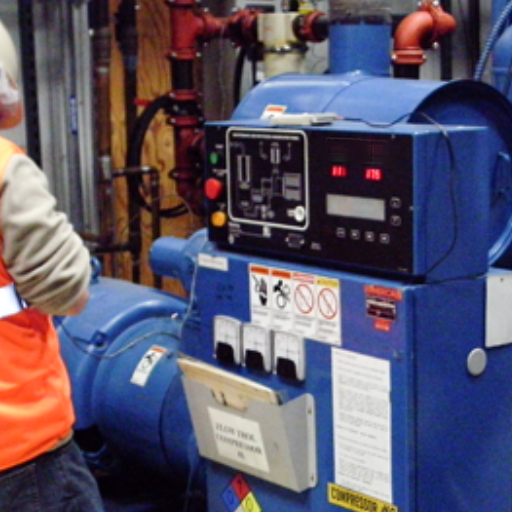
It is the practice that cost estimates in factories are done using numbers. The following table provides basic cost estimates of maintenance work for rotary screw compressors with oil-based lubrication under normal operating conditions.
| Compressor Size | Annual PM Cost (Parts) | Annual PM Cost (Labor) | Total Annual PM Cost | % of Original Value |
|---|---|---|---|---|
| 10 HP | 200−350 | 300−500 | 500−850 | 5-8% |
| 25 HP | 400−650 | 500−800 | 900−1,450 | 4-7% |
| 50 HP | 700−1,100 | 700−1,200 | 1,400−2,300 | 4-6% |
| 75 HP | 1,000−1,600 | 900−1,500 | 1,900−3,100 | 4-6% |
| 100 HP | 1,200−2,000 | 1,000−1,800 | 2,200−3,800 | 4-6% |
| 150 HP | 1,800−2,800 | 1,400−2,400 | 3,200−5,200 | 4-5% |
| 200 HP | 2,200−3,500 | 1,800−3,000 | 4,000−6,500 | 4-5% |
Assuming typical operation, use of synthetic oil, and OEM service intervals, should provide a good estimate of the costs required. For severe duty applications, expect to increase the charges in the range of 25%-50% for more frequent intervals and reduced wear cycles.
PM vs Reactive Repair: The Cost Comparison
| Cost Category | Planned PM (Annual) | Reactive Repair (One Incident) |
|---|---|---|
| 100 HP compressor oil change | $200 | $0 (not done) |
| Filter replacements | $150 | $0 (not done) |
| Separator replacement | $350 | $0 (not done) |
| Labor for scheduled service | $1,200 | $0 (not scheduled) |
| Annual PM total | $1,900 | — |
| Emergency airend replacement | — | 8,000−15,000 |
| Expedited parts and freight | — | 500−2,000 |
| Emergency technician callout | — | 800−1,500 |
| Lost production (12 hours at $15,000/hr) | — | $180,000 |
| Total cost | $1,900 | 189,300−198,500 |
The comparison is not close. One preventable failure costs more than a decade of scheduled maintenance. The question is not whether you can afford preventive maintenance. It is whether you can afford to skip it.
Adjusting Schedules for Operating Conditions
Severe Service: Dust, Humidity, and Heat
Factories in harsh environments must shorten maintenance intervals. The table below shows typical adjustments.
| Environmental Factor | Normal Interval | Severe Service Interval | Adjustment |
|---|---|---|---|
| Air intake filter check | Weekly | Daily or every 2 days | 2-3x more frequent |
| Air intake filter replacement | 1,000-2,000 hrs | 500-1,000 hrs | 2x more frequent |
| Oil change (synthetic) | 4,000 hrs | 2,000-3,000 hrs | 1.3-2x more frequent |
| Cooler cleaning | Weekly | Daily or every 2 days | 2-3x more frequent |
| Condensate draining | Daily | Twice daily | 2x more frequent |
| Separator replacement | 8,000 hrs | 4,000-6,000 hrs | 1.3-2x more frequent |
The extremes that guide the inventory are factories for the production of cement, foundries, wood processing factories, regions with high moisture content or humidity levels, and equipment placed at a height where the ambient temperature exceeds 95°F. If the temperature range in the compressor room reaches an average of more than 100°F, consider the necessity of additional air-conditioning or ventilation to do servicing of the equipment.
Oil-Free vs Oil-Lubricated Maintenance Differences
Compressors without oil require almost no maintenance in terms of oil change but create other tasks for operation. Tend to operate until the seals reach their limit of wear, usually every 2000-8000 hours, depending on the compressor model and air inlet temperature.
Clean intake filtration systems and dryers are even more crucial due to there being no oil which puts a harmful coating in some contaminating particles on the inner components of the unit’s air end. In dry compressors, the seals may reach their end shortly within the threshold period since the seals are sensitive to thermal expansion and therefore need to be closely monitored.
VSD Compressor Specifics
VSD compressors have additional maintenance considerations. The variable frequency drive requires periodic inspection of cooling fans and heat sinks. Control cable connections should be checked for looseness caused by vibration. Motor bearings may experience different wear patterns due to variable speed operation. Follow the drive manufacturer’s maintenance schedule in addition to the compressor manufacturer’s requirements.
Building a Maintenance Program That Sticks

Assign Clear Responsibility
Maintenance is of no help when it is not an accountable responsibility. Connect a designated operator or technician with every phase of the operation. Ensure that all compressors are fixed in a place where its user operates. Close all maintenance checks with how soon they were done and how well they were done. Using the tools of digital maintenance, constant reminders and trackers are released. However, when there are the following procedures, a paper checklist in the box has been the most effective.
Maintain a Spare Parts Inventory
Besides, critical spare parts need to be available at all times; this includes but is not limited to intake filters, oil filters, separator elements, belts, and compressor oil. For example, keeping a $150 filter in the storeroom can save the company from a weekend shutdown as the supplier of the filter might not be working. Monitor inventory and reorder to restock at the reorder levels. In the case of multiple compressors, it is recommended to have compatible sizes of filters in stock, if available, in order to avoid stocking up with different filters.
Contractor vs In-House Service
Normally, every day and on a weekly basis, it is the employees’ job to perform these tasks. If you have competent personnel, it is possible to conduct the radial oil and filter change, for instance, on a quarterly basis or on a monthly basis. But you will still need the help of a qualified technician to service the equipment during a major failure or a pressure vessel testing. Very often plants operate as a combination: daily operations are handled by the company’s personnel, whereas maintenance services and activities are contracted out. This is a good solution to control costs and to have access to sufficient competent labour.
The Filter That Cost $4,200
A metal stamping factory in Brazil ran its 100 HP compressor with a clogged intake filter for three months because “it still worked.” The restricted airflow caused the compressor to run 18% longer to meet demand. Extra electricity cost over three months: 4,200. A new filter costs 85. The maintenance manager now checks filters weekly and has the electricity bill to prove why.
This kind of history repeats itself across the globe and not only in manufacturing plants. Once you remove the filter, it appears fine from the outside. Even after it is restricted, the compressor continues to work. Every single hour wasted on the equipment led to a loss of millions in a year.
Frequently Asked Questions
How often should air compressors be serviced?
Well, as for industrial air compressors, daily diffusion is necessary (5-10 minute activity) and a yearly study is important for doing proper cleaning (15-30 minute activity). Then the monthly service extends to 30-60 minutes, the quarter service – 2-4 hours, and an annual overhaul service – a full day. Synthetic oil is generally changed every 2000 to 4000 hours of running period. Every time, a user must follow the manufacturer’s working guide with adjustment done for the working environment.
What maintenance does a compressor need?
Routine maintenance involves essentials such as oil level checks, condensate emptying, air filter checks and replacements, compressor oil changes, oil filters and separator elements replacements, belts and couplings adjustment, coolers cleaning, safety devices functioning tests, leakage verification and system pressure and temperature adjustment. In addition to the above, a quarter-time service would include pressure vessel inspection, sensor calibration and vibration analysis.
How much does air compressor maintenance cost per year?
The annual maintenance costs of this preventive maintenance cost between 4% to 8% of the total cost of the air compressor. On average, the maintenance of a 50 HP condenser will cost between 1,400 and 2,300 dollars. Maintaining a 100 HP condenser will cost 2,200 to 3,800 dollars per year. These prices are raised to 25% to 50% in severe service circumstances.
How often should you change compressor oil?
In oil-lubricated rotary screw compressors, the synthetic oil must be replaced every 2,000-4,000 hours of operation, and the mineral oil should be replaced every 500-1000 hours. This interval could be a lot less for any oils in case of harsh working environments like such as high temperatures, high dust and water conditions. Always do as per the instructions found in the user’s manual.
Conclusion
A structured preventive maintenance program costs 4% to 8% of your compressor’s value annually. One preventable failure costs more than a decade of scheduled service. The factories that treat compressed air systems as managed assets rather than background equipment enjoy lower energy bills, fewer emergencies, and equipment that runs for 20 years instead of 8.
Start with the daily checklist this week. Assign responsibility, require sign-offs, and drain that condensate every morning. Add weekly and monthly tasks next. Schedule your first quarterly service before the next busy production period. The 10 minutes you spend each morning will save you from the 14-hour shutdown that nobody saw coming.
For any assistance in the sphere of improving maintenance practices, purchasing authentic spares, or drafting a preventive maintenance plan tailored to your period of operation, contact Shandong Loyal Machinery. Our support department guarantees that authentic spare parts, repair kits, and detailed advisories will enable the air compressors to run effectively and efficiently throughout the year.