
How to Choose an Air Compressor for Your Factory: A Complete Buyer’s Guide
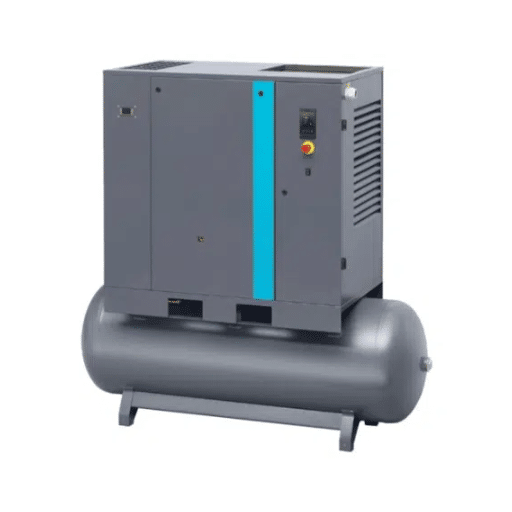
When a 30 HP piston air compressor was purchased by the production manager in a large local packaging plant in the suburbs of Jakarta, the price seemed right, and the quality seemed reasonable. A good choice, as he had thought. In six months, however, the system was not up to the mark when they tried to run all of the three pneumatic staplers over a full shift. There was a reduction in the output of the factory, and as a result, the factory lost 34,000 in productive time. In addition, the factory purchased a new rotary screw compressor, which uses oil in the synthesis, for an additional 18,000. A $52,000 expensive mistake was attributed to the beautifully voiced reasoning in favor of the wrong option.
If you have ever handled the purchase of some equipment in a factory, you know that buying an air compressor is not equivalent to purchasing a simple product. It is a strategically oriented choice impacting energy bills, operational hours, maintenance and safety requirements comprehension for the subsequent 10 years. Do it right and your compressed air system may be considered as a support for uninterrupted work. If, however, the capacity is wrong, count on most of the time it’s limited, unexpected outages, and growth of operating expense.
In this article, with the help of some very powerful metrics, we will explain how to choose the correct air compressor size for a specific institution. This includes how to conduct an air audit to determine the realistic air demand, what data in compressed air catalogs to focus on, the technology that can be mixed, how much the equipment and system maintenance costs, and so on. The chapter concludes with a ready decision algorithm and a simple manual for the next spell of purchases.
Need help sizing a system for your specific production line? Contact our team for a customized compressed air assessment.
How Factory Compressed Air Demand Is Different

Most of the recommendations for selecting a device and offering a commodity to the users a process to the final will be suitable for auto services, small workshops and construction teams. When it comes to a website in the use case of a production floor with fifteen pneumatic tools that may all be running at the same time, where a few seconds of downtime is enough to cost thousands of dollars and where the term of work of the compressor is ten to fifteen years.
Indeed, companies tend to use air compressors in such an intense manner that the systems have to work continually at a designed capacity. That is to say, it is impractical to use a mechanic who repaired motorcycles only during the weekend for the purposes of manufacturing a product in a factory. The compression that the unit is designed for can reach the limits if the latter configuration is altered without adjustment to the compressor used for compressed air. And transcending everything else, the ultimate one will be the use of the methodology of choosing the air compressor only based just on the horsepower without any technical consideration regarding the capacity in cubic feet
And the consequences of making a mistake in this situation are much more than just the additional costs. For example, an undersized compressor will always be operating under maximum capacity which in turn increases the rate of wear and energy consumption. In contrast, an oversized compressor that switches off and on too frequently creates inefficiency allegations and pressure fluctuations that make it difficult for the tools to function properly. Both circumstances increase the need for maintenance and decrease the lifespan of the equipment.
Looking for energy-saving options? Our guide on how to reduce air compressor energy costs covers VSD technology, leak detection, and system optimization strategies.
Step 1: Audit Your Factory’s Air Consumption
The most important part in any right compressor decision is knowledge of the specific air consumption in the enterprise. Let us give an example by starting with production planning.
Need to design an Air compressor system for your production line? Check out our article on Compressed Air System Design for Production Lines.
Inventory Every Pneumatic Tool and Machine
Identify the full list of all the compressed air tools used in the company. And individually assign each, identifying three quantities: the pressure in PSI, the air flow rate in CFM, and whether the tool will operate continuously or intermittently. Do not assume and look at marking appliances or the company supplier’s data and instructions.
Typical factory machinery comprises these types of tools such as air grinders, electric wrenches, electric stapling guns, spray painting guns, computer-controlled machines, robot arms and unitizing equipment, etc., including all these. The fullness of this list is directly proportional to the sizing density.
Calculate Simultaneous vs Peak Demand
It is also important to consider that operations are not all at the same time. A very common error is adding up all the CFM of all the equipment and getting a compressor that will generate that total. This will build a very fat patient, so surgical attention will be needed when it is time to bring the operation to its normal condition.
Rather, look at your manufacturing schedule. And which is the busiest shift to calculate the maximum number of tools running concurrently? What is the greatest consumption at the same time? If that is the demand, consider that specific figure notting – other than the wrong understanding or how germane the full demand is, for the appropriate sizing.
The 30 Percent Rule: Building in Margin for Growth
While it is recommended that the designer simulate the simultaneous operation of tools in order to determine the real concurrent requirement, it is suggested that at least a 30% increase be added. This percentage is justified by considering that in addition to the present demands, the demand is most likely to increase with time due to the following reasons: expansion in production, escape air leakage and consumption of the compressor itself increase.
A compressor that operates at 70% of its capacity has room to breathe. One that runs at 95% of capacity has none.
Worked Example: Sizing for a 15-Tool Metal Fabrication Shop
The inventory shows that 15 pneumatic tools work on a two-shift basis at one of the metal fabrication plants in Vietnam. However, in an actual sense, at any given time, there will not be more than 12 tools in use. The highest demand can be utilized within 12 tools, amounting to 185 CFM. With that, the required air compressor is now set at 240 CFM according to users, adding a 30% for growth. The 250 CFM single-phase electric screw-type rotary compressor of 37 KW had been installed. Two years later, they added a plasma cutter and still had capacity to spare.
Want a simpler way to estimate your needs? See our detailed guide on what size air compressor you need for different workshop setups.
Step 2: Understand the Key Specifications
Three fundamental measurements influence the choice of a compressor: CFM, PSI and duty cycle. Not to say that tank size and motor power do not matter at all, but they are just a part of what those previously mentioned factors do.
CFM (Airflow): The Number That Matters Most
CFM measures the volume of air in a compressor’s product. The number stands as the main point in determining whether your tools have enough air to do their respective work.
Suppose that you will experience a simultaneous demand of 200 CFM, but the compressor can only produce no more than 150 CFM. At its lowest points, the system will offer maximum pressure, but when it is called upon, it is thinner and lower with no immediate workers’ tools. The operation process gets interrupted and slowly progresses. The compressor then runs continuously, as it overheats.
Always go for dimensions based on the CFM that is needed, not on HP. A 50 HP compressor from one manufacturer may give 220 CFM. Another 50 HP model may give 180 CFM only due to differences in airend design and efficiency.
PSI (Pressure): Matching Your Highest-Demand Tool
Imagine a person breaking down a word (complex) into simple words to a primary school child. Most impacted devices, like Vacuum Cleaners and blowers, use about 90 – 120 PSI. Yet again, we have applications such as high-pressure pneumatic painting and also perhaps some cold metal forming operations that might call for 150 PSI or much higher.
Design the system for the tool carrying the maximum pressure in your inventory and add 10 PSI to this for the loss effects of filters, dryers, and piping.
Horsepower: Why It Should Not Drive Your Decision
Horsepower is a measure of the capacity of a motor as opposed to the delivery of airflow, and it is important when one is to calculate what voltage supply they have. Still, it is a very poor indication of the performance when sizing a compressed air system with one.
Two compressors of the same horsepower may have different CFM outputs. Always focus on CFM and PSI first. The rest like horsepower, should always come after such issues.
If you are unfamiliar with the concepts of CFM, PSI, and Horsepower, you can read our article on CFM, PSI, and Horsepower Explained.
Tank Size vs Flow Rate: Clearing Up the Confusion
Placement of the air tank is known not to create air flow. Rather, the tank holds air to even out peaks of demand and reduce the use of the compressor. The size of a tank is important but it cannot help if the compressor capacity is insufficient.
An undersized tank in relation to the compressor is bound to run out quickly, thus forcing the compressor to run without any breaks. Ideally, the tank should be able to hold an output of at least a gallon for every foot per cubic minute (CFM) at which the compressor performs. A 200- gallon tank or above is suitable for every 200 CFM compressor easily.
Duty Cycle: Why Factories Need 100% Continuous Duty
Duty cycles are a determining factor in the operation of compressors. This refers to the usage limit in terms of the risks of mechanical damage from overheating. Duty rates in reciprocating compressors, for example, range between 50% and 75%. They need cessation in order to cool down. When it comes to rotatory compressors, they are known to be 100% continuous duty-rated equipment. You cannot take a plant that works on a three-shift basis and then offer nothing like a continuous duty to it. It is important to them.
Step 3: Choose the Right Compressor Technology
Choosing a technology for industrial purposes usually boils down to a piston or a rotary screw. There are, of course, some other variants but their adoption is always driven by peculiarities.
Rotary Screw Compressors: The Factory Standard
In rotary screw technology, the principle of two contra-rotating screws is put to practice. There is no question that this is the number one choice in the industrial scenario and there is a host of reasons for that conclusion. Unlike other systems that have to take breaks to cool, screw compressors are engineered for continuous operation. They allow smooth and steady operation without any jerks or pressure waves. In comparison to conventional reciprocating compressors, they are less noisy. Yet another advantage is the low frequency of their maintenance requirements.
A healthy percentage of screw compressors come with oil injection into the compression unit for cooling, lubrication, and sealing purposes. These systems work efficiently and cost effectively in most purposes. For oil-free applications, there are also oil-free rotary screw compressors available, but they require a high first investment.
For small to medium factories just starting with screw technology, our 5-10 HP screw compressor buyer’s guide explains how to match horsepower and CFM to real workshop needs.
Piston (Reciprocating) Compressors: When They Still Make Sense
Piston compressors are able to use a piston that is driven by a crankshaft to compress air in cycles. They are generally affordable as well as capable of achieving high pressure levels. But since they have not been designed to be in action always, they give out after some time. The reason why piston compressors are incapable of continuous service is that the heat, vibrations, and wear caused by piston reciprocating action are too much, especially with the huge factory loads.
Even so, there are cases when using piston compressors has some advantages to the user such as cycling which is highly restrictive, small interfaces for operations where one can only use one or two tools at a time or have pressure higher than 175 PSI. In such cases, however, piston compressors are not ideal as they are not suited for continuous operation due to the overheating of the compressor.
Centrifugal and Other Technologies: Large-Scale Applications
Centrifugal compressors use a type of impeller that rotates at high speeds and creates a flow of air. They are particularly effective for huge applications with output powers greater than 500 HP and can be found in industries such as petrochemicals or electricity generation. In most plants, they are huge and expensive.
Decision Matrix: Which Technology Fits Your Operation?
| Factor | Rotary Screw | Piston | Centrifugal |
|---|---|---|---|
| Best for | Continuous factory production | Intermittent use, small shops | Very large-scale plants |
| Duty cycle | 100% continuous | 50-75% intermittent | 100% continuous |
| Pressure range | 100-175 PSI typical | Up to 5,000 PSI possible | 50-150 PSI typical |
| Maintenance frequency | Lower | Higher | Specialized |
| Noise level | Lower | Higher | Moderate |
| Initial cost | Higher | Lower | Highest |
| Energy efficiency | Higher under load | Lower under continuous use | High at full load |
If you want to choose between screw compressors and piston compressors, you can check out our guide about Screw vs Piston Compressor.
Step 4: Fixed Speed vs Variable Speed Drive (VSD)
This is one of the most important aspects of compressor selection from a financial perspective. But at the same time it is one of the most confusing among engineers.
How to Analyze Your Demand Profile
Any fixed-speed compressor is always running at the full speed of the motor during its operation. In the case of loading and unloading, it is the pressure that changes but never the speed of the electric motor. On a variable speed drive or VSD compressor, the speed of the motor is adjusted to meet the air that is demanded at that time. The motor may slow down as the demand diminishes, or it may speed up as the demand increases.
What is important is having to answer whether the factory operation is likely to have a greater amount of demand at some times and a lower amount of demand at some other times. Should you be using the same number of tools in every shift, resetting them after use and setting them again every single time of every working day, then a fixed speed compressor will be appropriate. If demand increases between different shifts or different production batches or season differences, then most often a VSD compressor would be more economical.
When VSD Pays for Itself: The Break-Even Framework
Centrifugal chillers initially entail a greater cost, especially with most of the installers. Ordinarily, this can increase to a value of between 20% to 40% over the cost of the district cooling system. These savings will come from the cost of electricity. And even if a fixed-speed compressor is run at a reduced load, it continues to consume virtually full power during each loading cycle. In contrast, a VSD compressor at partial load and maximum speed lowers the motor’s output.
The break-even analysis will be specific to the electric tariffs charged, the number of operational hours a year, and the degree of partial loading. Many of the end users inside of the plant can recover the cost of implementing the VSD in the facility within 18 to 36 months.
When Fixed Speed Is the Smarter Choice
A constant engine speed is more beneficial when the plant’s use is stable, when the availability of initial capital is limited, or when the compressor is intended to serve as a standby unit and operate only during the periods of peak loads. Likewise, operation at a fixed speed is recommended for companies with moderate air consumption and single-shift working, although the need for VSD would show that the energy cost is exceedingly high.
If you want to learn more about the difference between VSD and Fixed Speed Compressor, please click on our article on VSD vs Fixed Speed Compressor to view it.
Worked Example: VSD ROI for a Two-Shift Factory
An active fixed-speed compressor, having 75 HP, was used in a textile facility located in Bangladesh over two shifts. For the second shift, however, only half the compressed air facilities were activated then. Nevertheless, the compressor still operated at full load and unloaded. The energy consumption fell by 31% on the introduction of the VSD model in the very first year. It took 22 months to pay back the premium for the VSD. The factory made an electricity saving of $18,400 only five years.
Interested in energy-saving compressor options? Learn more about how VSD technology reduces industrial energy costs.
Step 5: Oil-Free vs Oil-Lubricated

The basis of a choice of the air carrier unit is determined by the opportunity of the air carrier unit to be used without oil, among other things and not by a certain manufacturer.
ISO 8573-1 Air Quality Classes Explained
According to the ISO 8573-1 standard, there are categories for air quality in terms of impurities, such as moisture, oil, and solids. Class 0 restrictions are the most stringent as they prescribe that no oil shall be carried over. The limit for Class 1 is extremely low. Classes 2 through 9 tell subsequent limits to conform to successively less stringent limits. In most cases of Class 2 or Class 3 air quality is sufficient in most aeration systems.
Industries That Require Oil-Free Air
There are also industries such as the food and beverage processing sector and pharmaceuticals, and sometimes even healthcare supplies. Industries like medical equipment, the manufacture of electronic boards and some forms of painting are other examples where air quality, which is free from oil, is a requirement. Such manufacturing sectors are too sensitive to attain standards because even the tiniest portion of oil in the air can cause damage to any of the products, affect the quality of the produced materials and the equipment or even several products within a factory. Assuming that your plant belongs to the Afghan types of groups, an oil-less air compressor is not a luxury.
When Oil-Lubricated Systems With Proper Filtration Suffice
It is necessary to use oil-lubricated institutions for production purposes in the majority of enterprises, e.g., metal workshops, vehicle parts assembling workshops, repair and building companies, window workshops, etc., since such compressors prove to be efficient, provided there is a supply of dry and filter cereals. It should be mentioned here that the oil plays an essential role in an oil-injected screw compressor in terms of performing both functions, cooling and sealing. And, with the help of Advanced air treatment systems, the content in the air going out of the compressor can be kept far below the limits required for purity class 2.
Not sure how to choose between Oil-Free and Oil-Lubricated compressors? Please click to view our article on Oil-Free vs Oil-Lubricated.
Cost Difference and Long-Term Considerations
In comparison, oil-free compressors tend to be more costly to include in an initial investment, typically around 30 to 60% more expensive than the oil lubricated type of compressors that they are corresponding to. They also typically tend to have worn blocks or airends depending on the length of usage of their operation because air compressors of this kind do not employ piston rings, and therefore do not require any lubricants or coolants injected in the air. Nonetheless, unless your process does not condone the use of oil-containing compressed air, the incremental outlay and additional maintenance entailed by oil-free compressors are generally avoided.
For automotive paint shops and body repair facilities where air quality directly affects finish quality, see our guide on air compressor solutions for the automotive industry.
Step 6: Plan Your Complete Compressed Air System
The compressor is only one component of a reliable compressed air system. Neglecting the rest of the system is a common and expensive mistake.
Air Receiver Tank Sizing
It is necessary to provide a receiver tank for storing compressed fluid, for minimizing the effects of pressure variations and for assisting the compressor in cycling efficiently. The recommended size of the tanks is at least one gallon per CFM of compression capacity. For factories with high production rates involving tool operations, extra tanks would help in maintaining the balance. It is, however, advised that the tank be installed y with the compressor but upgradient of dryers and filters (i.e., allowing condensation to take place before air treatment).
Dryer and Filter Selection
It is undeniably true that the atmosphere encompasses humidity. This water is concentrated after compression which subjects the instruments to erosion, contaminates products and also aggravates the formation acids on the piping. A compressed air dryer, having wetted air limited to a minimum, helps to eliminate the condensed water in compressed air. If a very thoughtful compressed air circuit is designed, a heatless desiccant dryer removes any remaining humidity. Place coalescing filters after the dryer to eliminate oil aerosols and particulate matter.
Piping and Distribution Basics
To promote energy efficiency in pneumatic systems, the piping network is an important consideration. The tank provides the storage capacity for compressed air that is then conveyed to various end-use points through the pipe system. Properly size the pipes to prevent leakage of the distributed air. It is necessary to account for the pressure drop when laying out the distribution arrangements. This will reserve 1 PSI of pressure rise or fall over 100 feet of piping. Distribution networks of the type of loop which also allow access from both sides to any utility, are relatively superior to distribution networks of the dead-end type.
Pressure Drop: The Hidden Efficiency Killer
Pressure drop entails a decrease in pressure level experienced between the periphery of the compressor and the machine that is utilized. It is present in piping, elbows, filters, dryers, and flexible hoses. Just a 10 PSI drop in pressure can affect the work of the instrument and requires increasing the pressure in the compressor, losing energy. For every 1 unnecessary bar of pressure, there is a corresponding increase in 7% of the energy costs.
Installation Requirements Checklist
Check the preparedness of the area for the compressor that will be brought. Ensure that power provided is enough. It is necessary to have a system in place to change the environment so that the heat coming from the unit is cooled. Construction of a reinforced concrete platform that is even and non-jarring for the equipment to be mounted on. Give space on all sides of the equipment when planning for operation and maintenance works. Also, ensure that the floor is able to support the weight of the equipment, especially those with in-built desiccant driers and air storage tanks.
For remote job sites or temporary factory installations where permanent foundations are impractical, a skid-mounted compressor system offers a pre-assembled, rapid-deployment alternative.
Step 7: Evaluate Total Cost of Ownership
The initial outlay in purchasing a compressor is very affordable for a large percentage of users as compared to the total amount that they are prepared to spend over the its life span. Full understanding of the cost structure is crucial for intending to make rational decisions.
Upfront Purchase Price: Usually Only 15% of Lifetime Cost
The machine typically constitutes about 10 to 15 % of the fully loaded cost over a ten-year life of the installed unit for most industrial single-machine screw compressors.
Energy Costs: The 69% Factor
Statistical reports concerning energy conversion in compressors indicate that one should allocate and budget around 69% to 75% of total compressors’ operating/lifecycle costs to energy consumption. Compressed air systems take up about 10% of the total electricity consumption of the industry worldwide. There are industries that even have 30 to 40% of the factory’s electricity bill being consumed by compressed air systems.
In case of a 100 HP compressor that is working 6,000 hours a year, there is a potential of over $50,000 in electricity that would be expended. The distinction between an efficient and an inefficient system is not a quantitative one but a qualitative one.
Maintenance and Spare Parts
Often, the cost of maintenance accounted for a majority of the lifecycle expenses, ranging from 5% to 10%. The rotary screw compressors demand frequent oil change, air filter and cooler inspection with the replacement of lubricant filters. These costs should be put in the cost estimates since the first day. Moreover, the serviceability of the compressor elements is rather an important factor. The risk of downtime owing to the fact that spare parts for the compressor are of a proprietary nature and damage components in the compressed air system may require a long time of lead time during which the compensation of the anticipated savings does not arise.
Downtime Risk and Production Loss
Unexpected halts to company operations pose an expensive problem for any profit-making organization. It would seem that any Downtime is easy enough to avoid with a budget, particularly when one considers the fact that other losses, such as recruiting, repair costs, job stoppage and possible customer turnover, are always in the sequence chain. Rather, on the other hand, according to economics, providing a quality product and showing competence in production is highly recommended and should not be perceived as luxurious.
To choose the most affordable Air compressor for your plant, please check out our article on Factory Air Compressor Pricing Guide.
5-Year TCO Comparison Table
| Cost Category | Fixed-Speed Screw | VSD Screw | Notes |
|---|---|---|---|
| Initial investment | $25,000 | $33,000 | VSD premium ~32% |
| Annual energy (6,000 hrs) | $42,000 | $29,400 | VSD saves ~30% |
| 5-year energy total | $210,000 | $147,000 | |
| Annual maintenance | $2,500 | $2,800 | VSD slightly higher |
| 5-year maintenance | $12,500 | $14,000 | |
| 5-year TCO | $247,500 | $194,000 | VSD saves $53,500 |
Figures are illustrative based on a 75 HP system at $0.12/kWh. Actual costs vary by region and application.
Step 8: Build Maintenance and Support Into Your Decision

The majority of buyers tend to trivialize the issue of maintenance after purchase and this is the wrong thinking. The extent and expense of any repairs that may be required on a compressor should be one of the reasons for selecting any compressor unit.
You can choose a Portable Air Compressor or Stationary Air Compressor depending on your needs. Please see our article on Portable vs Stationary Air Compressor.
Service Interval Comparison by Compressor Type
Such compressors may work for a number of hours, say 2000-4000 hours before change of oil is required; such time scale is applicable to the replacement of oil filter, air filter, and air oil separator. Then perhaps, Airend may need to be overhauled after the exploitation of 30000 to 60000 hours of the equipment. More maintenance work is done on piston compressors, that is, valve checking, ring change, and bearing grease on a shorter operating cycle. And where maintenance begins, an analysis of the mode and extent of activities to be conducted shall be considered. In the course of 10 years, the maintenance cost gap is high.
Spare Parts Availability and Lead Times
Some important questions that must be asked to any supplier before making any commitment from their end are whether they will be able to provide with spare parts counting other things. These might include which parts are considered fast-moving. For example, how long will an air filter, an air oil separator, or an airend rebuild kit take to be delivered? Can one easily get the commodities needed locally or they have to be imported from another country? A machine waiting for a part for a period of three weeks will not work economically.
Local Technical Support vs Remote Diagnostics
Modern compressors come equipped with smart functionalities like remote monitoring and alerts. Such systems are obviously of great use; they cannot totally get rid of the need for skilled service personnel. Check if the service provider has coverage in the area of your operation and this might be more cherished among international buyers.
What are the requirements to meet when installing an air compressor? Please learn through our article on Air Compressor Installation Requirements for Factories.
What to Ask Suppliers Before You Buy
- What is the rated service life of the airend?
- What does the standard warranty cover, and for how long?
- What is the lead time for common spare parts?
- Do you provide installation supervision or commissioning support?
- What is the typical response time for technical support inquiries?
- Can you provide references from factories in a similar industry and climate?
Want to set up a maintenance schedule for your Air compressor? Check out our article on Air Compressor Maintenance Schedule.
Frequently Asked Questions
What size air compressor do I need for my factory?
Find the appropriate compressor size by calculating the total CFM required for all the tools that workstream-wise on a particular time during a day, that is the worst scenario, and adding another 30% margin to this figure for future expansion and loss of air. Pressure must be such that every tool in stock operates at the highest PSI and a further 10 PSI should be added to accommodate the frictional pressure loss in the distribution system.
How much does a factory air compressor cost?
20 to 30 HP compressor systems for small shops start from $8,000 and rarely cost more than $18,000 with basic installation. Mid-range systems of 50 to 100 HP cost $20,000 – $50,000. Much larger industrial systems, i.e., 150 HP, can cost somewhere in excess of $100,000. Remembering that the capital cost is only about 10% – 15% of the 10 year total cost of ownership.
How much electricity does a factory compressor use?
A 100 HP compressor working 6,000 hours generates around 450,000 kWh per year. The cost of electricity generation at $0.12 per kWh is $54,000 a year. In many industries, the total energy use of 10% to 30% of the plant’s electricity is attributed to the compressed air.
How long does an industrial air compressor last?
An average rotary compressor in good condition can function for more or less 40,000 to 60,000 hours worth of home usage before an overhaul of the air-end is needed. At an average of 6,000 operational hours per annum, such compressors may be expected to render seven to ten years of trouble-free operation. Simple block replacement and frequent servicing may enhance the life expectancy of the machine up to 15 years or more.
Should I buy one large compressor or multiple smaller units?
When it comes to critical factory functions, usually, the best option is a multi-unit configuration with an extra compressor on standby. In case of failure in one of the units, the facility is still able to operate at a reasonable degree. Additionally, numerous small compressors are less likely to experience power losses while coping with varying demands compared to when the unit is big and is only switched on and off in periods interval.
Conclusion
When sourcing compressed air for your factory, the practice is not so simple as to just “buy” a product. It is a decision on the system that would influence your electricity bill, availability of production, and labor used for maintenance for the next ten years. The correct commencement would be an audit, an effective study of technology and performance characteristics and then an analysis of which components of the acquired compressor turn out to be costs and which are benefits in the form of downtime risk, maintenance and energy.
As we said earlier, factories with an exemplary record have three characteristics in common. They don’t align plant operations to their artificial gearing production numbers. They don’t have a myopic focus on first cost. They do think about the supply chain not only in terms of the equipment needed but also of how the equipment is used and paid for across its entire life span.
If you intend to work on a new compressed air plant or you are looking to overhaul an existing one, then you should calculate your roi from the features listed above. Please, work through each of the steps listed above with your current production data. In the event that you require engineering assistance in order to tailor a system to your application, then we recommend that you reach out to us. We are able to assist you in designing an appropriate and economic compressed air system, including selecting and dimensioning the right equipment that is needed for your factory.
Contact Shandong Loyal Machinery for a customized compressed air system assessment