
Pressure Band Optimization for Fixed Speed Compressors: Cut-In, Cut-Out, and Energy Savings
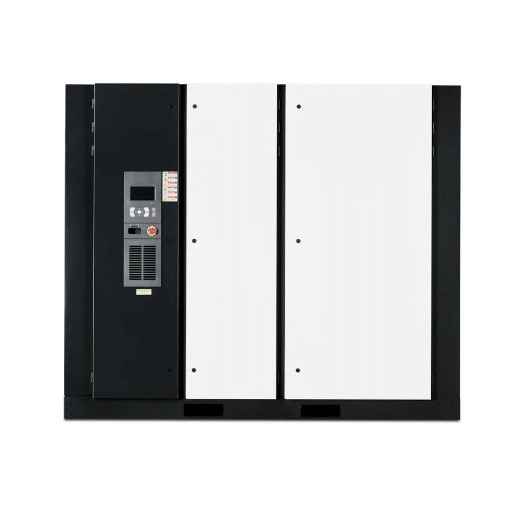
Your fixed speed compressor is set to 125 PSIG cut-out and 115 PSIG cut-in. That 10 PSI band means your motor starts 20 times per hour. Widen the band to 20 PSI and your starts drop to 10 per hour. But widen it too much and your pneumatic tools lose torque at the bottom of the cycle.
Most plants set pressure bands by factory default or guesswork. They do not understand the trade-off between pressure stability, cycling wear, and energy cost. A 10 PSI differential might be perfect for one application and destructive for another. The difference is not luck. It is math.
This guide gives you a compressor pressure band optimization framework built specifically for fixed speed units. You will learn how pressure bands control cycling frequency, why every PSI of discharge pressure costs money, how to calculate the ideal band width for your system, and how to adjust your pressure switch correctly. You will also see how receiver tank size and pressure band width work together, and when a narrow band protects your tools while a wide band protects your motor.
Need the full system picture? Our complete fixed speed air compressor guide covers selection, sizing, applications, and total cost of ownership.
What Is a Pressure Band and Why Does It Matter for Fixed Speed Compressors

A pressure band is the gap between your compressor’s cut-in pressure and its cut-out pressure. Cut-in is the lower pressure limit at which the compressor loads and begins pumping air. Cut-out is the upper pressure limit where the compressor unloads and stops pumping while the motor continues to spin.
The difference between them is the pressure differential, also called the pressure band width.
For a fixed speed compressor, this band is everything. The motor runs at a constant RPM. It cannot throttle output. When system pressure hits the cut-out setpoint, the inlet valve closes and the compressor unloads.
When pressure falls to the cut-in setpoint, the valve opens and the compressor loads again. There is no middle ground. Every trip across that band is one complete load/unload cycle, and every cycle is one motor start event.
The width of your pressure band directly determines how often that happens. A narrow 5 PSI band on a small tank might produce a cycle every 60 seconds. A wide 20 PSI band on adequate storage might stretch that to 4 minutes. The motor, contactor, and bearings experience the same stress on every cycle. Fewer cycles mean longer component life.
But the band also determines pressure stability at your point of use. A wide band means your sander or spray gun sees pressure swing from 105 PSIG to 125 PSIG. For some tools, that is irrelevant. For others, it changes the paint pattern or fastening torque. The goal of pressure band optimization is to find the minimum width that still protects your motor from excessive cycling.
Want to understand how load/unload control works in detail? See our article on how fixed speed load/unload control works for the full technical breakdown of inlet valves, pressure switches, and control sequences.
The Energy Cost of Every PSI: Why Lower Pressure Saves Money
Compressed air is one of the most expensive utilities in a factory. It consumes roughly 10 percent of all industrial energy use. A significant portion of that cost is pressure you do not actually need.
The Compressed Air Challenge, a U.S. Department of Energy initiative, estimates that for every 2 PSIG reduction in discharge pressure, energy consumption drops by approximately 1 percent.
Atlas Copco research puts the figure closer to 7 percent savings per 1 bar, or 14.5 PSIG, of pressure reduction. Purdue University’s analysis of real compressor systems found an average of 7.6 percent energy savings per 14.5 PSIG reduction.
The numbers vary by study, but the direction is unanimous: lower pressure costs less.
There is a second effect called artificial demand. When you over-pressurize a system, air leaks flow faster, open orifices consume more mass, and regulators dump more air to maintain downstream pressure. A leak that wastes 10 CFM at 100 PSIG might waste 12 CFM at 125 PSIG. That extra 2 CFM is artificial demand, and your compressor must produce it even though no process requires it.
Real scenario: A metal stamping plant in Dongguan ran a 50 HP fixed speed compressor at 130 PSIG. The maintenance manager raised the pressure six months earlier because operators complained that pneumatic presses lacked force at the end of the cycle. An audit revealed the real problem: a 20 PSIG pressure drop through corroded galvanized piping between the compressor room and the presses. Instead of fixing the pipes, the plant was compressing air to 130 PSIG to deliver 110 PSIG at the press. The compressor consumed an extra 8 percent energy. Replacing a 30-meter pipe section cost $400. Lowering the discharge pressure to 105 PSIG saved $1,200 per year in electricity.
This is the most common pressure-related energy waste in industry. Plants raise compressor discharge pressure to compensate for the downstream pressure drop. The correct fix is to eliminate the drop, not to over-compress the air.
Looking for more ways to cut energy costs? Our fixed speed compressor energy efficiency strategies cover leak detection, heat recovery, and multi-compressor sequencing.
Narrow vs Wide Pressure Bands: The Fixed Speed Trade-Off
Pressure band width is a compromise. You cannot optimize for both cycling frequency and pressure stability at the same time. You must choose which risk matters more for your application.
A narrow band, typically 5 to 10 PSI, keeps pressure within a tight range. Your tools see minimal variation. Paint guns maintain consistent atomization. CNC clamping holds a uniform force. But the compressor cycles frequently. On a small tank, a 10 PSI band might produce 20 to 30 starts per hour. That is 3 to 5 times the CAGI recommendation of 3 to 6 starts per hour for motors above 15 HP.
A standard 10 to 15 PSI band is the factory default on most rotary screw compressors. It balances pressure stability and cycle frequency for typical general manufacturing. On adequate storage, this band usually produces 8 to 12 starts per hour. Acceptable, but not ideal.
A wide band, 15 to 25 PSI, dramatically reduces cycling. With proper tank sizing, cycle times stretch past 2 minutes. Motor contactors, bearings, and drive couplings last longer. The trade-off is wider pressure swings at the point of use. For bulk material handling, general assembly, and sandblasting, this swing is irrelevant. For precision work, it can be a problem.
A very wide band, over 25 PSI, maximizes storage utilization and minimizes cycling. But it risks dropping below the minimum pressure required by your highest-demand tool. If your spray booth needs 90 PSIG minimum and your cut-in is 85 PSIG, your paint quality suffers at the bottom of the cycle.
Real scenario: A machine shop in Suzhou ran a 10 HP fixed speed unit on a 30-gallon portable tank with a 15 PSI band: cut-out at 115 PSIG, cut-in at 100 PSIG. During heavy sander use, pressure dropped to 98 PSIG at the bottom of the cycle. The sander was rated for 90 PSIG minimum, but at 98 PSIG it lost 15 percent of its rated torque. Operators compensated by running the tool longer, which increased air demand and shortened cycle time further. The shop added a 120-gallon vertical receiver and narrowed the band to 12 PSI with cut-out at 110 PSIG and cut-in at 98 PSIG. The sander now sees a minimum of 100 PSIG. Cycle time stabilized at 3 minutes. Tool performance and compressor life both improved.
The decision matrix is simple. Precision applications need narrow bands. General manufacturing can tolerate wide bands. Bulk handling and material transport benefit from the widest practical band. The key is knowing your application’s pressure tolerance before you turn the adjustment screw.
Need help sizing your system correctly? Our fixed speed compressor sizing methodology walks through demand calculations and safety margins.
How to Calculate Optimal Cycle Time for Your Pressure Band
Cycle time is the number of minutes between consecutive load events. It depends on three variables: receiver tank volume, pressure band width, and actual air demand. The formula is straightforward.
Cycle time in minutes equals tank volume in gallons multiplied by pressure band width in PSI, divided by demand in CFM multiplied by 7.48.
For example, a 400-gallon tank with a 20 PSI band and 40 CFM demand gives roughly 26.7 minutes of storage time. But that is the total time to depressurize from cut-out to cut-in. The actual cycle time also depends on how fast the compressor refills the tank during the loaded portion. A practical rule is that cycle time is approximately half the total storage time for a compressor sized close to peak demand.
A more direct approximation for fixed speed load/unload systems: cycle time in minutes equals tank volume times band width divided by 15 times demand.
Using that formula: a 400-gallon tank, 20 PSI band, 40 CFM demand equals 400 times 20 divided by 15 times 40, which is 13.3 minutes. That is conservative and safe for planning.
The CAGI guideline for motors above 15 HP is a maximum of 3 to 6 starts per hour. That means a minimum cycle time of 10 to 20 minutes. In practice, 2 minutes is the absolute minimum before contactor wear accelerates. Most plants target 3 to 5 minutes per cycle.
Real scenario: A packaging plant in Wenzhou ran a 30 HP fixed speed compressor on a 60-gallon tank with a 10 PSI band. Demand fluctuated between 30 and 50 CFM. The cycle time was roughly 60 seconds: 30 seconds loaded, 30 seconds unloaded. That is 60 starts per hour, 10 times the CAGI limit. Motor contactors burned out twice per year. After upgrading to a 400-gallon wet receiver with the same 10 PSI band, cycle time stretched to 4 minutes. Starts dropped to 15 per hour. Contactors now last 3 years. The tank cost less than two contactor replacements.
Notice what happened. The plant did not widen the pressure band. It added storage. This is the key insight: you can fix short cycling with either a wider band or a larger tank. Adding storage preserves pressure stability while reducing cycling. Widening the band sacrifices pressure stability. Storage is almost always the better choice.
Not sure how much storage you need? Our air receiver tank sizing guide for fixed speed compressors gives you the exact formula and sizing tables.
Step-by-Step Pressure Switch Adjustment Procedure
Before adjusting any pressure switch, disconnect power at the breaker and depressurize the tank through the drain valve. Most switches are adjusted at zero pressure, though some designs require system pressure. Always check your manual first.
Locate the pressure switch cover. Inside, you will find one or two adjustment springs or screws. The larger screw, often labeled RANGE or MAIN, sets the cut-in pressure. The smaller screw, labeled DIFF or DIFFERENTIAL, sets the pressure band width. On some switches, the differential screw changes the gap between cut-in and cut-out. On others, it changes only the cut-out while the main screw moves both points together. Consult your switch documentation to confirm which type you have.
Set the cut-in pressure first. Close the drain valve and power on the compressor. Allow it to run until it stops at the current cut-out pressure. Then slowly open the drain valve and let the pressure fall while watching a calibrated gauge. Note the exact pressure where the compressor loads again. That is your current cut-in.
To raise the cut-in, turn the main screw clockwise. To lower it, turn counterclockwise. Make adjustments in quarter-turn increments. Each full turn typically changes pressure by 2 to 3 PSI. After each adjustment, let the tank fill, then drain it again and verify the new cut-in. Repeat until you reach your target.
Once the cut-in is correct, set the differential. Close the drain valve and let the tank fill to cut-out. Note the stop pressure. Adjust the differential screw to achieve your desired bandwidth. Most rotary screw compressors ship with a 10 PSI differential as the factory default. For general manufacturing with adequate storage, 15 to 20 PSI is often a better choice.
After both settings are correct, run three to five complete cycles and verify stability. Use a calibrated gauge, not the factory tank gauge, which can be off by 5 to 10 PSI. Document your final settings: date, cut-in pressure, cut-out pressure, and differential. This record becomes your baseline for future audits.
Never set the cut-out pressure higher than the maximum allowable working pressure stamped on your receiver tank. Leave at least a 10 PSI safety margin below the tank rating.
Pressure Band and Receiver Tank: The Storage Equation
Pressure band optimization and receiver tank sizing are not independent decisions. There are two variables in the same equation. Changing one without considering the other produces unexpected results.
CAGI recommends a minimum of 1 gallon of storage per CFM of compressor capacity for load/unload systems. That is the absolute floor. For effective pressure band optimization, CAGI suggests 5 to 10 gallons per CFM. A 30 HP compressor delivering 120 CFM needs at least 120 gallons minimum, and 600 to 1,200 gallons for optimal cycling control.
The reason is simple. Storage volume determines how long the compressor can stay unloaded before pressure falls to the cut-in point. A larger tank extends that time without requiring a wider pressure band. This preserves pressure stability at the point of use while still reducing motor cycling.
Wet storage, located before the dryer, acts as a pulse dampener and condensate drop-out zone. Dry storage, located after the dryer, provides stable pressure to downstream equipment without the temperature and moisture swings of the compressor discharge. For pressure band optimization, wet storage is what extends cycle time. Dry storage is what stabilizes the point-of-use pressure.
When should you add a tank instead of widening the band? The rule is straightforward. If your application requires pressure stability within 10 PSI, add storage. If your application tolerates 15 to 20 PSI of swing, widening the band is acceptable and costs nothing. But remember: a wider band raises your average system pressure if you keep the same cut-out. To maintain the same average pressure with a wider band, you must lower both cut-in and cut-out equally.
Multi-Compressor Pressure Band Strategy (Cascade Controls)

When multiple fixed speed compressors serve the same system, pressure band optimization becomes a sequencing problem. You cannot set all units to the same cut-in and cut-out. They would fight each other, loading and unloading in rapid succession as they chase the same pressure target.
The solution is cascade control. Each compressor operates within its own staggered pressure band. The base-load unit, which runs most frequently, has the lowest band. Trim units have progressively higher bands.
A typical three-compressor cascade might look like this:
| Compressor | Role | Cut-In | Cut-Out | Band |
|---|---|---|---|---|
| Unit A | Base Load | 100 PSIG | 115 PSIG | 15 PSI |
| Unit B | Trim #1 | 110 PSIG | 120 PSIG | 10 PSI |
| Unit C | Trim #2 | 118 PSIG | 125 PSIG | 7 PSI |
Unit A handles the baseline demand and cycles normally within its 15 PSI band. When demand exceeds Unit A’s capacity, system pressure falls to 110 PSIG and Unit B loads. If both units are at full capacity and pressure continues to drop, Unit C loads at 118 PSIG. Only the compressor that is needed runs loaded. The others stay unloaded or stopped.
The base-load unit should have the widest band because it cycles most often. The trim units can have narrower bands because they operate less frequently. If you have a VSD trim compressor in the mix, its band is effectively zero: it maintains a constant setpoint with minimal fluctuation.
Rotate the base-load role weekly or monthly to even out runtime hours across all units. This prevents one compressor from absorbing all the cycling wear while the others sit idle.
A master controller automates this sequencing and handles rotation automatically. Manual cascade settings work fine for two or three compressors but become difficult to manage at scale.
Common Pressure Band Mistakes That Waste Energy
The most expensive pressure band mistake is also the easiest to make: raising discharge pressure to compensate for downstream problems.
When an operator complains that a tool lacks power, the first response is often to crank the compressor up by 5 or 10 PSI. The tool works better. Everyone moves on.
But the real problem is usually one of these three issues:
- A leak in the distribution piping
- A clogged filter element
- Undersized piping between the compressor and the tool
Raising discharge pressure to overcome downstream pressure drop is like turning up the water pressure because your garden hose is kinked. Fix the hose.
Another common error is setting all compressors to identical cut-in and cut-out pressures in a multi-compressor plant. This causes units to load simultaneously, creating pressure spikes and inefficient load-sharing. Stagger the bands.
Plants also fall into the set-it-and-forget-it trap. Demand profiles change seasonally. New equipment raises peak demand. Leaks develop gradually.
The pressure band that was optimal in January might be wrong in July. An annual compressed air audit should include a pressure band review.
Running pressure higher than your highest point-of-use requirement is pure waste. If your most demanding tool needs 90 PSIG and your regulator can handle it, there is no reason to compress to 125 PSIG. Every PSI above 90 is energy you pay for but do not use.
Troubleshooting Pressure-Related Problems
| Problem | Likely Cause | Fix |
|---|---|---|
| Short cycling every 60 to 90 seconds | Band too narrow or tank too small | Widen differential 5 to 10 PSI or add receiver storage |
| Pressure drops below tool requirements | Band too wide or cut-in too low | Narrow differential or raise cut-in pressure |
| Compressor will not unload | Faulty pressure switch or stuck inlet valve | Test switch with gauge, inspect inlet valve for carbon buildup |
| Excessive energy consumption | Discharge pressure set too high | Lower cut-out to minimum required plus 10 PSI margin |
| Uneven load-sharing across multiple units | Identical pressure settings on all compressors | Stagger bands in cascade pattern with 5 to 10 PSI gaps |
| Rapid pressure fluctuations at point of use | Inadequate dry storage downstream of dryer | Add dry receiver after dryer to buffer demand spikes |
Most of these problems trace back to three root causes: inadequate storage, incorrect pressure settings, or downstream pressure drop. Address the system, not just the compressor.
When to Review and Adjust Your Pressure Band

Pressure bands are not permanent. Several events should trigger a review of your settings.
Add or remove pneumatic equipment. A new CNC machine with high intermittent demand might require a wider band or additional storage. Removing equipment might let you narrow the band for better stability.
Seasonal demand changes affect cycling frequency. Summer production ramps might push your compressor into constant loading. Winter slowdowns might produce excessive unloaded hours. Adjust the band to match.
Leak rates increase over time. A plant that was tight at commissioning might develop 20 percent leakage after two years. More leaks mean faster pressure decay, shorter cycles, and more motor starts. Fix the leaks first. Then, verify your band is still appropriate.
After any compressor maintenance or pressure switch replacement, verify the new settings against your documented baseline. Technicians sometimes reset switches to factory defaults without checking the plant’s optimized settings.
Finally, conduct an annual compressed air system audit. Measure pressure at the compressor discharge, at the dryer outlet, and at the point of use for each critical tool. If the gap between compressor discharge and point-of-use pressure exceeds 10 percent of discharge pressure, you have a distribution problem, not a pressure setting problem.
Concerned about cycling wear on your motor and contactors? Our fixed speed compressor maintenance schedule shows how to inspect contactors, track cycle counts, and plan component replacement.
Conclusion
Compressor pressure band optimization is the lowest-cost energy and reliability improvement available to fixed speed operators. It requires no new equipment, no capital investment, and no downtime. Two screws on the pressure switch control your cycling frequency, your energy consumption, and your motor life.
The key is to match the bandwidth to your storage volume and your application’s pressure tolerance. Calculate your cycle time. Ensure your receiver tank gives you at least 2 minutes per cycle. Set your discharge pressure to the minimum your highest-demand tool requires, plus a 10 PSI safety margin. Fix the downstream pressure drop instead of raising compressor pressure to compensate. And review your settings at least once per year.
The receiver tank is your most powerful tool for pressure band optimization. Adequate storage lets you run a narrower band without excessive cycling. Narrower bands mean stable pressure at the point of use. Stable pressure means consistent tool performance and better product quality.
If you operate a fixed speed screw compressor and have not reviewed your pressure settings in the past 12 months, start with a simple audit. Record your current cut-in, cut-out, and average cycle time. Compare them to the guidelines in this article. Then adjust. The savings begin with the first turn of the screw.
Shandong Loyal Machinery manufactures fixed speed screw compressors from 5 HP to 100 HP. We provide system design guidance, pressure optimization recommendations, and technical support for industrial compressed air systems worldwide. Contact our team for a pressure audit tailored to your operating conditions.