
Fixed-Speed Air Compressor vs Variable Speed: Which One to Choose?
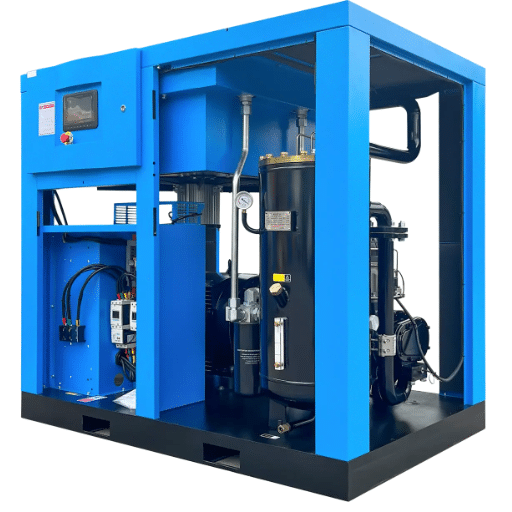
The process of no exaction of the right air compressor might not be so simple, yet it has to start somewhere and if you are already at the point of asking what are “fixed-speed” and “variable speed” then you are halfway there. Each of these air compressors has its own major attributes that should always be ripped apart for a better understanding; potential impacts on efficiency, energy cost, and operating expenses can be quite different. Thus, if your performance desire is optimization, our guide is here to point you to the right fit for your needs.
Understanding Fixed-Speed and Variable Speed Compressors

The fixed-speed air compressor it is characterized by a constant speed, working thus giving a steady air flow of compressed air. This kind of compressor is reliable and also cheaper in most cases thus making it applicable for the air-demanding process of a constant nature. Nevertheless, such compressors may not be economic in the case where the air usage varies, the reason being that they consume energy all the time even when their output is not required.
The variable-speed air compressor is different in that it changes the speed of the electric motor in accordance with the air demand. Apart from the great power saving that comes with this, it also the only operation that has different air usage patterns, gives the compressor a longer lifetime. Although the price paid upfront might be high, the long-term operating costs can be reduced. Hence, they are the best option for companies that want to maximize efficiency and reduce energy consumption.
The selection of the best one out of the two is entirely dependent on your needs. Fixed-speed machines are suitable for standard applications while variable-speed machines are best for dynamic workloads in terms of economics.
What is a Fixed-Speed Air Compressor?
A fixed-speed air compressor runs at a constant speed; thus, it always gives a certain flow of compressed air regardless of demand. It’s intended to operate nonstop at peak efficiency if air usage is steady. Such compressors are recommended for places where air consumption is constant since they offer consistent performance without the need for rigorous tuning. Conversely, the inflexible working nature of these compressors might lead to increased power usage when the demand is uncertain hence, making them less energy-efficient for the variable loads.
What is a Variable Speed Compressor?
A variable speed compressor is one that constantly controls its motor speed according to the current air demand, giving rise to remarkable energy efficiency and operational flexibility. In comparison to fixed speed compressors that operate at an unchanging pace, variable speed compressors deploy the exact amount of energy that is required for the present demand. Their capability to cope with changing workloads not only curtails power wastage but also cuts down the costs of operating the equipment overall, thus making them perfect for places where air consumption varies. Moreover, they still exert the same constant pressure and help reduce the frequency of equipment replacements.
Key Differences Between Fixed Speed and Variable Speed
Fixed-speed compressors keep on working at constant speed no matter if the demand changes, which can lead to loss of efficiency when air consumption varies. In contrast, variable speed compressors change their motor speed to suit the needed air demand, which results in a big drop in energy usage and cost in operations. Fixed-speed compressors come with a more straightforward design and a lower initial purchase price, the variable speed ones still have the advantages of greater energy efficiency, lower long-term operating costs, and reduced wear on parts due to their ability to avoid constant cycling. This fact makes variable speed compressors perfect for applications with various air demand, while on the other hand, fixed-speed compressors can easily be put in environments with steady demand.
Components of a Rotary Screw Air Compressor

A rotary screw air compressor comprises a number of crucial parts that interact to compress air in an effective way:
- Air End (Screw Element): The main part where air gets compressed by the turn of the male and female rotors.
- Motor: The source of power that rotors need to be driven and air to be compressed Pneumatic.
- Air/Oil Separator: The one that eliminates the oil from the air that is compressed and makes the air clean.
- Oil Filter: It cleans the oil that is in circulation from the impurities and makes the operation smooth and increases the life span.
- Cooler: It keeps the temperature of both the air and the oil from getting too hot.
- Control System: It oversees the activities of the compressor, including regulating the pressure and the safety measures.
- Intake Valve: It regulates the air entering the compressor to get the best performance out of it.
The components are characterized by their functions, which are very crucial for the machine’s operation to be reliable and continuous as well as for it to be energy-efficient.
Rotary Screw Technology Overview
Rotary screw technology utilizes two intermeshing rotors in a sealed chamber that compress air as they rotate. This layout gives a continuous flow of compressed air, hence it is suitable for applications that require steady and reliable operation. Among the main benefits of the technology are that it is very energy efficient, quiet, and requires very little maintenance as there are no valves and other high-wear components. Moreover, the built-in cooling systems and advanced control mechanisms provide better performance and protection against overheating or excessive wear making rotary screw compressors a durable and efficient solution for various industrial applications.
Air Tanks’ Significance in Air Systems
Air tanks are very important elements in air systems; they function as storage reservoirs that provide air pressure continuity and efficiency of the compressed air supply. By limiting the compressors’ cycling, air tanks help to load compressors less, thus extending the equipment’s life and making the whole system more efficient. Furthermore, air tanks smooth out the system’s response to sudden demand fluctuations, thereby guaranteeing the performance even during high usage times. They further help to treat the air by getting rid of the moisture and other impurities, leading to better air quality and protecting the downstream equipment from harm or inefficiency.
Importance of Air Dryers in Compressed Air Systems
Air dryers are indispensable in preserving the compressed air systems’ efficiency and longevity by eliminating humidity from the air. Without the necessary drying, moisture can build up in the system, thus leading to its corrosion, equipment failure, and diminished performance. Air dryers help to keep the air quality stable by obstructing the growth of water droplets that can either pollute the downstream parts or cause them to malfunction. Protecting the system this way also means that there will be dependable operation through a variety of applications. The choice of the air dryer type refrigerated or desiccant model should be based on system requirements and environmental conditions because it is a critical decision that impacts quality, efficiency, and cost.
Performance Metrics: CFM and Air Pressure

CFM (Cubic Feet per Minute) and air pressure are among the most important indicators that tell us the performance level of an air system. CFM tells the volume of air that is provided by the system, so it indicates the maximum level of application demands that the system can handle. PSI (Pounds per Square Inch) is the unit generally used for air pressure, and it indicates the force with which air is supplied, thus providing an assurance of the correct functioning of the tools and equipment with the right amount of force. The correct balance of CFM and air pressure must be maintained to achieve the best efficiency of the system and to avoid any performance problems.
Understanding CFM in Air Compressors
CFM, or Cubic Feet per Minute, is a very important measure that indicates how well and how capable air compressors are. It tells how much air the compressor can put out in a minute, and thus it directly affects its capability to power different tools and machines. When choosing an air compressor, it is necessary to find a good match between the CFM your tools require and the compressor’s output to have good performance. Generally, more CFM is required for tools needing constant and high airflow, whereas less CFM may be enough for tasks that are not very demanding or are done intermittently. Knowing and following the right CFM standards will help avoid system strain and ensure that the operation will be efficient.
Impact of Air Pressure on System Efficiency
The air pressure has a major influence on the efficiency of a compressed air system. If the pressure is set too low, the tools and equipment may not work at all or will work at a lower than intended performance level. On the other hand, very high pressure can lead to energy waste, faster deterioration of the system, and more operational costs. The right air pressure for your system will enable the tools to work well, and at the same time, it will help saving energy and the likelihood of mechanical problems will be less. It is very important to do the proper monitoring and regular calibration of the pressure settings in order to achieve the maximum system efficiency.
Comparing Performance: Fixed-Speed vs Variable Speed
Fixed-speed systems are the ones that work at a constant rate, thus, they always deliver the same performance but at the same time they consume more energy because they are not able to adjust the output according to the demand. This may result in waste of energy especially during periods of low demand. In contrast, the variable-speed systems are those that are able to change their output in a more precise manner to meet the demand, thus offering considerable savings in energy and better efficiency. Although variable-speed systems usually come at a higher price, their improved performance and savings from the cost over the long run make them the preferred option for applications that need flexibility and energy efficiency.
Applications and Use Cases
In industry, variable speed systems are the go-to solution in situations when the priorities are energy efficiency and adaptability. One example of that would be HVAC systems, which through precise regulation of airflow and temperature also use needed energy less; another one would be industrial machines whose motors are performing at peak efficiency with the help of being adjusted according to the production demand, and finally the pumps pumping water, which, you guessed it, are also saving power by letting the flow rate go down. They also find their application in other energy types like wind and solar where, for example, wind turbines, and then they are efficient in energy production at least up to some extent. However, the list does not end here as there are more like water management systems, etc.
Fixed-Speed Rotary Screw Compressor: When to Use
A fixed-speed rotary screw compressor can be recommended for use in applications where the compressed air demand is both constant and stable throughout time. They are the most efficient in an environment where production capacity is constant and there is not much change in air usage. Plants with predictable workloads, such as manufacturing lines running at a steady pace, can be completely relying on and enjoying the simplicity of fixed-operation compressors. Furthermore, fixed-speed compressors are the best choice for a company that wants to have a lower capital investment and very little maintenance hassle. They are the least suitable for the situation where there is no energy efficiency impact caused by variable demands.
Variable Speed Drive Compressors Benefits
VSD compressors are the best choice in applications where unstable air demand exists as they modify the rotating speed of the motor to the requirements of the event. This has the effect of cutting the consumption of unnecessary sources in low-demand times in large volumes which leads to large savings in terms of electricity cost. VSD compressors also help in operating cost saving through their lifespan and aid in keeping the air supply even at the pressure required which is a very important feature for the processes that are sensitive to variations. Being more energy efficient leads to lower environmental impacts and thus creating a scenario where such businesses that put sustainability on top of their objectives are the customers for VSD. It might be that other compressors have a lower recipe at the beginning, but it is VSEs the long run savings and adaptability to variable workloads that make VSD compressors a very efficient and flexible solution.
Selecting the Right Compressor for Your Needs
While deciding on the “right” compressor for your needs, take into account parameters like air pressure and flow rate required and what kind of application it will serve. Also, check if your operation requires a fixed-speed compressor for maintaining a steady workload or a variable-speed drive (VSD) compressor for the demands that change. Besides, consideration should also be given to energy consumption, noise, and overall cost of ownership including initial investment and maintenance costs. Taking these factors into account will guarantee that the compressor chosen meets your production needs and environmental goals.
Conclusion and Recommendations

In summary, picking an air compressor really necessitates an in-depth comprehension of your operational needs along with application requirements. A fixed-speed compressor is an option for situations with stable workloads, while a variable-speed drive (VSD) compressor is ideal for coming up with a solution to varying demands. Make energy efficiency your number one concern and look at the total cost of ownership—initial outlay plus maintenance—before making a decision. Our advice is to have a conversation with suppliers you can trust, and to consider energy-efficient models, so that you can come up with a solution that is reliable, economic and sustainable at the same time.
Key Points Summary
It is necessary to take a close look at your application and the nature of your workload when choosing an air compressor. The ideal compressors for constant demand are fixed-speed, while variable-speed drive (VSD) compressors are the ones that perform best in the case of changing requirements. The top priority should be given to energy efficiency because it has a direct impact on both the cost and the environment in the long term. Think of the total cost of ownership, which includes the initial price and the maintenance costs over time. Working with trustworthy suppliers and checking out energy-efficient models will generally lead you to the solution that is most reliable, most affordable, and best suited to your operational goals.
Advice for Different Uses
Take into account the distinctive conditions of each application when applying compressors for specific uses. In the case of manufacturing, the emphasis should be put on compressors that are very durable and capable of working nonstop. In the case of industries with fluctuating air demand, variable-speed drive compressors would be the answer to the energy crisis and also versatility. In food and beverage production, oil-free compressors are required by the regulations that are strict concerning hygiene to avoid contamination that is not wanted. For the automotive industry, pick either a portable or a stationary type that supplies a steady power source for tools and machinery. Always match the compressor specifications, such as pressure and flow rate, to the precise needs of your operations in order to optimize efficiency and performance.
Reference Sources
-
Atlas Copco: VSD vs Fixed Speed – This source explains when a fixed-speed compressor is a smart choice, particularly for constant air demand scenarios.
-
Rasmussen Mechanical Services: VSD Compressors vs Fixed-Speed: Facility Manager’s Guide – This guide compares fixed-speed and variable-speed compressors, detailing their operational differences and applications.
-
Kaishan USA: Variable-Speed Vs. Fixed-Speed Air Compressors – This article discusses the energy consumption and efficiency of fixed-speed compressors, providing insights into their feasibility for specific use cases.
Frequently Asked Questions (FAQs)
Is a fixed speed compressor or a variable speed compressor right for my air system?
Deciding whether to use a fixed-speed compressor or a variable-speed compressor in the air system boils down to the actual requirement of compressed air at any given time and the extent to which the demand reveals a pattern of fluctuations. Fixed-speed compressors have a constant speed and hence are straightforward and reliable for continuous air needs as they are designed to run non-stop at full-speed meeting the greatest compressed air demand. A VSD compressor, on the other hand, (variable speed drive rotary screw or VSD air compressor) can use varying rotations per minute of the motor to correspond with the demand for air and frequently the energy used is also reduced as the demand is intermittent. In the case of a continuous and relatively close-to-compressor-rated cfm air demand, then fixed-speed units are likely to be cost-effective, but if air demand is variable, then VSD technology will result in lower operating costs. An air audit conducted by an expert that takes into consideration ambient air, airflow and actual air needs will be the key to determining whether fixed-speed compressors or variable-speed compressors are better and efficiency optimization is a common practice among facilities that run compressors with different settings (fixed-speed and VSD).
How do fixed-speed compressor motors compare with hp variable speed drive units?
Motor compressors of the fixed-speed kind run constantly at high speeds no matter how much load there is, and this can lead to energy waste because the compressor would still be drawing power albeit less air has been required, while hp variable speed drive compressors do the exact opposite and hence are more efficient in part-load situations by adjusting motor speed to match air demand. Take for instance, a rotating screw compressor of the 30 hp fixed-speed type may constantly operate at full capacity while a brand new compressor with a variable frequency drive of the same specifications can slow down and reduce its energy consumption when the air flow requirements become less. The VSD compressor technique when air demand vacillates causes decreased cycling and unload losses, a trend that could be interpreted as lower compressor cost over time though this may entail a higher upfront investment. In situations where air is required at maximum compressor capacity continuously, fixed units may be sufficient and are easier, while in most manufacturing plants air demand dips and rises making VSD compressors more often than not a better investment in the long run. Performing an air audit will reveal if the hp VSD option produces payback through energy savings over the fixed-speed motor alternative.
Is it possible for fixed speed and variable speed compressors to work together with good results?
Absolutely, using fixed and variable speed drive compressors in combination is a frequent practice that aims to provide a good mix of reliability and efficiency, by assigning the fixed-speed compressor to base load and the vsd compressor to variable peaks. In the case of such arrangements, the control systems will have to carry out adjustments in compressor speed and staging so that the variable speed compressor can modulate the motor speed meeting short-term increases in air flow without imposing the fixed-speed unit to cycle. This way, compressor motors will experience less wear, decrease in energy consumption will take place when the demand for air drops, and a consistent air pressure will be maintained throughout the whole compressed air system. When multiple compressors are operated according to a proper strategy, the system is able to supply the maximum compressed air demand while at the same time minimizing situations where compressors do unnecessary unloading. Regular upkeep of parts like air inlet valves and air dryers can help keep both fixed-speed and VSD compressors functioning efficiently and reliably by ensuring steady air flow and performance.
How is the energy use affected when the demand for air keeps changing between the least and the most compressed air demand?
When the demand for air changes, fixed-speed compressors will continue to work at full speed and either discharge or recycle the air which results in energy loss because the motor of the compressor will still draw power even when it is providing less air. Compressors that are equipped with variable frequency drive have the feature to regulate their speed continuously according to the demand hence, the VSD compressor is very often able to draw significantly less power during the period of low air demand aligning the speed of the motor with the actual load and consequently, improving the efficiency of the whole system. In a situation where the demand fluctuates wildly between low and peak demand, either a newer VSD compressor or a combination of fixed-speed units with a VSD can reduce cycling losses and provide a more consistent air pressure. The extent of energy savings depends on the degree of demand variability, the power rating of the machines (for instance, 30 hp vs smaller units) and how accurate the control logic is in matching the speed and the variable speed drive settings to the real-time signals coming from the flow and pressure sensors. An air audit can not only assess the potential energy savings but also help you in making the right decision about whether to replace fixed-speed models with variable speed drive rotary screw compressors or just to supplement the existing ones.