
Oil-Injected vs. Oil-Free: Choosing the Cleanest Air for Your Process
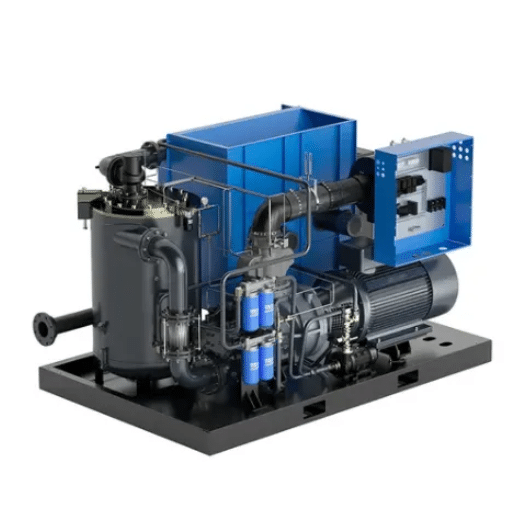
One factor that stands out when choosing the correct air compressor for the task is whether it should be oil-fired or oil-free. This aspect greatly affects the quality of compressed air, performance, and adherence to certain industry regulations. Whether it’s the pharmaceutical industry, the food industry, or any type of manufacturing, these differences are important to understand to obtain the best performance and control over the quality.
Introduction to Compressed Air Systems

Compressed air systems are an integral part of powering different industrial processes and equipment in various sectors. They work by intake of ambient air, treating it by compression, which increases the pressure, and supply it to applications involving pneumatic tools, material handling, precision manufacturing, and so on. Due to its importance in various activities, compressed air is sometimes referred to as the ‘fourth utility’. For air compressors to work effectively, factors such as energy efficiency, quality of the air, and the frequency of maintenance must all be factored in, explained, and followed to ensure complete and consistent service and the applicable standards.
Overview of Compressed Air Systems and Their Industrial Applications
Compressed air systems are necessary for numerous industrial operations as they provide a stable and utilitarian energy source for many activities. These systems may contain compressors, air dryers, filters, storage tanks, and distribution piping, which function in a synchronized manner to produce, treat, and use the compressed air.
🏭
Manufacturing
Activates pneumatic tools and actuators; helps in making equipment
🥤
Food & Beverage
Packaging, cleaning purposes, and transportation
💊
Pharma & Biotech
Maintaining an extremely clean environment in production
🚗
Automotive & Construction
Spray painting, air tools, and high-power-consumption applications
To ensure optimum efficiency, businesses have to periodically evaluate the energy efficiency, curb air seepage, and observe air quality levels specified by appropriate policies such as the air purity standard ISO 8573. An oil-injected rotary screw compressor is very efficient; the oil seals all the gaps between the rotor’s teeth, thus, a high level of efficiency is achieved.
Importance of Air Quality in Industrial Processes
Fresh air makes everything better, even industrial operations, simply because it ensures efficiency and safety, including improving the level of operations in the industry. Consequently, compressed air that is contaminated with moisture, oil, or particles could cause equipment breakdown, product wastage, and non-conformity to a very high industrial standard. For instance, sterility and hygiene standards in the pharmaceutical and food industries demand that any impurities in the air systems have to be removed, as they undermine the quality of the product.
Why Air Quality Matters
- Adequate air filtration removes solid particles, aerosols, and water vapor
- Purity levels must meet the ISO 8573-1 standard
- Regular air quality inspections cut down on process wear and tear
- Good housekeeping ensures a higher degree of reliability and avoids bottlenecks
Good housekeeping, such as regular air quality inspections and servicing of equipment, is not only about achieving compliance but also about cutting down on process wear and tear in the system, avoiding bottlenecks, and ensuring a higher degree of reliability.
Brief Differentiation Between Oil-Injected and Oil-Free Air Systems
🔩 Oil-Injected Systems
Oil is used in the compression chamber for lubrication, sealing, and cooling, making them highly efficient and durable for harsh operating conditions such as heavy industrial machinery. However, this structure compels oil particles to be washed out of the air under pressure since any trace of oil can interfere with some of the processes.
💨 Oil-Free Systems
Do not use oil in the compression chamber; rather, they use other materials such as Teflon coating or advanced engineering for lubrication and cooling. Best used in industries where there is a need for ultra-high levels of purity compressed air. Although typically more costly initially, oil-free systems prevent contamination, avoid significant downstream filtration, and provide long-term cost and safety advantages.
What Is an Oil-Injected Rotary Screw Compressor?

An oil-injected rotary screw compressor employs oil as a working fluid during the compression cycle to provide sealing, lubrication, and cooling. Oil forms an excellent sealing medium between the rotors, resulting in airtight (compressor) operation. These compressors are favored in other industries where clean air is not of utmost importance because such oils are always separated and filtered downstream. They render great services, economical at high pressures, and general-purpose applications in which high pressures are required.
Explanation of Oil-Injected Rotary Screw Compressors
One notable feature of the oil-injected rotary screw compressor is its excellent performance and longevity. The compressors are designed in such a way that they can run continuously even in conditions that demand a constant air pressure, and this is possible without the units overheating due to the presence of oil, which cools down the compressors. In addition, they are constructed with vibration and sound dampeners, giving them better operational stability and application in other industrial sectors where toughness and effectiveness cannot be compromised.
✅ Advantages
- Continuous operation without overheating
- Vibration and sound dampeners for operational stability
- Excellent compression ratios with lubrication
- Cost-effective for general industrial applications
⚠️ Disadvantages
- Requires adequate separation and filtration
- Cannot always guarantee purity levels for pharma/food sectors
- Ongoing maintenance: oil changes and filter replacements required
For general industrial use, where efficiency and cost economy are paramount rather than the requirement for dry air, an oil-injected rotary screw compressor would be the most advisable.
Operational Principles and Typical Applications
An oil-injected rotary screw compressor is a common example of a positive displacement machine. Within it, two helically wound gear-like rotors encase pressurized fluid in the compression chamber while rotating opposed to one another. Oil is sprayed into the chamber during compression for several of its functions: to cool down the temperature, to occupy the void in the intermeshing screw faces, and to reduce the friction in their rotation. Once the air is compressed and mixed with the oil, it leaves the chamber and passes through a separator and filter. The main purpose of these filters is to remove the oil from the air before it reaches the desired point.
Environments that practice charge air distribution systems employ these compressors since they are well-built and efficient. Most of the time, they are used to operate air tools, create packaging mechanisms, provide spray painting, and deliver services in high-power consumption areas like the automobile and construction industries.
Typical Applications
- Operating air tools in the automotive and construction industries
- Creating packaging mechanisms
- Providing spray painting services
- Material transporting blowers requiring high-pressure, uninterrupted supply
Also, an oil-injected rotary screw compressor is preferred in several industries, particularly where an uninterrupted supply of compressed air with high pressure is required, for instance, in material transporting blowers. Such compressors prove to be cheap and long-lasting over many cycles of operation since they are very useful equipment.
Advantages of Using Oil-Injected Systems
Cooling and lubrication are provided during working periods, thus preventing any immense wear from the inside for a period of time. This translates to them being able to function smoothly for a very long time. In addition to this, this type of system is thought to be better at closing or preserving the pressure system efficiently by means of minimizing air loss than increasing energy savings, which assures effective sealing. Lastly, heavy workloads and endurance, all these are all activities that an oil-injected rotary screw compressor can handle, making it appropriate for such extreme conditions where workloads are filled with requests. All these help ensure that the system is dependable, maintenance is minimal, and expenses are cut down in the long run.
Understanding Oil-Free Compressors
The air supply requirements when using an oil-free compressor are met without any assurance of a threat to oil-based contamination. Such compressors are used in fields involving very high air purity, e.g., food, beverage, pharmaceuticals, and electronics manufacturing. Such compressors do not require any oil in the compression chamber due to the use of special materials and technologies, e.g., dry bearing, special coatings, etc. Though oil-free compressors are typically more capital-intensive and possibly slightly less efficient than oil-injected rotary screw compressors, these are easily justified by the mitigation of contamination risk and the observance of air hygiene standards. Besides, the compressor multisystem calls for less downstream filtration and therefore maintenance costs are quite lower. Thus, most consumer applications use oil-free compressors since product safety and quality cannot be compromised.
Defining Oil-Free Compressor Technology
One of the variants of the rotary screw compressor is the oil-free compressor technology, in which oil is not used in the compression chamber, ensuring that the air delivered is pure and free from any lubricants. These air compressors do not utilize any lubricants in the process of compression but rather utilize other methods, such as water injection, use of high-performance Teflon or carbon coatings, or any other form of development in materials and design to minimize the static and dynamic contact of moving parts.
With only air devoid of any oils being supplied on the downstream end, the compressors become oil-free and therefore comply with most of the standards, such as ISO 8573-1 Class Zero, about specific air end use areas which require very clean air. Take, for example, the application of such a compressor in a pharmaceutical company, a food or beverage manufacturing company, or an electronics manufacturing company, etc.
⚡ ISO 8573-1 Class Zero Compliance
The worst case scenario is where an oil-injected rotary screw compressor would be used. Although the oil content in the compressed air is low, sectors such as pharmaceuticals, food and beverage, and electronics cannot work with this type of compressor, for even a negligible amount of oil in compressed air could damage the end product.
Limitations and Operational Considerations of Oil-Free Compressors
There is no doubt that oil-free compressors have major benefits as far as producing clean air is concerned, but then they have their own shortcomings and conditions of service. A primary drawback is that their purchase price usually exceeds that of an oil-injected rotary screw compressor owing to the high-tech materials and technology required in their manufacture. There is also a tendency for these compressors to have a shorter service life and demand regular servicing or repair because the components wear out with time, since no oil is used.
The compressors also raise concerns regarding the working temperature or the high temperature of the compressors: The reason is that with less heat, friction is generated, which may cause the compressors to overheat, hence they don’t work. Oil-free compressors are not energy efficient, hence they lead to costly bills at some point. To secure the functional reliability of the equipment, maintenance equipment is arbitrarily controlled as well, according to the consumer guides and recommended averages.
One of the features of oil-less systems to note is that when thinking about employing it in the industry, a comprehensive evaluation concerning how those conditions will nourish the machine and the costs that it would take in the long run must be done.
Air Quality Standards and Compliance

As far as oil-injected rotary screw compressor air quality is in question, focus has been placed on ISO 8573-1 Class 0, which implies the highest degree of cleanliness, including zero aerosols, liquids, or even vapor oils. Such stringent standards must be adhered to, particularly in the pharmaceutical, food, and electronics industries, where even the slightest amount of contamination is likely to render the product useless or unsafe. Such compressors have smart filtration systems and close tolerances to meet these requirements. These methods of achieving compliance are only effective over an extended period of time if there is constant observation, specific routines for carrying out procedures, and replacement of the filters. The organization can therefore evaluate the different industries and also the specific laws that govern such industries to manage all the activities at optimal levels of performance.
Overview of ISO Air Quality Standards
The most important international standard for the quality of compressed air is ISO 8573-1, which divides the contaminants into three relevant categories: solid particles, water, and oil. In each category, there are purity classes that go from “Class 0,” which is the strictest and highest purity level, to other classes that go with higher numbers and are less strict. For solids, Class 1 permits a maximum of 0.1 μm particle size, while for oil, Class 1 also allows 0.01 mg/m³ oil content, including oil in the form of aerosol and vapor.
ISO 8573-1 compliance is important and must be adhered to by industries by means of different air treatment solutions, such as, but not limited to, advanced filters, dryers, and oil separators, depending on the application. It is also important to conduct periodic air quality tests to check whether or not the air conforms to such quality classes. This is because certain industries like food application machine production, pharmaceutical, and even electronics do not permit any contamination on the products, and hence affect the likely air quality used in the processes employed.
Specific Regulations for Various Industries
Many sectors operate under certain rules that help maintain the air compressors’ lean in the appropriate compressed air quality levels.
All these serve as a myriad of regulatory approaches, specific to productive activities undertaken by individual industries, rationalizing such a venture – an investment in highly sophisticated risk-reduction tools and clean-ship technologies – to be undertaken on safety and quality enhancement grounds.
How Oil-Free and Oil-Injected Systems Compare in Meeting These Standards
Compressors designed to operate without oil and those that are oil-injected rotary screw compressors vary considerably with regard to what level of clean air, say ISO 8573-1 class 1, can be expected. The former does not contain any risk of oil contamination when in operation, thus providing hygienically clean air suited, for example, to less clean industries: pharmaceutical or microelectronics industries. Such compressors most of the time have special designs, including a high degree of multi-stage compressors, which achieve the high standards of purity and reliability.
In contrast, oil-injected air compressing systems utilize oil-lubricated cooling to compress air, which in itself poses a problem of oil being present as vapor or particles in the air. Even though such compressors include filtration systems for the air output, which minimize the oil content, having a clear Class 1 adherence is harder, often requiring expensive multi-stage filters and strict controls for ensuring no contamination occurs.
At the end of the day, oil-free systems fit certain activities aimed at achieving the maximum purity of air, removing the need to achieve an additional level of apparatus, meeting tough standards efficiently. Nevertheless, it is still possible to employ oil-injected rotary screw compressor systems in the battle against less demanding applications while also accepting lower-quality air for economic reasons.
Comparing Oil-Injected and Oil-Free Compressors

The deliberate choice of an oil-injected or oil-free air compressor normally depends on certain parameters. First of all, the level of air cleanness required by the application is important; oil-free performance is advantageous in the industries of food, drugs, and electronics sectors, where it is crucial that there is no contamination whatsoever. Secondly, the cost of operation is an essential parameter—the operation of an oil-injected rotary screw compressor will most likely cost less; there is also the aspect of its running cost in the long run because of the outlook of the filtration machines and the risk of contamination by oil. Thirdly, consideration is to be made as to the energy consumption and the performance of the model chosen, as oil-free cartridges are considered more effective even under excessive regulations, since they obtain similar efficiency even in ultra-clean environments.
Performance and Efficiency Differences
An oil-injected rotary screw compressor has greater performance capabilities when compared to an oil-free or dry rotary screw compressor; this is only achieved by supporting loss-making ventures. Oil-injected rotary screw compressors have excellent compression ratios because lubrication is incorporated into the mechanical mix to lower the abrasive wear and assist in closing leakages, making them efficient in more relaxed applications. The downside is that considerable filtering is required to maintain the air quality, which usually affects the efficiency of the system and therefore requires more frequent servicing.
In diametric contrast, oil-free compressors dispense with the need for lubrication in the compression chamber during operation, so that the air meets the pre-requisite purity level of ISO 8573-1 Class 0. Therefore, they are most appropriate for applications where high air quality is a necessity, such as the food, pharmaceutical, and electronics industries. Despite the cost of oil-free compressors being higher, they have lower maintenance costs as well as meet the necessary performance requirements, and therefore, the system’s cost of upkeep is generally lower. Therefore, the selection of an oil-injected rotary screw compressor or oil-free screw compressor should be in accordance with the organizers’ strategic interests, optimization of processes, and prevailing laws in relation to the subject matter.
Cost Analysis, Including Long-Term Operational Expenses
According to research, the fees included in operational costs over the long-term are significantly influenced by elements such as energy efficiency, ease of maintenance, or reliability. Even though the oil-free technology is associated with additional costs during purchase, the minimal maintenance required and absence of any oil consumables minimize any additional costs involved. Further, the ability of the device to operate normally at all times is another key factor that should be explored because energy savings are often associated with such devices. On the other hand, it is understood that oil-lubricated compressors have a low acquisition cost; however, high maintenance costs may be encountered because of their requirements for oil change, filtration, or other related work. Therefore, in the end, the decision lies in weighing the cost-effectiveness together with the application’s requirements and frequency of use.
Maintenance Requirements for Each Type
Due to how they are built and work, oil-free and oil-injected compressors have different maintenance needs.
💨 Oil-Free Air Compressors
These require less frequent maintenance as they do not contain oil to be changed. The main maintenance task includes the regular checking of the air filters, seals, and bearings, among other components. Also, it is essential to regularly check the lubrication-free components and any other cooling systems to ensure proper functioning.
Especially in a clean air critical environment, this reduction in downstream maintenance is possible without compromising on the integrity of the oils/greases used in these compressors.
🔩 Rotary Screw Air Compressors
As the use of oil in the compression cycle means every rotating and sliding component in the air compressor has a portion of oil, maintenance is, to some extent, more difficult than dry-running ones. Where there is oil, there should be oil changes, and this includes the lubricating oil as well, to avoid seizing of moving parts and overheating.
In addition, timely and effective replacement of oil filters and separators must be done in order for the system to remain functional.
Owing to manufacturer-recommended use, maintenance, and design, all aspects of this and the other compressor are able to be enhanced and extended by the operators in their strategies.
Reference Sources
“Performance Analysis of an Oil-Injected Screw Compressor and Its Application”
This study analyzed the performance of oil-injected air screw compressors, focusing on leakage challenges. It highlighted the difficulty in estimating exact leakage values in oil-injected systems.
“Mathematical Modeling of the Working Cycle of Oil-Injected Rotary Twin Screw Compressor”
The study developed a mathematical model to simulate the working cycle of oil-injected twin-screw compressors, emphasizing their use in medium-pressure applications.
Frequently Asked Questions (FAQs)
How does an oil-injected rotary screw air system function?
Air compression in an oil-injected rotary screw compressor relies on a pair of interlocking helical rotors (also called “rotors”), which pull in the air, enclose it within the snarled rotating lobes, and compress the air further by reducing its volume. A lubricating oil is injected inside the cavity to lubricate and seal the rotors as well as extract thermal energy. This form of lubrication increases efficiency by reducing wear compared to piston compressors. Air for compression when mixed with oil goes through a separator that recycles most of the oil back to where it was used, and the compressed air passes to the air treatment, some processes, and filters, most often for getting rid of dust.
What are the benefits of using an oil-injected compressor compared to a piston compressor in the business?
Interested in more permanent solutions for your enterprise? Normally, ceaseless industrial applications tend to employ screw compressors rather than piston air machines, resulting in easier air delivery. screw compressors also minimize vibration and movement. This is because the exhaust journal of the piston does not move between the pistons. More technically, Paris indicated that these were termed positive displacement air compressors that utilize blades, which he termed also “vane” and a figure enclosed helical rotors, in which air is compressed in a constant flow, unlike the current conventional reciprocating systems. They often have fewer service requirements, better constituent seal, and allow for easy management of the operator’s lubricant consumption, while allowing a large control range performance thanks to VSD (variable speed drive) incorporated against step solutions in piston compressors.
Can compressing machines function with VSDs, and what does this mean in terms of energy saving and control of power?
Adjusting the motor speed with respect to the actual demand using a Variable Speed Drive avoids the unnecessary operation and further peak power requirements of the compressor. With oil-based screw compressors where the Variable Speed Drives are used, the rotor adjusting means adjusts the speed of the motor, air offers, and also compressor activities in order to only produce and use as much air in real time in order to minimize the energy bills and wear of components. This comes in handy in the compressor market, where energy cost is an important aspect of the machine’s life cost. VSD incorporated screw air compressors provide economical compressed air as they minimize the cycling, which is a wastage, and also minimize losses due to air leakage.
How do you maintain an oil-injected rotary screw compressor to contain oil from appearing in the compressed air and to make sure compression of the air is optimal?
Routine maintenance entails changing the oil and oil filters, examining and replacing air intake filters, checking for oil carryover, and thus, separators and coalescing filters are not overlooked, and also looking out for seal and valve leakage. Appropriate air treatment, inclusive of a filtration system and a cardiac defibrillator, removes both oil and impurities to comply with air quality requirements set by the application. Toys routine rotors bearings inlet checks of valves prevent compression abuse need to grey out oil can break contamination of working devices and processes.
Are oil-injected rotary screw compressors capable of supporting the high horsepower needs of heavy-duty industrial equipment?
Indeed, industrial oil-injected rotary screw compressors are enormous machines with a lot of power, which may prove to be useful for those industries that work in loads of cycles and non-stop. They are designed in such a way as to make use of steady and probably high levels of oil injected at different capacities. Familiar names such as Atlas Copco and other brands bring a package with two-stage and twin screw option as well as variable speed drive and best control, which helps keep the preferred horsepower while cutting the electric bill and other costs over the life of the equipment.
What could be the reasons behind the pollution of oil or leakage in a mounted rotary screw compressor, and what are the solutions available?
There are several typical reasons for this: oil seals become scorched, depleted separator elements, wrong oil viscosity grade, system overheating, and filters become choked. These problems are countered by replacing damaged seals, servicing separators, or changing them altogether. Oil with considerable viscosity is used since manufacturers also recommend certain oils for the compressor and its components, including those that plain oil can’t lubricate. Cooling and filtering the ambient and incoming air is adequate. Having routine maintenance checks and checking oil conditions and pressure systems to reduce oil leakage and oil entrainment in the compressed air supply.