
VSD vs. Fixed-Speed: Which Compressor Saves More Energy?
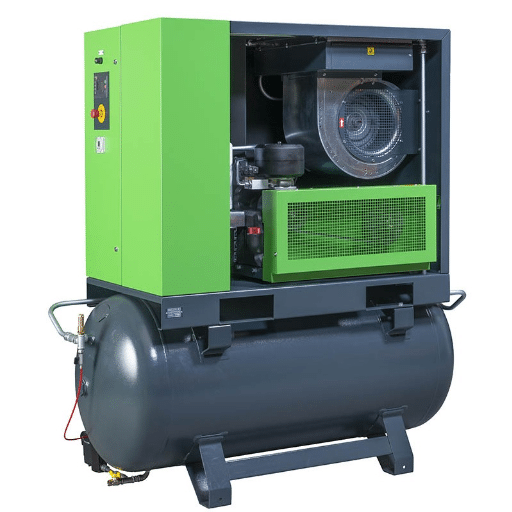
In order to improve energy efficiency and save on operating costs, industries employing air compressor systems are keen on this. The two most renowned compressors mostly used in manufacturing industries are fixed-speed compressors and variable-speed compressors, which are also dynamic in energy consumption. It is worthy to note that the whole strategy of energy consumption and its efficiency is highly influenced by the type of compressor chosen. This article comprehensively covers each of these two systems, VSD and Fixed Speed compressors, in detail, explaining their operation in various environments and how efficient they are, economically and energy-wise. By the conclusion, the reader will be equipped with knowledge on the equipment to use depending on the conditions at hand.
01
Introduction to Air Compressors and Energy Efficiency
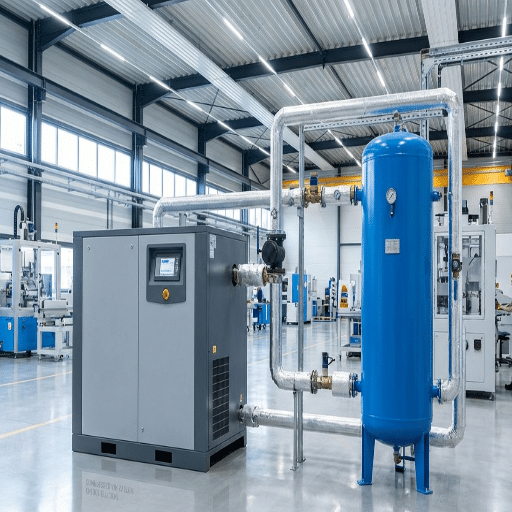
Air compressor conversion is an integral activity and the process benefits and helps to convert action and especially mechanical energy from other forms and matters of energy into potential energy that can be stored in pressurized air. Energy efficiency in regard to air compressors is paramount because the consumption of electricity in such equipment is rather significant. Particularly, taking into account that electricity is relatively expensive in many countries, the use of such compressors that are appropriate to their purpose and efficient to operate can go a long way in minimizing energy waste, cost, and fostering environmentally friendly activities. In the case of fixed speed compressors, wherein an example of a variable speed rotary screw air compressor can also be considered, the operation of the motor varies with the load requirements, and therefore, they can be very useful in cases where the demand varies during the operation. On the contrary, fixed speed compressors work at the same power even in different working conditions. From the above, one must be well aware of the nature of the operation that they are dealing with in this particular case in order to realize the efficiency and the cost savings of using such technology in the long run.
The Role of Air Compressors Across Industries
An air compressor uses energy to compress ambient air and store it as pressurized or potential energy. Compressed air is then utilized to operate equipment, machinery, or even complete industrial processes. As per their functioning, air compressors are divided into two categories: positive displacement type compressors (compression takes place by confining the air in a closed chamber, such as in a piston or screw compressor) and dynamic type compressors (wherein the compression takes place due to the kinetic energy provided by the impeller, for example, centrifugal compressors).
In many spheres of human activity, air compressors are an indispensable device that increases productivity and carrying capacity. In industry, pneumatic tools, for instance, are used for fitting, trimming, or forming parts. For instance, there is a strong dependence on the jackhammer, drill, and related tools in the construction sector, while air compressors are required. Similarly, in medicine, oil-less compressors are seen in use in patients’ ventilators, dental chairs, and other equipment. In addition, boosts are used in the oil and gas sectors for the purposes of pressurizing pipes or during survey work. Such a degree of necessity in air compressors ensures that they are significantly more in so far as products or services go worldwide.
The Two Primary Types: VSD vs. Fixed-Speed
For one, there are variable speed drive technology-based rotary compressors and fixed speed controlled compressors; however, both of them influence energy saving and optimal functioning differently. On the other hand, fixed speed compressors work at a certain rotation speed throughout the operation and maintain the required pressure continuously, even if there is a surplus or a lesser demand for the pressure. These types of compressors work great where there is always a requirement for a continuous supply of air, but since their operation can’t be scaled the way other compressors can, excess energy is often wasted when the equipment is idling.
Variable speed rotary screw air compressor, on the other hand, involves utilizing an advanced motor that works to regulate the speed of the compressor depending on the availability of air. Turning down the air consumption takes little energy, especially in cases where the demand for air is not consistent. These mechanical units, even when they present some inconveniences, such as increased capital expenditure, the economics for their use are appealing internally because of their energy efficiency in the long run.
🌱 Why Energy Efficiency Is a Critical Consideration
Energy efficiency is of critical importance when it comes to reducing operational costs, limiting negative environmental externalities, and sustaining operations over time. Energy facilities whose systems are more effective use less energy, which results in huge cost reductions in the long run. However, increasing energy efficiency also means reducing emissions of greenhouse gases, which is in line with the global policy on addressing climate change. Aside from that, with the increase in energy prices and carbon regulations, these technologies thus favoring energy efficiency become paramount considering the changing business environment, which is much more sustainable.
02
What Is a Variable Speed Rotary Screw Air Compressor?
A variable speed rotary screw air compressor is a sort of rotary screw air compressor with the addition of rotation and motion transmission, in that its motor speed will adapt to the compression air demand and output. Besides, it implements control of the drive of socialists’ supply of air services, in contrast to fixed-speed compressors, which always run at their nominal speed, hence eliminating energy waste. This is because such a model is promoted as optimizing energy consumption between diverse speeds of operation. Due to this, major savings in terms of electrical power consumption are realized, the equipment experiences fewer moving components, and much more precise air is produced. Such compressors augur well with installations characterized by varying air demands, however, as they maximize operation efficiency and effective use of power.
How Variable Speed Rotary Screw Compressors Work
A variable speed rotary screw air compressor uses sophisticated systems that change the speed at which the machine runs as the demand for air increases or decreases to produce the required output while saving energy. The system’s central mechanism is the rotary screw mechanism, which consists of two helical screws that mesh and compress the air as it moves inside the chamber.
When contrasted with a fixed speed air compressor, the variable speed roto compressor speeds up and down through a smart inverter. During compressed air demand cycles, the system runs faster since air is needed when the speeds cycle down. In this state that revolves around low demand, the motor shall be at low speeds, thus energy consumption will be minimal. As a result, this functionality enhances efficiency in the use of system components and prevents unnecessary production of compressed air in excess, which does not enhance productivity.
Also, in most cases, VSD compressors come with built-in sensors and control systems so as to accurately monitor different operating conditions, such as pressure and airflow, etc. This helps in controlling the system’s operational processes in real-time with increased accuracy. The energy consumption in the case of variable speed compressors is significantly less compared to fixed speed ones — a difference of 35% or more in some situations — and also, the equipment service life is prolonged because the internal components wear out less due to mechanical stress. For this reason, the variable speed rotary screw air compressor appeals most to industries with fluctuating demands of compressed air.
Key Features That Differentiate VSD from Fixed-Speed Compressors
⚡ Variable Speed Drive (VSD) Technology
While fixed-speed compressors run at constant effort even if the demand fluctuates, variable speed drive compressors change the speed of the motor to fit the quantity of airflow asked for. This improves the efficiency of use and therefore limits the power consumption during idle periods.
🌿 Conservation of Energy
The variable speed unit used for compression can save up to 35% energy when compared to a fixed speed unit. As they are restrained from running when not necessary, they are aligned with clean energy goals as a bonus.
🔌 The Soft Starting Feature
VSD compressors are capable of soft starting, where the motor is allowed to increase speed to its working levels at a slow pace. As such, the starting current is reduced alongside the mechanical loading, thus reducing the wear and tear caused on the parts and improving component durability.
🎯 Effective Pressure Regulation
Such compressors offer a more stable system pressure by varying the output according to load, providing uniform performance at differing loads. This reduces swings and hence improves the effectiveness of operations that are sensitive to a difference in air pressure.
🔧 Reduced Maintenance Burden
As they work more efficiently and do not have to be frequently switched on and off, VSD compressors do not suffer from as much mechanical stress as would be the case with fixed-speed compressors. This results in less maintenance and increases the time between the repairs.
📊 Modern Management & Monitoring
Nearly all VSD compressors are fitted with controllers that assess important parameters in real-time, like pressure, rotational speed of the motor, and power use. This facilitates improved efficiency, condition-based maintenance, and system analysis for strategic shutdown.
Common Applications and Industries
Usage of variable-speed rotary screw air compressors is evident in several industries due to the versatility and efficiencies of these machines. They are used in factories more often than not, where there is a need to power pneumatic tools, conveyor belts, and other production machinery. In the scenario of food processing industries, these compressors are used during packaging, bottling, or maintaining a clean and contamination-free environment. Also, in the pharmaceutical manufacturing industry, such uses include precision processes, coating, and encapsulation. These compressors have also found a place in the car industry as they are a great help in assembly lines, painting systems, and air-powered tools. Such compressors are used in textiles, electronics, and other industries where there is a need for efficiency and reliability above all else, and this includes uses involving cooling, drying, et cetera. They also provide the additional benefit of matching their output with supply fluctuations, and this makes it possible to apply them effectively in industries that do not require constant airflow throughout the operation.
| Industry | VSD Compressor Application |
|---|---|
| Manufacturing | Powering pneumatic tools, conveyor belts, and production machinery |
| Food Processing | Packaging, bottling, and maintaining contamination-free environments |
| Pharmaceuticals | Precision processes, coating, and encapsulation |
| Automotive | Assembly lines, painting systems, and air-powered tools |
| Textiles & Electronics | Cooling, drying, and processes requiring efficiency and reliability |
03
How Fixed-Speed Air Compressors Operate

Fixed-speed air compressors stabilize the motor’s speed and thus provide compressed air flow continuously, irrespective of the requirement. The motor continuously turns the compression element without deviation in its speed, thus providing constant air flow at a fixed pressure. Such a configuration is quite effective and functional as the components within the compressor system have few differences in their operation. However, in cases where the air requirements are dynamic, such a motor would be less effective as it will still use the same power as it uses to compress the maximum amount of the air available, although the amount of air is not the maximum. The performance of such compressors remains stable, and they are ideal for applications that require a constant flow of air.
Overview of Fixed-Speed Compressor Functionality
There is no change in speed in a fixed speed compressor, therefore ensuring a constant supply of air, which is suitable for consumption processes with consistent demand. There are advantages of these compressors, namely, making them more durable, simple, and lower initial cost compressors compared to variable speed rotary screw air compressors. The hard shell minimizes the need for repairs, thus they are very popular in industrial settings.
The fixed-speed compressors are energy efficient only in environments with stable demand; they effectively optimize their traveling speed in this respect. In the constant speed compressor, the air compressor motor is designed to operate at a fixed full speed even when there is no demand for air. Hence, most of the energy used at the low load operating range is wasted. Also, in instances when the factors concerning demand require the motor to stop and restart, that will enhance the wear and tear on the drive. In the end, these compressors with fixed speed optimize wherever the air generated has to be steady. In other cases where the usage is a cyclic variable, one would question this economic approach.
Advantages and Limitations of Fixed-Speed Systems
✅ Advantages
Simple in nature, fixed speed systems generally cost less to purchase than variable speed ones. Also, they do not present problems when required to operate at a constant output for extended periods and are energy efficient. Since there is a minimum number of parts to be maintained, the operation costs are lower than those of processes with varying workload.
⚠️ Limitations
Nevertheless, fixed speed systems contribute to wastage when used in situations where the work order within the process varies. Therefore, since the motor is always running at the same velocity, it will always consume equal amounts of power irrespective of the demands, thus causing some energy losses in the low operations. Besides, in situations of varying demand, the cycling effects, which also lead to wear and tear of parts, would become more frequent, thus raising the repair costs and reducing the life of the system. These difficulties render the fixed speed systems unfit where versatility is indispensable in such operations.
Typical Use Cases in Industrial and Commercial Sectors
Variable-speed rotary screw air compressors are typically used in applications that do not require variable operation and cover extremely low demand and a very substantial range of running. For example, the moving conveyor belt on the manufacturing line cannot be any faster than it would impact the efficiency of production in the case of shirt personnel. For some HVAC systems, it is also the same, considering the regular flow of air, which does not change. These applications can be found in industries such as water supply and, more particularly, irrigation, where a constant flow is maintained to avoid changing the use of the system. They are effective under static conditions, but the restriction for such devices likewise supports them in high degrees of fluctuations in load or energy saving.
04
Energy Consumption Analysis: VSD vs. Fixed-Speed Compressors

When comparing the energy consumed, variable speed rotary screw air compressor machines are much more effective in terms of variable consumption than those that operate at a fixed speed. This is because such machines are intended to vary the speed of the motor to allow service demand without wastage; besides, variable speed compressors run more efficiently for light loads. On the one hand, compressors with a fixed speed rate operate at uniform speed regardless of the need to consume more energy. There are quite a few examples of studies illustrating this claim, and chances are that VSD Compressors can save about 35% on energy consumption in zones with dynamic masses. Therefore, considering porous load operations, one cannot go wrong in stating that such compressors are the best in terms of electricity and resources.
Energy Savings Potential
Up to 35%
energy reduction achievable with VSD compressors in dynamic load environments
Energy Consumption Under Different Load Conditions
The primary reason why various types of variable speed rotary screw air compressors offer a far harder challenge to competitors is due to electrical consumption comparison under different load conditions. The variable speed compressors present better efficiency as they do not require traditional frequency modulating equipment, although they take theoretical circumstances into account. In other words, the operation of VSD compressors under partial load conditions is a means of reducing energy utilization because motor speed adjusts to the normal air output. For instance, at half the rated load, VSD compressor energy consumption lowers by nearly a quarter of the 100-plus numbers, whereas nothing changes for fixed speed compressors since, in the latter case, they run at fifty percent loads within the machine while consuming the full power, which naturally results in extra operation expenses.
On the contrary, when the compressors are in use at maximum levels, the difference in energy used by VSD and fixed speed compressors is reduced. But, in cyclical applications, the importance of using VSD compressors is realized because they do not have multiple on and off cycles as compared to fixed-speed compressors. Turning the compressor on and off consumes excessive power and causes undue stress, which subsequently magnifies the repair expenses. Therefore, in fluctuating load scenarios, a variable speed rotary screw air compressor is more cost-effective and energy-saving.
| Load Condition | VSD Compressor | Fixed-Speed Compressor |
|---|---|---|
| Full Load (100%) | Runs at full speed; similar consumption to fixed-speed | Runs at full speed; optimal efficiency range |
| Partial Load (50%) | Motor speed adjusts; energy consumption drops significantly (~25% reduction) | Still runs at full power; energy is wasted on unneeded output |
| Low / Idle Demand | Motor slows dramatically; minimal energy draw | Enters start-stop cycling; surge current and mechanical stress on each restart |
| Cyclical / Variable | Smooth continuous adjustment; no on/off cycling | Frequent on/off cycles; elevated wear and higher energy spikes |
How VSD Compressors Adapt to Fluctuating Demand
The variable speed rotary screw air compressor employs a motor designed to accommodate variable demand conditions. This is accomplished by automatically adjusting the speed of the compressor motor to meet specific air availability needs at a particular moment. While fixed speed machines turn at a constant rate, Variable Speed Drives, or VSDs, have a Variable Frequency Drive that enables the motor to turn only as fast as necessary to produce the desired amount of compressed air. Energy reductions are realized when demand for compressed air drops and efficiency is maintained even during peak demand periods. VSD compressors prevent losses in energy due to producing excessive compressed air and also avoid too frequent stopping and starting, which causes damage by maintaining smooth pressure with slight variations. Immodest variation of performance is the dominant feature of VSD compressors and sets them as perfect in the case of processes where consumption of air cannot be predicted.
Scenarios Where Fixed-Speed Compressors May Consume More Energy
Compressors that have fixed-speed capability are often plagued with inefficiencies when used in situations where the required quantity of air changes. For instance, during instances of partial load, since the compressors must either run at full capacity or not at all, they go into a start-stop mode. The problem with this mode is the high energy consumption due to a rush of current during the initial motor switch-on. Other applications, such as those where accurate maintenance of pressure is key, for example, those that use compressors with fixed speeds, will tend to overcompensate varying loads, and still run at a pressure higher than that which is necessary; hence wasting energy. It is also sometimes the case that, between working hours or usage intervals, fixed speed compressors are left on but do nothing and hence are carrying some load (turning) with no output. In light of such operational shortcomings, it is clear why traditional air compression units with a fixed speed are not ideal in environments where air flow is not constant or predictable.
⚠️ Key Insight: Fixed-speed compressors running at low or partial loads waste energy constantly. In environments with variable air demand, this inefficiency translates directly into inflated electricity bills and avoidable mechanical wear.
05
Cost Implications Beyond Initial Investment

It is common to buy a compressed air system only to discover that there are additional costs associated with it afterwards. Still looking for a bargain, buying a single-speed compressor appears ‘cheap’, but it soon leads to a great deal of waste of electricity, far above the installed cost of the unit. The majority of the cost of the compressed air system comes from energy usage, which is often stated to be at about 70% of the total costs of the system. Also, it should be noted that repair and stoppage-related costs for unlined speed gear units may increase due to shocks resulting from variable loads. Lastly, what is worth mentioning is that the provided analysis clearly shows that the factors discussed before concerning variable speed rotary screw air compressors must be checked in detail before making any purchase.
70%
of the total system cost
The majority of the cost of the compressed air system comes from energy usage, which is often stated to be at about 70% of the total costs of the system. Choosing the compressor type a strategic, long-term financial decision.
Initial vs. Long-Term Costs for Both Types
The most common fixed-varied speed type, being the alternating current (AC) non-inverter type compressor, generally has its fixed-speed counterpart designed at a lower cost than its variable speed design. Hence, for facilities with a constant duty cycle operated by a compressor, the varying speed option stands out as attractive. Yet, such economics do not last for fixed-speed compressors that consume more energy, have poor part-load efficiency characterized by low efficiency over lesser load conditions where the volumetric flowrate required is lower, and tend to suffer from high wear caused by regular stopping and starting of the compressor.
Conversely, it is important to note that a variable speed rotary screw air compressor is more expensive to acquire, a benefit of which, however, is notable with time. It is achieved by matching motor speeds to the load, which ensures there is no wastage of energy through idling on power, and also allows for a reduction in the cost of operation. It also increases the mean life of the machinery since there are fewer moving parts, hence less wear and tear, as well as lower maintenance from less machinery to maintain. In facilities that have highly variable or inconsistent operations are far more economical to install considering all the changes that will take place during the optimal wear of the system.
| Cost Category | VSD Compressor | Fixed-Speed Compressor |
|---|---|---|
| Initial Purchase Price | Higher upfront investment | Lower upfront cost |
| Monthly Energy Costs | Up to 50% lower under variable loads | Higher, constant power draw regardless of demand |
| Maintenance Costs | Lower; reduced mechanical stress and fewer start-stop cycles | Higher in variable-load environments due to wear from cycling |
| Equipment Lifespan | Extended; less wear from smooth operation | Reduced if used under frequent cycling conditions |
| Long-Term ROI | Strong; savings accumulate significantly over time | Better only under constant, predictable load conditions |
Energy-Saving Potential in Monthly Operational Costs
In my opinion, the use of VSD compressors has the ability to reduce the power consumption and hence monthly expenses quite significantly. The biggest advantage is that by varying the motor speed according to the load demand, power consumption can be reduced by up to half when compared with fixed-speed compressors. This can even generate savings in the farmhouse upwards of hundreds to thousands of dollars in some months, given the extent of activities being undertaken as well as the rates of electricity prevailing within the area. For instance, a variable-speed rotary screw air compressor could be applied to a facility with high air demand changes.
Maintenance Expenses and Downtime Factors
Whenever you are assessing the running cost of energy-saving air compressors, you cannot escape the aspect of maintenance and downtime costs. Fixed speed compressors, in comparison to VSD compressors, have basic components and electronics; hence, the latter requires more budget for maintenance. But also, thanks to their diagnostic and control systems, breakdowns, which are hard to anticipate, are less frequent in those compressors because problems tend to be detected early enough before more damage is done. Moreover, with the decreased wear and tear due to favorable load functioning, service intervals may increase, and that lowers the cost of maintenance.
A significant aspect is the downtime as well. In this regard, while VSD compressors are ideal for working under variable demands and providing the required air throughout their application without overloading the system, the equipment will not be as easy to operate. Likewise, there is a definite system for charging and discharging the air, providing definite downtime for maintenance, which avoids unnecessary downtime. Yet, businesses will need to take note of the staff who can handle this VSD compressor in case it needs any repairs because VSD compressors are beatable in terms of repair time. These aspects will help promote more efficient and reliable work.
Summary
Key Takeaways: VSD vs. Fixed-Speed Compressors
- ✔
VSD compressors adjust motor speed to match real-time air demand, delivering up to 35% energy savings in dynamic load environments. - ✔
Fixed-speed compressors offer a lower purchase price and simpler maintenance, making them suitable for constant, predictable air demand operations. - ✔
Energy accounts for approximately 70% of total compressed air system costs — making efficiency the dominant factor in total cost of ownership. - ✔
VSD compressors reduce mechanical wear through soft starting and fewer on/off cycles, extending equipment lifespan and lowering maintenance costs. - ✔
For facilities with variable or unpredictable air demand, a variable speed rotary screw air compressor provides the strongest long-term return on investment.
Reference Sources
Modeling and Simulation of Rotary Screw Compressors
Published by Purdue University, this paper discusses the components and operation of rotary screw compressors, including variable speed models.
Improved Compressed Air System Increases Efficiency
Published by the National Renewable Energy Laboratory (NREL), this case study explores the use of rotary screw compressors in improving compressed air systems.
Frequently Asked Questions (FAQs)
How does the efficiency of a screw compressor in compressing air increase with variable speed control?
A variable speed rotary screw air compressor makes use of an inverter or VSD to regulate the speed of the motor to the demand for air, thereby eliminating energy wastage when compared to fixed speed models. By adjusting the rpm and motor speed to low loads and higher airflow, variable speed compressors ensure constant pressure while offering high energy efficiency and lowering the total ownership cost of industrial air installations.
How is the variable speed compressor better than a fixed one in terms of the archived replay HTML system?
In comparison to compressors that operate at a fixed speed, variable speed compressors allow adjusting the speed in accordance with air requirements, preventing fluctuations in compressed air demand. Accordingly, this saves energy, operating costs, avoids equipment wear due to start/stop cycles in already familiar intervals, enhances performance, and often decreases the space for installations. With respect to situations that call for air under compression in a system operating under variable flow or pressure conditions, the most effective variable speed screw compressor may be unrivaled in performance and in usage time.
Does the technology of a variable-speed rotary screw air compressor help with energy efficiency?
Yes, this is because either VSD control or inverter-driven motor speed control offers extraordinary motor efficiency, as there is no need for running the motor at maximum power all the time, which results in less energy consumption. In quite a number of industrial operations where there are hits of varying air demand, and hence significant wastages, energy-saving VSD devices cut down on those expenses and achieve a satisfactory tension and flow sustainability.
How does variable frequency drive control influence the efficacy of air regulation and volume control in rotary air systems?
Variable speed control using Variable Speed Device (VSD) technology enables the rotary screw compressors to keep the air pressure and air Red Surges null during their operation, and consequently, notorious pollution-free air is achieved, and also gives stability to the processes. These parameters can be achieved with the inclusion of dryers and filter systems, and the control allows the regulation of saturation with oil or treated compressed oil required as an input for processes. Concluding, this helps in achieving the requirements of the factory or specific goods air specifications.
What is the effect of using such compressors on maintenance and capital costs as compared to fixed-speed models?
Compressors that utilize variable speed drives play a crucial role in minimizing operating costs by optimizing energy utilization. Variable speed drive mechanisms come with a lot of advantages, such as built-in inrush current, which is why motor belts, starters, or couplings do not get so much deformed. This further slackens the punctilious observance of the maintenance schedule for the equipment. Of course, the acquisition cost may be higher in comparison to the variable speed rotary screw air compressor that runs at a constant speed, but there are amortized savings that come with energy efficient consumption and decreased idle time.