
Variable Speed Rotary Screw Air Compressor: VSD/VFD Technology Explained
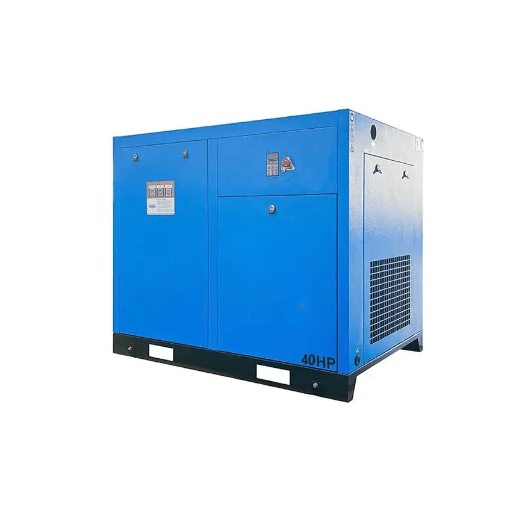
The progress of air compressor technology has been a significant driver of improvements in energy efficiency, performance, and operational cost management across industries. The development of Variable Speed Drives (VSDs) and Variable Frequency Drives (VFDs) has been the driving force behind this progress. These advanced systems have completely redefined the capacities of rotary screw air compressors. This article is very detailed and will help you understand the technology behind VSD/VFD. It will also look into the various core benefits of these systems, such as reduced energy consumption, load balancing to address fluctuating demand, and reduced equipment wear and tear. Here is a complete overview of air compressor technology, whether you are a beginner or someone looking to become more knowledgeable for practical purposes.
Introduction to Variable Speed Rotary Screw Air Compressors
Rotary screw air compressors of variable speed are technological breakthroughs engineered to perform air compression with precision. Earlier Smith-speed models run at a fixed speed year-round, unlike variable-speed compressors, whose motor speed automatically adjusts to meet specific air demand. Energy savings are therefore very significant. Furthermore, the systems are very kind to the components, and at the same time, they can incur considerable power consumption costs. Also, these systems virtually eliminate component fatigue, thereby extending the equipment’s service life. They also keep the pressure within the system constant, and hence, the load is not affected. Besides, they are fault-tolerant, and the industry can anticipate potential problems. Their efficiency and reliability make them preferred choices for industries with varying air requirements, thereby improving operational performance and reducing total expenses.
What is a Rotary Screw Air Compressor?
A rotary screw air compressor is a gas compressor with a rotary positive-displacement mechanism that provides a continuous flow of compressed air. To achieve this, the device draws in air from an inlet valve and squeezes it between two gate-like helical screws, or rotors, which interlock perfectly. The rotors of exacting design rotate in opposite directions, thereby reducing the volume of air and raising pressure throughout the system.
The efficiency and reliability of these compressors are at the highest level, which is why they are recommended for almost all business operations in day-to-day life. In addition, for continuous compressed air use, compressors can be very helpful because they maintain a steady pressure level while delivering a higher air volume. The main advantages of rotary screw air compressors are that they require less maintenance than reciprocating compressors, operate more quietly, and can run continuously for longer periods without cooling problems. Accordingly, it can be said that their design and operation make them the most essential machinery component in industries such as manufacturing, food processing, construction, and automotive.
Understanding Variable Speed Technology
Variable-speed technology is a system that can adjust the speed and output power of its motor to meet specific compressed-air needs at that time. Apart from fixed-speed compressors, which are operating at a constant speed, variable-speed compressors are the ones that use innovative control systems for controlling the speed of the motor, which ultimately leads to very high energy efficiency. The U.S. Department of Energy states that using this technology can save up to 35% on energy consumption; however, this is highly dependent on the type of application and the mode of operation. On top of that, variable-speed compressors will reduce the need for regular maintenance of components, such as minimizing wear and tear, by eliminating cycling and reducing stress on the system. It follows the pattern of steady change in air demand; it is technology not only to optimize operational efficiency but also to lower overall operational costs, which is extraordinarily beneficial to industries with varying production rates.
Overview of VSD and VFD Technologies
|
Parameter |
Variable Speed Drive (VSD) |
Variable Frequency Drive (VFD) |
|---|---|---|
|
Functionality |
Controls motor speed dynamically |
Alters motor speed via AC frequency |
|
Technology |
Uses electronic/mechanical mechanisms |
Operates through frequency modulation |
|
Applications |
Pumps, compressors, conveyors |
HVAC systems, industrial motors |
|
Energy Efficiency |
High, depends on load requirements |
High, optimized for dynamic loads |
|
Cost |
Moderate to high upfront cost |
Similar initial cost to VSD |
|
Maintenance Requirements |
Moderate, depends on component wear |
Low, fewer moving parts |
|
Installation Complexity |
Moderate, depending on system design |
Relatively simple with proper wiring |
|
Integration Capability |
Compatible with various systems |
Integrates with modern automation |
|
Reliability |
High, robust under varied conditions |
High, stable under fluctuating loads |
|
Environmental Impact |
Reduces energy use and carbon footprint |
Minimizes operational waste |
Benefits of Variable Speed Drives in Air Compressors
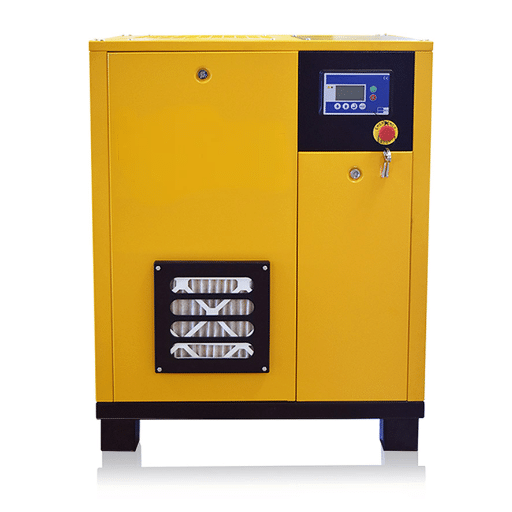
- Energy Efficiency: VSDs adjust motor speed to match actual compressed air demand, thereby significantly reducing energy consumption and eliminating unnecessary energy use during low-demand periods.
- Cost Savings: VSDs cut operational costs over time by reducing energy waste, thereby benefiting facilities with fluctuating air demands, as savings from reduced energy costs were the only option in the past.
- Extended Equipment Life: A smaller number of motor rollbacks and speed-ups reduces the stress the parts and mechanical units generally undergo, leading to less physical deterioration and longer compressor life.
- Improved System Stability: Adjustments in VSDs maintain airflow pressure throughout, even when the load is changing and the power supply remains good.
- Environmental Benefits: VSD systems enabled compressors to consume less power, resulting in a smaller carbon footprint and making it an eco-friendly, sustainable solution.
Energy Efficiency and Cost Savings
The use of Variable Speed Drives (VSDs) in an integrated system can increase energy efficiency by up to 35%, resulting in substantial savings for businesses, especially in industrial sectors. This increase in efficiency stems from the fact that VSDs can match system demand to 100%, eliminating the power loss that is common in applications where fixed-speed units always run at a perfect speed, whether needed or not. The prevalence of VSD technology in the air compressor sector is inevitable, as it is not only hailed as a reliable and cost-effective option but also recognized as a key player in the energy-saving industry.
Moreover, minimizing power consumption is the primary driver of lower utility bills, resulting in significant savings throughout the equipment lifecycle. Also, the highly sensitive and powerful energy-level monitoring devices on the newest VSD-based compressors can accurately monitor energy consumption, enabling businesses to spot waste and further improve performance. Besides that, the policies are usually combined with incentives or benefits from the usage of energy-saving technologies, making the starting point for VSD systems to be instantly accepted as a wise decision from both points, economic and environmental.
Improved Performance and Reliability
Compressors equipped with Variable Speed Drives (VSDs) are designed to increase overall system efficiency by dynamically regulating motor speed in response to real-time demand, thereby avoiding wasteful energy consumption. The technology for such precise control not only optimizes the equipment’s operational performance but also reduces mechanical stress, which can eventually prolong the lifespan of vital system components. Also, high-tech VSD systems come with maintenance prediction and diagnostic intelligence features. With these remarkable capabilities, the process of monitoring operational parameters and early recognition of potential issues that can cause equipment to break down is a matter of continuous inspection, ensuring no unpleasant surprises or high maintenance costs. The whole system should be designed so that such innovations will improve product quality and allow a steady flow of work, thus increasing profits in rigorous industrial settings.
Impact on Compressed Air Systems
The distinction between Variable Speed Drive (VSD) technology and compressed air systems is one of the main factors driving a significant increase in energy efficiency. VSD systems are designed to modulate motor speed to match the actual demand for compressed air; hence, they operate without the need for constant-speed compressors to waste energy. The research demonstrates that using VSD compressors can achieve energy savings of up to 35%, depending on usage conditions and demand. Not only does this increase in efficiency reduce costs, but it also helps reduce greenhouse gas emissions, which aligns with the sustainability goals of modern industries.
A Variable Speed Drive (VSD) Compression Air System offers greater stability, as it can regulate pressure levels with greater precision. This guarantees a uniform air supply, even as load conditions fluctuate, which is essential for processes that require minimal pressure control. Moreover, the fewer start-stop cycles of VSD compressors result in a significant reduction, reducing wear and extending the equipment’s life, and decreasing the need for maintenance. Thus, the system is made more reliable, and maintenance costs are reduced throughout the compressor’s lifespan.
Components of a Variable Speed Rotary Screw Air Compressor
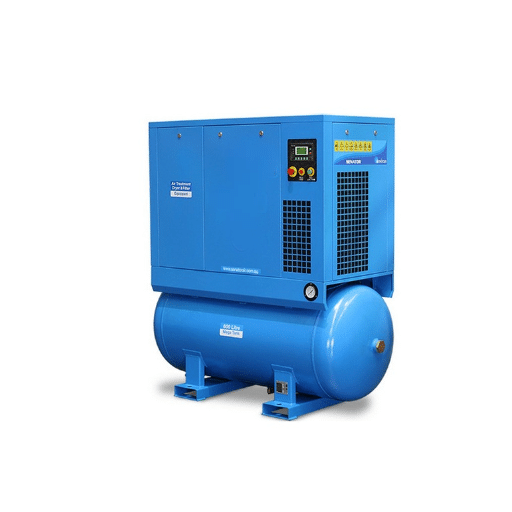
- Rotors
The main contributors to air compression are the male and female rotors, which come together to compress and move the air. - Variable Speed Drive (VSD)
By matching the power supply frequency to the desired motor speed, the VSD can easily adjust the motor speed, ensuring precise output matching the demand. - Motor
Compressorenergy.com: Powers the compression process, with energy efficiency significantly improved by its integration with the VSD. - Air/Oil Separator
The system is designed to filter oil from the compressed air before it is released, keeping the air clean. - Cooling System
The system also prevents overheating by controlling the operating temperature by releasing heat generated during the compression process. - Control Panel
User-adjustment and monitoring features are incorporated into the system for pressure, temperature, and other operating parameters, allowing the user to maintain control. - Intake Filter
The system’s internal components are safeguarded through a combination of cleaning the incoming air and filtering out contaminants.
Role of the Air Tank in Compressed Air Systems
An essential part of compressed air systems that enables a steady, reliable output. The air tank absorbs fluctuations in demand, thereby reducing the risk of pressure drops that can affect system performance. It also lets the compressor work more efficiently while minimizing unnecessary wear and energy consumption through reduced starts and stops. Also, moisture management cannot be overlooked in the case of air tanks; they are indispensable for cooling and condensing water vapor in the compressed air, which is then easily removed by filtering downstream systems. The size and capacity of the air tank are effectively the system’s peak demand-handling factors; therefore, it is a vital system design and installation, and thus, the correct sizing is directly linked to the optimization of energy efficiency while at the same time meeting the requirements of the application and with the least design effort possible.
Understanding the VSD Compressor Mechanism
A Variable Speed Drive (VSD) compressor is an air compressor that dynamically adjusts the motor speed to match the exact air demand at any given moment. VSD technology eliminates unnecessary energy consumption, unlike fixed-speed compressors, which operate at a constant speed and are cycled on and off depending on the load. The compressor is controlled by a control system that varies the frequency of the electric supply to the motor, so that the compressor generates only the precise amount of compressed air required.
From a technological perspective, adding a VSD to the system improves overall efficiency by saving energy, particularly in applications with variable air demand. The system also reduces wear and tear on the machinery by eliminating repeated turning on and off. To put it another way, the equipment’s life can be extended. And this is also confirmed by some VSD compressors’ quality – they can save energy consumption by 35% when compared with the fixed-speed kinds. Thus, being both cost-effective and environmentally friendly, they soon find the corresponding place in the markets of many industries. Moreover, the latest VSD compressors are designed to be equipped with a highly reliable monitoring system that enables the company to maintain good control during operation and to forecast future trends and required maintenance. Moreover, it will increase operational reliability and, at the same time, reduce the total cost of ownership.
Comparing Variable Speed and Fixed Speed Air Compressors

The primary distinction lies in the way energy consumption and air output are controlled between variable speed drive (VSD) and fixed speed air compressors. Fixed-speed compressors maintain a constant speed of operation, continually providing a flow of compressed air whether needed or not. They are very reliable for applications with a stable need for air, but they are also very inefficient due to high energy use and costs during demand fluctuations.
In contrast, with VSD compressors, the motor speed is varied moment by moment to achieve the exact level of air demand. Such dynamic control results in the least energy waste, which is why there is a marked difference in efficiency when the industry has demand cycles that vary. Besides, compared to fixed-speed models, they very often extend the equipment’s service life by reducing mechanical wear.
In environments with a constant, easily predictable air demand, a fixed-speed compressor might offer the best value for money. Nevertheless, if the demand fluctuates, VSD compressors will come out on top in terms of efficiency, energy cost, and operational flexibility. The determining factor in the decision on compressor type is the examination of the air demand behavior and the application’s energy efficiency goals.
Operational Differences and Applications
|
Key Parameter |
Fixed Speed Compressors |
Variable Speed Drive (VSD) Compressors |
|---|---|---|
|
Air Demand Profile |
Best for constant air demand |
Ideal for fluctuating air demand |
|
Energy Efficiency |
Moderate efficiency |
High energy efficiency in variable demand |
|
Initial Cost |
Lower upfront cost |
Higher upfront cost |
|
Maintenance Needs |
Simplified maintenance process |
Complex but cost-saving overall |
|
Operational Flexibility |
Limited adaptability |
High adaptability for diverse operations |
|
Applications |
Suitable for simple, constant workflows |
Fits dynamic, energy-aware industries |
|
Noise Levels |
Standard noise generation |
Often quieter operation |
|
Power Consumption |
Consistent, regardless of demand |
Aligns closely with real demand |
Cost Analysis: Initial Investment vs. Long-Term Savings
When the financial side of any production process change is reviewed, the relationship between initial investment and long-run savings becomes significant. For most systems, the total cost at the very beginning of the process might seem lower; however, such systems tend to incur higher costs in the long run due to factors such as ongoing power consumption, maintenance services, and lower efficiency under different workloads.
On the other hand, the high start-up cost is frequently what troubles most new energy-saving systems. But then, the implementation of smart energy usage provides the benefit of the systems, while not forgetting the high quality of the implemented design, which, at the same time, saves the day. And, the user has the right to choose between the two.
Industry experts believe that the return on investment for companies adopting more advanced, energy-sustainable solutions will be visible within 3 to 7 years, provided the correct scale and system usage are ensured. The drop in total cost of ownership, paired with improved performance and adherence to current efficiency norms, makes these systems the environmentally friendly choice across sectors of the economy. On top of this, the use of very sophisticated analytics tools will make it very easy for companies to determine the exact amount and operational efficiency of the savings, as well as to make resource allocation transparent and optimized in the long run.
When to Choose a Variable Speed Compressor
A variable-speed air compressor can be used in situations where compressed air demand varies greatly during production cycles. Sectors like fabrication, automotive production, and food processing, known for their elastic production demands, are the primary beneficiaries of the technology, and this, in turn, helps maintain operational efficiency while avoiding energy waste. Variable-speed compressors can align their motor speed with the air demand at any given moment, resulting in lower energy costs and less wear and tear than with fixed-speed models.
By adopting variable-speed compressors, facilities with irregular energy usage can reduce costs by 35%, as these compressors minimize power loss during periods of low demand. At the same time, the pressure the compressors allow to be built up is distinct and minimally varied; therefore, customers in highly performance-critical lines of activity like the pharmaceutical and precision manufacturing sectors can take advantage of the consistent pressure control of the compressors, knowing that the operations are being maintained at a stable level and with relatively low noise levels, too.
Deciding on a variable-speed compressor will also help, in the long run, reduce energy consumption and lower the carbon footprint, as it complies with state-of-the-art energy-efficient standards and carbon footprint minimization efforts. During the analysis of this alternative, organizations should look at their pressure air needs, how the compressors work and how they may save money on energy and thus they would take a decision that is well-informed.
Applications of Variable Speed Rotary Screw Air Compressors

In multiple sectors, rotary screw air compressors that can be operated at different speeds are a common sight, which in the end will be a vital factor in helping to save energy. Manufacturing plants depend on these machines to the extent that they power pneumatic tools, conveyor systems, and production machinery. Another example of the crucial role of rotary screw air compressors is the automotive repair and assembly sector, where they are essential to ensure the accurate operation of air tools. In the food and beverage industry, they are used to maintain high hygiene standards by incorporating them into packaging and cleaning processes. Moreover, they benefit the healthcare sector significantly by providing contaminant-free air for medical equipment and lab applications. Their rapidly adjusting to the air demand makes them the first choice for the places that need the same high-performance day and nigh,t as well as the most efficient air compressor.
Industrial Applications and Case Studies
The applications of air compressors are numerous and broad-reaching, primarily because of their reliability and efficiency. An example is the automotive industry. Air compressors are used to streamline car production by powering pneumatic tools, spray painting, and tire-inflation equipment, resulting in a uniform product and no slack in production. In another example in the manufacturing sector, air compressors are a necessity, as they help systems such as conveyor belts, clamping machines, and cooling systems function more efficiently and accurately.
The pharmaceutical industry is a field with high standards for safety and cleanliness, and the topic of air compressors has been a subject of a fascinating case study. Essential in a few of the smallest spaces in the manufacturing area, where compressed air for the making of tablets and filling them in capsules and packaging must be immaculate in addition to the meeting of the specifications of the air quality regulation ISO 8573-1, referred to numerous times above all previously mentioned, the oil-less compressors are the ones allowed to be in such an environment. Data-based control of processes is done using these same complex and costly systems, thus employing the fewest possible people to handle the various parts, from raw materials to finished products.
Use in Compressed Air Systems for Manufacturing
Compressed air systems have become a critical factor in many manufacturing sectors, providing the power needed for automation, material handling, and instrumentation. The development of current technologies has made it possible to integrate these systems with Industry 4.0 concepts, enabling remote monitoring, predictive maintenance, and energy optimization as part of the package. Various analyses show that the energy used by compressed air systems alone can account for 30% of total energy at a production site, underscoring the importance of efficiency. Technologies such as variable-speed drive (VSD) compressors and energy recovery, for example, are effective means to reduce running costs by matching airflow to actual needs and thus avoiding energy loss. Another step in the right direction is upgrading filtration and drying technologies to meet higher air-purity standards, a characteristic property across industries such as food processing, pharmaceuticals, and electronics.
Role in Energy-Saving Initiatives
Compressed air systems have been used as a key method to reduce energy consumption across a wide range of industries. According to a study, compressed air accounts for approximately 10% of total industrial electricity, making it a top priority for energy-saving measures. After adopting cutting-edge monitoring and control systems, energy losses from leaks and inefficient use are minimized, resulting in energy savings of 10% to 30% through ideal facility pressure control and demand control strategies. Moreover, novel applications like heat recovery systems, which trap waste heat from compressors and send it to heating processes, effectively offer double benefits: reduced costs and environmental accolades. Using industry case examples, it has been demonstrated that upgrading the flow lines, filter system, and compressor units not only reduces energy use but also helps the organization comply with stringent energy laws and improve its greenness rating. It can be seen, therefore, that changes in the air system are reflected in significant, positive changes in the process industry, as they go a long way toward reducing energy requirements and adhering to the latest practices.
Reference Sources
-
- Key Findings: The study explored how oil injection impacts the performance of variable-speed twin-screw compressors.
-
Energy Optimization of Compressed Air Systems with Screw Compressors Under Variable Load Conditions
- Key Findings: This research focused on optimizing energy use in compressed air systems using screw compressors under variable load conditions.
Frequently Asked Questions (FAQs)
Q: What is a variable-speed rotary screw air compressor, and how does it differ from a fixed-speed compressor?
A: A variable-speed rotary screw air compressor uses a variable-frequency drive, so the motor speed changes and the drive motor responds to air demand in real time; on the other hand, a fixed-speed compressor operates steadily at the highest speed. The compressor motor adjusts speed, which in turn reduces idle energy when the actual air demand falls below full capacity. Commonly, this technology results in higher energy savings in VSD units compared to traditional full-capacity air compressors. Also, variable-speed drive technology reduces the burden on the drive train and, in turn, the compressors’ costs throughout the equipment’s life.
Q: What is a variable speed compressor, and how will it save energy?
A: VSD technology in air compressors was developed to adjust the motor speed, so it operates at the same load as the air, resulting in lower power consumption at partial load and a high level of energy efficiency. The highest energy recoveries and the fastest return on investment for VSD systems are expected compared to fixed-speed compressors in variable-demand systems, where compressor operation at full output can be avoided with motor-speed-based control. In addition, a fixed-speed compressor rather than a VSD will lead to fewer periodic component failures. The changing of the motor’s speed leads to a lesser life cycle of the machine, and the frequency with which the compressor is turned on and off is also less than that of the fixed-speed compressor.
Q: Can rotary screw air compressors compete with screw compressors in terms of VSD technology?
A: Both rotary screw air compressors and screw compressors use the same basic compression method. Still, rotary screw compressors with a variable-speed drive can operate efficiently over a wide range of flow rates. The VSD air-capable rotary screw compressor does this by adjusting motor speed in response to real-time air demand, providing better flow-rate control and, hence, reducing energy consumption. There are two standard compressor configurations: direct drive and the other drive train, while VSD units typically have fewer unnecessary starts and stops. A VSD rotary screw system, when combined with an air dryer and an appropriate air receiver to reduce system pressure, can deliver a very stable system and high-quality air.
Q: Is it a good idea to get a VSD air compressor to reduce pressure fluctuations in the compressed air system?
A: Yes! A VSD air compressor varies its motor speed so that the compressed air pressure closely matches the target pressure when air consumption changes. The speed of a motor control system simplifies the control function, and the compressor can modulate rather than just start and stop, which prevents continuous flow rates from sagging to extremes. The dryer’s capacity or an additional air receiver when the VSD is working helps significantly reduce airflow and eliminate short-term peak problems. Also, adding a dryer or an air dryer to the system ensures uniform air quality at stable pressures. Machinery that operates on compressed air can achieve maximum energy savings and reduced compressor costs, as well as meet the factory’s demands, only if the system is well designed and adequately controlled.