
Belt-Driven vs Direct-Drive Screw Compressor: Pros and Cons of Air Compressors

From the manufacturing sector to automotive or air-conditioning repair, air compressors are indispensable tools in many industries, capable of operating machinery and tools efficiently by providing power. Nevertheless, the selection of the right type of compressor might be a challenge, particularly in the case of the decision between the two types, namely, the belt-driven and the direct-drive screw compressor. Each of the types presents unique merits along with possible disadvantages that vary according to the intended use, budget, and performance characteristics. The discussion herein is focused on unveiling the main differences that exist between the two choices, listing the pros and cons for each to facilitate your proper decision-making. If you are giving preference to cost, maintenance, energy efficiency, or longevity, then this guide will definitely equip you with the required information to choose the most compatible compressor for your needs.
Introduction to Air Compressors
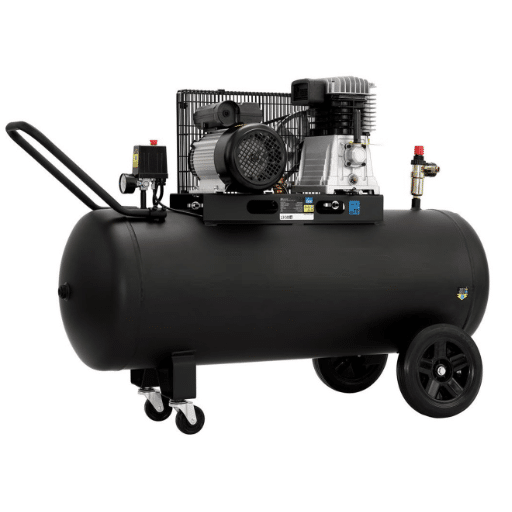
What is an Air Compressor?
An air compressor is a machine that transforms power into potential energy held in the form of air under pressure. Depending on the type, air compressors may use electric motors, diesel engines, or gas engines to suck up air from the surroundings, compress it thus increasing its pressure and then push it into a tank to be released later for various purposes. The air is then released gradually to function tools, fill tires with air, run machines or even play an important role in industrial processes. Hence, it is a tool that is handy in many different fields and also in daily life.
Types of Air Compressors
Air compressors are of different types and each type has its own area of application and needs to be met. The main types are as follows:
Reciprocating (Piston) Air Compressors
These are one of the most frequently used types with the characteristics of being sturdy and efficient. They compress air by using a piston which is moved by a crankshaft. They are made available in two types i.e. single-stage and multi-stage; hence, they can be used for any size task from small DIY projects to large heavy-duty industrial applications.
Rotary Screw Air Compressors
These compressors, containing two helical screws, are meant for nonstop functioning, so they are the most dependable source of compressed air in industries which need a regular supply. Moreover, they are really quiet during operation, consume less energy, and have the ability to deliver the highest airflow.
Centrifugal Air Compressors
The centrifugal compressing machines are for the air in large quantities and sectors like in manufacturing plants, and power production plants because they work by rotating very fast and adding heat energy to air before making it pressure air. High volumes of compressed air are specified by them as the industry uses mainly for manufacturing and power generation plants.
Axial Air Compressors
Mostly employed in specialized sectors such as aerospace and energy production, axial compressors are characterized by high flow rates and efficiency even at high speeds. Also, their complexity and costliness restrict them from being used generally.
Portable Air Compressors
Air compressors that are portable, and having small size and light weight are best to be used in the field. They usually perform quick tasks such as inflating tires or driving small pneumatic tools and thus are a good source of convenience for both personal and professional users.
The different types of air compressors have their own benefits and the one to be used is determined by the pressure range, capacity, and application. It is very important to select the right compressor whether for industrial purposes or everyday tasks to ensure efficiency and reliability.
Importance of Choosing the Right Compressor
The proper air compressor selection is crucial to achieving the three most important operational factors: efficiency, safety, and performance for the specific application. The right choice is dictated by pressure range, volume, and frequency of use. In the industrial environment, it is common that compressors with larger capacities are needed for handling the demanding continuous operations, while portable ones come in handy for the smaller and irregular applications. Properly selecting the compressor that exactly matches your requirements leads to lower energy usage, less wear and tear, and more reliable performance which in turn saves time and money in the long run.
Belt-Driven Air Compressors
How Belt Drive Compressors Work
Belt-driven air compressors are powered by the use of belts and pulleys to transmit the motor’s power to the pump. When the motor is on, it turns the drive pulley, which in turn, moves the belt connected to the compressor’s pump. The pump’s pistons or rotary components are then pushed to inflate the air and fill the tank. The use of a belt system not only makes it easier for the motor to operate but also gives it much longer life and quieter operation. Besides, belt-driven compressors usually allow easy speed and power adjustments by simply changing the size of the pulleys, thus making them suitable for various applications.
Advantages of Belt Drive Air Compressors
The primary benefit of belt drive air compressors is that they can operate less noisily than direct drive ones, which makes them great for places where the noise has to be reduced. Furthermore, they are very robust because the belt takes up most of the motor’s stress, hence no wear and tear on the main parts of the machine. Moreover, these machines are quite flexible since their design allows easy adjustments to power and speed by changing the sizes of the pulleys. Another advantage of such compressors is their low maintenance, which is due to the replaceable belts and easy access to parts, thus making them an efficient and reliable choice.
Disadvantages of Belt Drive Air Compressors
The advantages of belt drive air compressors are many, but their use involves some inconveniences as well. The possibility of belt sliding or misalignment is one of the most significant drawbacks and it can lead to a decrease in the output and the necessity of periodic adjustments or replacements to keep the performance up. Moreover, in some cases, the noise from these compressors might be more than from direct models, and that can be an issue in places where quietness is essential. The other factor to take into account is that the belt drive compressors might require more space and therefore be less practical for compact applications due to their configuration. However, good upkeep and care will often suggest possible solutions to these problems.
Direct Drive Air Compressors

Understanding Direct Drive Technology
The direct-drive air compressors consist of a motor that is directly linked to the compressor pump, thus there is no necessity for a belt or pulley system. This particular setup leads to a higher level of efficiency, and the loss of power is minimized because the energy is transferred in a non-stop manner from the motor to the pump. Direct-drive compressors are usually more compact and lighter in weight, which makes them suitable for portable applications or in areas where space is limited. Moreover, they are usually less burdensome in terms of maintenance in comparison with the belt-driven models, as there are fewer parts that are prone to the effects of wear and tear. However, these devices might run at higher speeds which ultimately leads to higher vibrations and noise levels. Nevertheless, direct drive technology could be considered as a dependable and efficient choice for air compression system users who demand only simplicity and portability along with their equipment.
Advantages of Direct Drive Air Compressors
Direct drive air compressors have a variety of advantages to boast that have made them an attractive choice by users. Their small size and low weight are their main features which not only make them easy to carry around but also save space in areas such as domestic workshops or mobile operations. Furthermore, the link between the motor and the pump directly results in fewer losses due to energy dissipation, hence, better efficiency and performance. Only a few parts in motion mean less maintenance and generally more reliability over the years. In spite of their faster operation, they are a perfect selection for users who consider simplicity, less cost, and good performance as the main characteristics.
Disadvantages of Direct Drive Air Compressors
Direct drive air compressors have their share of drawbacks alongside the pros they offer. The main issue is that they have a shorter life span than the latter because the high speed of operation is a factor that contributes to the wear and tear of the components concerned. Moreover, they are generally noisier and this might be a problem if they are to be used in noise-sensitive areas. Besides, direct drive compressors have limited options when it comes to speed and power adjustment and this might render them unfit for operations that require accuracy or prolonged heavy use. A consideration of these drawbacks is essential when making the decision regarding the suitability of a direct drive air compressor for the particular purpose.
Drive Type Comparison: Belt vs Direct Drive

Performance Metrics: CFM and PSI
When comparing the performance of belt drive and direct drive air compressors, CFM (Cubic Feet per Minute) and PSI (Pounds per Square Inch) are the essential parameters. The belt drive compressors give a constant CFM and high PSI levels; therefore, they are best for heavy and long-run applications. Direct drive compressors, on the contrary, provide enough CFM and PSI for light to medium tasks but might lack the power to excel during heavy usage. So, knowing the CFM and PSI requirements of a job is very important when making the compressor choice to guarantee efficiency and reliability.
Maintenance Considerations
Maintenance has always been vital for both the belt and the direct drive compressors in order to achieve their best performance. Inspections should encompass proper checking for wear and tear of the belts, cleaning or replacing of air filters, and verifying that all connections are tight. Besides, regular oiling of moving parts helps decrease friction and, thus, wear. It is also good practice to remove condensation from the tank regularly to prevent rusting of the internal parts, and check that the compressor’s pressure settings are accurate. Following the manufacturer’s maintenance timetable and using approved parts or fluids will lessen the occurrence of unanticipated breakdowns and keep the performance at its best.
Cost Analysis of Drive Types
When looking at the cost of the various drive types, several factors must be taken into account such as initial purchase price, energy efficiency, maintenance requirements, and long-term operational costs. For example, a belt-driven system might have a lower initial cost but could lead to higher maintenance costs over time due to the belts needing to be replaced and worn out. Direct-drive systems, which are usually more expensive initially, often require less maintenance and are more energy-efficient, contributing to lower costs in the long run. Variable speed drive (VSD) systems, in spite of being more expensive initially, provide substantial energy savings and better performance; thus, they become a cheaper option in the long run for schools with variable demand. In the end, the cost-effectiveness of a drive type is determined by the particular operational needs and usage habits.
Applications of Belt-Driven and Direct-Drive Compressors
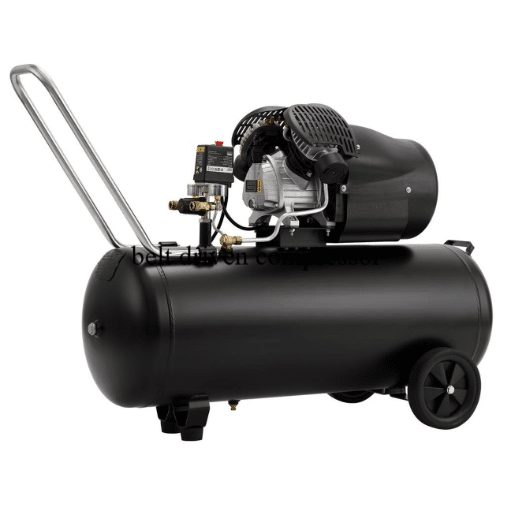
Use in Pneumatic Tools
Belt-driven and direct-drive air compressors, which are basically two different types of compressors, are the main source of energy for pneumatic tools, since they provide the pressure of the air needed for the efficient functioning of those tools. The first type, the belt-driven compressors, is the best for workshops and big factories because these places need constant and powerful performance, and, besides, the belt-driven compressors can manage much higher workloads, as well as offer the possibility of changing the speed. Direct-drive compressors are, however, more suited for portable and smaller-scale applications like home projects or light-duty tasks because of their compactness and maintenance ease. It is the specific demands of the tools being used and the operational environment that determine the choice of the right compressor.
Applications in Auto Repair
The auto repair industry uses air compressors a lot, almost all shops depend on them for various tasks, hence the necessity of air compressors in this sector. Air compressors are usually used to power the pneumatic tools like impact wrenches, ratchets, and spray guns that need air to be supplied constantly for their maximum performance. These tools speed up the repair process allowing the technicians to work quicker and with more accuracy. Other than that, air compressors are also involved in activities such as tire inflating, component cleaning, and maintenance of other areas where precise air flow is essential. The right type of compressor, whether it be heavy-duty with a belt drive or light-duty with a direct drive, facilitates the tools in satisfying the operational requirements of the workshop effectively.
Best Practices for Choosing an Air Compressor
The first step in making a decision about an air compressor is to pinpoint the exact tasks it will perform as well as the necessary pressure and airflow. Think about the compressor’s size and mobility, making sure that it fits your work area and is easy to move around. Determine the power source, i.e., electric or gas-powered, according to your shop’s layout and energy supply. Consider the tank capacity, noise levels, and the life of the compressor, so that they can keep up with your production needs. Besides, check the maintenance needs and see to it that the compressor is provided with a good warranty and support options to cut down on downtime.
Reference Sources
-
Fluid Air Dynamics: Direct-Drive vs. Belt-Drive Air Compressors: What’s Better? – This article compares the pros and cons of belt-driven and direct-drive compressors, focusing on cost, efficiency, and maintenance.
-
Atlas Copco: Belt Drive Compressors Vs Direct Drive Air Compressors – A comprehensive guide on the advantages of belt-driven compressors, including their flexibility in speed and pressure adjustments.
-
Huade Air: What are the advantages and disadvantages of belt drive in air compressor transmission mechanism – This source discusses the cost-effectiveness and design simplicity of belt-driven compressors.
Frequently Asked Questions (FAQs)
In what way do belt drive air compressors stand in contrast to direct-drive air compressors?
Usually, a belt-drive air compressor lasts longer than a direct-drive compressor, and its maintenance is also easier, since the motor is separated from the pump and allows for better isolation of vibration. Air compressors of belt drive vs direct drive configurations may produce less noise and smoother operation, as well as use a smaller motor for the same cfm, which is a good solution when the horsepower is limited. Despite this, the belt drive system needs to be checked at regular intervals for the condition of the drive belt and its parts such as pulleys and tensioners which may need to be replaced, while direct-drive compressors do not require such inspections due to lesser wear items. In most workshops, where the pneumatic and air tools work intermittently, belt-driven compressors place less peak load on the motor and thus, the maintenance cost of both the motor and compressor is lower. The decisions between drive types are influenced by factors like oil-free versus oil lubricated pumps and the intended use of the compressor for heavy auto repair work or spray painting.
What maintenance is required for the air compressor pump and drive belt?
The air compressor pump has to undergo regular maintenance such as the checking oil level for units that are oil lubricated, changing oil according to specifications, and at the same time making sure that oil-free models are following their service intervals for filters and seals. Inspect the drive belt for wear, cracking, or glazing and adjust tension as needed; a failing drive belt can reduce compressor pump output and damage motor to the compressor pump coupling. Replacement parts such as belts, pulleys, and gaskets should be genuine or OEM-equivalent to maintain performance, and scheduled checks of piston rings and valves help sustain cfm and psi ratings. Cleaning cooling fins and ensuring the motor and compressor are aligned prolongs pump life and reduces risk of overheating in rotary screw compressors or piston pumps. For units used in auto repair or spray painting, maintaining consistent 150 psi–175 psi capacity and checking the pressure switch keeps pneumatic tools operating reliably.
Can air tools and pneumatic tools get enough cfm from a belt driven compressor pump?
Definitely, a belt-driven compressor pump able to deliver the cfm is properly sized and can be used for almost all air tools and pneumatic tools. Designs with the belt drive can also equip the compressor with larger and heavier flywheels and pumps to present a higher free air delivery. It is advisable to first add together psd, polyester and watercolor brush, and other miscellaneous supplies tools required you intend to operate concurrently and then select a unit that has a bit of margin allocated for continuous operation – pancake and 6 gallon portable models may be trendy but might not supply adequate air for multiple tools. The sizes and horsepower ratings of belt-drive air compressors are widely diverse and can be tailored to serve needs ranging from small grinders and sanders to larger spray painting setups. Do not forget that the duty cycle, size of the tank (for example, 6 gallon vs larger horizontal air tanks), and the pressure requirement (150 psi vs 175 psi) all have an impact on the performance of the tools in the long run. If several air tools need to be run at once, a higher hp belt-driven compressor or rotary screw compressor might be the right choice for uninterrupted high demand.
What are the parts that need to be replaced in a belt-driven compressor and where can I get them from?
The list of common replacement parts contains the drive belt, air compressor belt pulleys, gaskets, valves, piston rings, pressure switch assemblies, and air filters; the list also includes oil filters and drain valves for oil lubricated pumps, which are considered typical service items. Always buy the parts from the manufacturer or a reputable supplier that lists them compatible with your motor and compressor model to ensure the right fit and to maintain warranty coverage. Always have spare belts and basic gasket kits on hand to cut the downtime, especially if the compressor is used for auto repair or it frequently gets used during spray painting tasks. Regular checks of the pump and motor will definitely help you in identifying which replacement parts are most likely to be the next ones needed, especially when you are following the maintenance capabilities as per the operator manual. For old or rare models, it’s best to cross-reference part numbers and ensure that the motor-to-compressor pump alignment and horsepower are compatible with the replacement components.