
Single-Stage vs Two-Stage Screw Compressor: Performance Differences

In the case of industrial use, the effectiveness and dependability of your machinery can greatly influence both the total output and the operating costs. In most systems, the screw compressors are among the most important parts and they are the ones that actually provide the energy for different processes. Nonetheless, there are some significant differences between screw compressors, and knowing the pros and cons of the single-stage and the two-stage design can greatly improve your operations. The blog post discusses in detail the performance differences between these two kinds of compressors, focusing on their design, efficiency, and ideal uses. By the time you finish reading, you will know for sure which option works best for you and how the decision can affect your output and profits.
Understanding Screw Compressors

What is a Rotary Screw Air Compressor?
A rotary screw air compressor operates with the help of two interlocking helical rotors that breathe in air and push it out. When the rotors rotate, the air is caught in between the rotors, the volume is gradually reduced, thus yielding. Rotary screw compressors are widely used in different manufacturing processes, construction, and automotive industries due to their reliable, efficient, and uninterrupted availability of compressed air. They are pretty silent since their design reduces pulsation, and they last longer than other types of compressors.
Types of Screw Compressors
Screw compressors can be classified into two major types according to their operation and design:
Oil-Injected Screw Compressors
The compressors that use a lubricant, usually oil, during the whole compression process are categorized as oil-injected compressors. The oil has many roles to play like sealing the rotors, removing heat, and, consequently, reducing wear. Oil-injected screw compressors are terrific as they combine super efficiency with durability and can withstand the most demanding applications in manufacturing, construction, and energy. The oil contamination in the final output is minimized by advanced filtration systems in these compressors, thereby enhancing their reliability.
Oil-Free Screw Compressors
The oil-free screw compressors, as the name suggests, operate without the use of oil. Instead of using oil they rely on precision engineering and advanced materials for achieving the required airtight seals and for efficient compression. These compressors are a must in pharmaceuticals, food processing, and electronics industries, where the air has to be contamination-free. While being generally more expensive to operate and manufacture, oil-free screw compressors give incomparable advantages in cases where air purity is most important.
Both categories of screw compressors come with their own respective advantages, aligning with the specific needs of different industries making it critical to always choose the right type of compressor according to the operation requirements and compliance.
Components of a Screw Compressor
The screw compressor is made up of a few main components that coordinate their work to guarantee efficient operation. The principal of these elements is the rotors which are the heart of the compression process, meshing to compress the air as they turn. The housing contains the rotors and keeps them correctly positioned while allowing very little air to escape. Air is sucked in through the inlet and is pushed out through the outlet ports which are the ports for air flow into and out of the compressor. The oil system (in oil-injected compressors) or cooling system (in oil-free compressors) is also important as it helps to keep the optimum temperatures for running the compressor. Control unit is overseeing and controlling the performance of the compressor which is nothing but efficiency and reliability. When the components are working togethe,r they form a strong system that is able to meet industrial demands.
Single Stage Screw Compressor
Design and Functionality
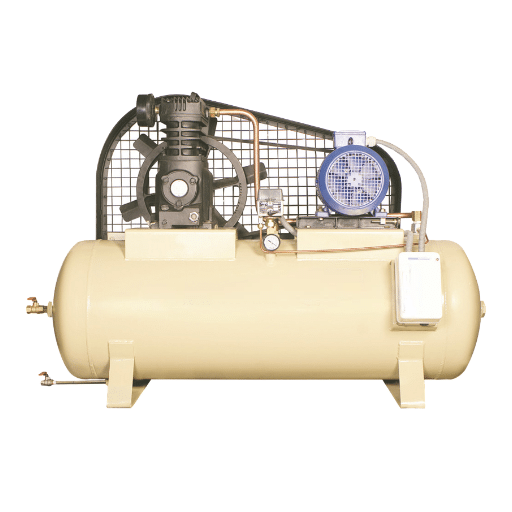
Single stage screw compressor are machines that solely rely on a pair of intermeshing helical rotors that are rotating in the same direction to compress the air in one phase. The gas is let in through the inlet valve and the progressive traps and compresses the volume of air as it is moving along the rotor’s length. The whole process raises the air pressure to the required amount and then it is discharged through the outlet valve. This kind of engineering has made it possible to compress air without using several stages thus making them small and efficient for moderate pressure applications. Besides, the manufacturers of these machines also count on their reliability, ergonomics, and low noise, as sometimes mentioned, alongside their less frequent breakdowns and more extended periods between repairs.
Energy Efficiency of Single-Stage Compressors
The energy-saving factor of these single-stage compressors is the main point from that attract attention in this area of applications involving moderate pressure. Their easy way of working does not consume much energy when compared with the multi-stage technique, since air is compressed at once. Engineers have applied various professional and design methods that have made the process even more energy-efficient, like the use of optimized cooling and decreased friction parts, which are all aimed at bringing down energy losses. They may not come in handy in situations with high-pressure requirements but a single-stage compressor provides an energy-efficient solution for those processes that do not require more than moderate pressure, thus ensuring cost-saving and sustainability in various industries.
Applications of Single-Stage Compressors
Moderate air pressure is the main requirement for the place where single stage screw compressor are installed. Tire inflation, vehicle painting, and pneumatic tools powering are among the activities that automotive workshops do using these kinds of compressors. They also serve the same purpose in small manufacturing, woodwork, and even home repair where the use of nail guns or staplers is common. Such applications demonstrate their economical and energy-efficient features which coupled with their reliability, promote their candidacy for low-pressure machines but whilst at the same time still offer advantages in terms of less operational cost.
Two-Stage Screw Compressors
Mechanics of Two-Stage Compression
Dual-stage compression has proven to be the most effective way to compress air to higher pressure levels. The system first takes in the air into the first stage, which then compresses the air to an intermediate pressure. The compressed air subsequently goes through a cooler, an actual heat exchanger, to lower the temperature and at the same time to be able to liquefy more moisture which otherwise would cause energy loss and thus performance reduction. The 2nd stage is where the cooled air flows and gets compressed once again, this time to a higher desired pressure level. This will cause less heat generation and less wear, which means it will together decrease energy use. Additionally, the improved efficiency will also prolong the compressor’s lifespan. Moreover, through the two-stage compression division, such compressors are designed to serve the industrial and commercial sectors by preventing any inconsistency in their performance from the public power grid events.
Advantages of Two-Stage Compressors
The task of minimizing energy consumption is done with the help of the designed two-stage compressors that distribute the compression process across two phases. This results in less heat generation and energy loss which is why the method is considered ultra-efficient giving the firm a good reputation.
The strategic positioning and arrangement of the compression process across two phases of operation in two-stage compressors reduce the loss of power to the minimum, making them remarkably energy-efficient. One of the mega advantages of their trading temperatures is the absorption of less heat, resulting in less energy loss and thus cost saving over other compressor types.
The reduced heat production by 2-stage compressors during operation leads to less wear on the mechanical parts which increases the lifespan of the machines and makes the usage of the machine a very good investment for heavy industrial establishments and for commercial purposes as well.
Lessened danger of Overheating: The copd air in the midst of the stages is cooled by two-stage compressors and in result the operating temperature stays at lower levels. The attribute that can be designated this way reduces the chances of overheating, as a result, there is no downtime, and the operation becomes smoother.
Aptness for Extreme Duties: The appliances which are immediately turned on but need a high amount of power are the ones for which two-stage compressors are to be used. The heavy-duty performances and the non-stop operations in such longlisted industries as the automotive, construction, and manufacturing ones are the occasions where the two-stage compressors are the saviors of the industry.
Reduced Maintenance and Higher Efficiency of Two-Stage Compressors: While only the start-up costs may deter many buyers from investing in them, the two-stage compressors will be the best among the cost-effective solutions in the long run because of the operation, energy, and maintenance costs savings.
Two-stage compressors are used in a wide range of applications
The use of two-stage compressors is common in many industrial and commercial sectors where the need for a steady supply of high-pressure air is a must. The most common applications for these compressors are in the manufacturing industry where they power pneumatic tools, the assembly line, and automation systems, among others. They are also very efficient in construction where heavy-duty tools like jackhammers and sandblasters can be operated with ease. Moreover, in the car repair and body work, two-stage compressors are used for spray painting, tire inflation, and working impact wrenches thus making the process more efficient. These compressors are usually the number one choice for the market where the demand for continuous performance is very high because of their high capacity and great reliability.
Performance Comparison
Efficiency Metrics
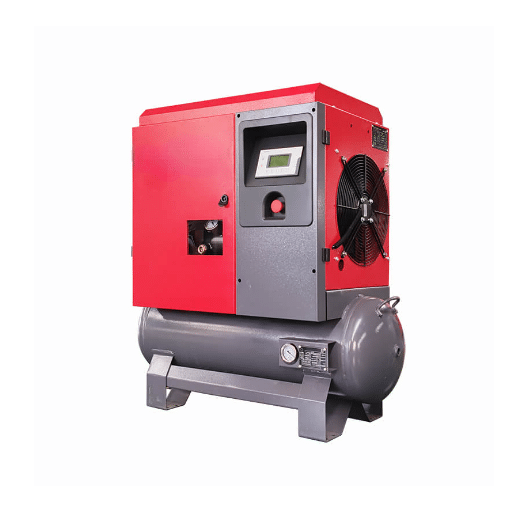
When discussing two-stage air compressors, efficiency metrics mostly consider their performance that is expressed in terms of air pressure constancy, energy consumption, and runtime, among other factors. By design, these compressors, which operate in two stages, are usually more effective than one-stage compressors because the former dissipates heat while working and the latter compresses air in a single stage. The same workload is one of the main factors that make this type of compressor more efficient in terms of energy consumption too. Thus, they can be referred to as the best choice for industries with high loads of demand for compressed air. The continuous use also gives them the additional advantage of always being at their peak during power outage, thus ensuring no need of redundant supplies.
Financial Metrics
It is crucial to check two major expenses, namely initial investment and operational costs during the long run, when comparing air compressors of the two-stage type. Though in general, the air compressors of this category may still be the costliest ones at the outset, due to the higher input than the single-stage compressors, but the lower usage of power and wear and tear accumulated problems and a file of costs often make two-stage compressors the most convenient in the long run. For two-stage air compressors, the price spans over $1,500 and $5,000, depending on capacity, brand, and added features, being the data extracted from market research. Yet, their less power consumption design can make even industrial companies reduce electricity costs by up to 20-25%, thereby compensating the initial outlay and the capital saved can be used for other purposes. In addition, the build quality of two-stage compressors is so good that it hikes up the value and serviceability of the compressor, besides it being maintenance-free and repair-free most of the time. Hence, most of the times the two-stage compressor stands as a rational investment to many industries, especially with high-demand applications, considering that it is a cost-effective choice for operations in the long run.
Suitability for various Industries
Two-stage compressors are quite appropriate for many industry sectors because of their efficacy and robustness. These compressors make the working in Manni actually efficient, this is due to the fact that the factory will be power-driven all round the clock. The same thing is related to the vehicle industry which depends on the compressors for the proper performance of power tools and equipment. The food and beverage industry uses these compressors for a major part of their activities- the processes needing clean, compressed air, ensuring product quality and safety. They are also in vast demand in the chemical and pharmaceutical industries, where precision and reliability are key issues. Altogether, their adaptability and high performance make them a versatile solution across a large number of challenging industries.
Choosing the Right Compressor

Factors to Consider
Choosing the proper compressor should be made by considering a variety of factors for the best efficiency and performance that is up to the mark. One of the key factors to consider are the specifications of a particular application; that includes the pressure and the capacity that would be required for the operation. Energy efficiency is always a huge factor that needs to be taken into account as it points out the level of the operational cost that can be consumed over a certain period with the help of an unfed or an overfed type of compressor. Also, evaluate the type of compressor that meets your requirements the best among the two options—single-stage and two-stage—according to the pressure to be attained and the application frequency. Reliability and need for maintenance should be thoroughly examined so that if something happens, there would be no or little losses in time; this can help in ensuring things are continually running even when the compressor is under breakdown. It should also be seen that the compressor meets the standards and regulations set by the authorities in the industry, more so in the food, pharmaceuticals, and chemical industries, where quality and safety need to be top of the list.
Single vs Two-Stage: Which is Better?
You decide to go to a single-stage or a two-stage compressor, depending specifically on what your needs are. Single-stage compressors are found to be less complex and more cost-effective; therefore, they are the most appropriate choice for applications that require modest pressure levels and have the additional requirements of light to moderate usage. On the contrary, the two-stage compressors were developed to cater to the demands of industrial plants that run on high air pressure by guaranteeing the highest efficiency and offering various other advantages of the system. So if saving energy is paramount, you have the two-stage as the unit with more energy efficient operation, still you have the same reliability under high demand, and in the long run, the cost-saving factor is still winning while the other is more expensive. For other industrial plants that are users of fewer air pressure levels than what the big compressors need to generate, the single-stage compressor is the right choice.
Future Trends in Compressor Technology
Compressor technology in the near future would largely be hinged on new developments in power-saving operations, green technology, and smart technology integration. Among the innovations, VSD is increasing its share of the market since it allows the compressor to adapt its power consumption to the demand, which results in a significant cut in energy waste. Besides the environmental and social aspect of this movement towards refrigerant and material ecologic-friendliness, great importance is given to the application of Internet of Things (IoT) and AI technologies in the vein of the Maintenance 4.0 concept. IoT and AI together enable predictive maintenance as well as real-time performance monitoring, thus reducing downtime and assuring the best possible operation. The growing needs for or the offsets of making the planet more sustainable and IoT, AI, and VSD can be the connections of sustainability and technological advancement in the compressor sector.
Reference Sources
-
Atlas Copco: Exploring the Advantages of Screw Compressor with Single Phase Technology – This article discusses the smooth and continuous operation of single-phase screw compressors, highlighting their reliability and performance.
-
Air Best Practices: The Pros and Cons of Single-stage and Two-stage Rotary Screw Air Compressors – A detailed comparison of single-stage and two-stage rotary screw compressors, covering their advantages and limitations.
-
Air Compressors Direct: Rotary Screw Compressor Buyer’s Guide – A comprehensive guide to selecting the right rotary screw compressor, including insights into single-stage models.
Frequently Asked Questions (FAQs)
What is a single-stage screw compressor motor direct drive compressor series?
The air compressor manufactured in a single stage essentially employs a motor in order to power two rotors — one is male and the other is female — to squeeze the intake air in the positive displacement air end, usually with a direct drive arrangement for efficient energy use. These air compressors move air together with a flow rated in cfm (cubic feet per minute) and a pressure in psi (pounds per square inch), the most common rating being around 150 psi for many industrial rotary screw units. Direct drive designs are usually driven input directly by the motor, thus, minimalizing the energy lost via the belt drive systems and adding to the full load response and reliability and durability improvement. Compressor controls and variable speed rotary screw air systems are additional tools for even more energy savings, since they are able to match the airflow to the actual air demand in the compressed air system. Maintenance of the air end and compressor oil is a guarantee of long life despite the conditions for the oil-flooded types, whereas for applications like clean air streams and sensitive air treatment, oil-free single-stage compressors still can be preferred. To sum up, these compressor series present a very economical option for compressed air provision needed in various manufacturing and process plants.
How does a belt drive screw compressors motor compare to direct drive driven compressors?
Belt driven systems are the kind that depend on belts and pulleys to transmit mechanical energy from the engine to the pump, being able to provide speed matching and easier replacement and on the other hand the direct drive compressors are generally run directly and thus eliminate belt maintenance. The belt driven system may play the role of rpm setting for different compressed air volumes in a more accurate way than any other system and may be less demanding in terms of power during start once in a while but on the other hand, energy efficiency is decreased slightly. The absence of belts in the direct drive system is usually accompanied by the elimination of the maintenance of the belts, which is a big advantage of the direct system over the direct belt system. The former is one of the factors that often result in oil spillage and contributes to a higher usage of energy when the compressors are in operation. On the other hand, the direct system is very much going towards the future of energy efficiency, whereby there is not much to look after and the chances of an early breakdown are very slim, whereas the belt system needs constant surveillance. No matter if oil flooded or oil-free, the machines are all qualified to be super parts of the air compressor company’s business as their products claim to cover the whole range of customer needs in the compressed air sector.
Can oil-free single-stage screw compressors and compressor series be recommended for use in systems where air treatment is required with high precision and as a top priority?
Oil-free single-stage screw compressors are primarily designed to avoid bringing air stream contamination into the compressor oil, thus most of them are used in such fields as medical, food processing, and others in which air treatment quality and its regulation are of highest priority. These compressors, then, still use the male and female rotor pairs and positive displacement principles, they just adapt to the use of different materials and methods of sealing that would totally eliminate oil in the compressed air, which sooner or later solicits a different manner of maintenance than oil-flooded types. However, in terms of energy, oil-free units might consume more than oil-flooded rotary compressor types in specific duty cycles. Nevertheless, they can also eliminate the need for expensive downstream air treatment and filtration in order to remove oil aerosols. So, to get the right model, it is not only the compressed air demand that should be taken into account but also the expected airflow and flow rate in cfm, the required discharge pressure in psi, and whether the use of an air receiver is a benefit when it comes to managing variations in air demand. Also, compressor controls and the use of variable speed rotary screw air, as well as the synchronization of the compressor with the air demand without putting it through the excess of full load cycling, can be employed in order to eventually reduce the energy consumption. In the end, the manufacturers offer a compressor series that will have options both for oil-free and oil-flooded compressors and thus will be the most cost-effective solution for the customer’s total cost of compressed air across volumes of compressed air and job types.
What role does the air end and male rotor design play in compressor performance?
Within a rotary screw compressor, the air end is the part consisting of two rotors: the male rotor and the female rotor. It is where the incoming ambient air is trapped and compressed through the gap between rotors. The quality of machining of the male and female rotor profiles defines the machine’s volumetric efficiency, leakage rates, and accordingly the airflow and flow rate it can give at a particular discharge pressure. In the case of oil-flooded units, compressor oil is at the same time a heat transfer and sealing medium in the compression chamber, which boosts energy efficiency and lengthens the lifetime of the equipment; whereas, in oil-free machines, performance insulation without oil is maintained by means of reduced clearances and the use of advanced materials. The air end’s setup defines a compressor’s ability to preserve a constant top performance at both full load and partly loaded circumstances. It plays a significant role in the machine’s life cycle, by being a key contributor to reliability, durability, and ease of maintenance. The proper selection of the air end should involve an analysis of the compressed air needs of the application, the possibility of the use of the centrifugal type of compressor, and the compatibility of the compressor control system with the overall objective of energy saving. Moreover, the air end is the factor that determines the overall cost of ownership of a compressor series–maintenance intervals, and the availability of spare parts.