
Industrial Screw Air Compressor Solutions for Reliable Compressed Air Supply
Screw air compressors deliver continuous, high-quality compressed air for demanding industrial applications. Our rotary screw air compressor range combines proven technology with energy-efficient design, providing reliable performance across manufacturing, construction, and processing facilities. From compact 5 HP units to powerful 100+ HP systems, these compressors are designed to meet diverse compressed air needs with superior efficiency and low total cost of ownership.
Continuous Operation
Energy Efficient
Low Noise Design
Easy Maintenance
What Defines a Rotary Screw Air Compressor?
A rotary screw air compressor is a positive displacement compressor. Its core mechanism is powered by two counter-rotating screws (rotors) housed within a precise casing. As these screws turn, they draw air into the gaps between their lobes. The rotation progressively reduces the volume of these air pockets, increasing the pressure until the compressed air is discharged at the outlet. This continuous motion ensures a non-pulsating, steady air supply.

Proven Advantages for Industrial Compressed Air Applications
Our rotary screw air compressor technology delivers measurable benefits that directly impact your operational efficiency and bottom line. Engineered for reliability and performance, these systems provide superior value across manufacturing, construction, and processing facilities worldwide.
Built with precision-engineered components and rigorous quality control, our compressors deliver consistent performance with minimal unplanned downtime. Heavy-duty construction withstands harsh environments while maintaining peak efficiency throughout extended service life.
Advanced energy-efficient design combined with optimized compression technology reduces electricity consumption by up to 35%. Longer maintenance intervals and durable components minimize service expenses, delivering the lowest total cost of ownership in the industry.

Choose from single-stage or two-stage compression, fixed or variable speed control, and power ratings from 5 to 100+ HP. Multiple voltage options, cooling methods, and integrated air treatment solutions ensure the perfect match for your specific requirements.
Comprehensive technical support, genuine replacement parts availability, and experienced service teams ensure maximum uptime. Factory-trained technicians provide installation guidance, preventive maintenance, and rapid emergency response to keep your air system running optimally.
Explore Our Screw Air Compressor

Single-Stage Screw Compressor
Ideal for standard industrial pressure requirements, offering a robust and cost-effective solution for reliable air delivery.

Two-Stage Screw Compressor
Delivers higher efficiency and air flow (CFM) for demanding applications by compressing air in two steps, reducing energy consumption.

5-10 HP Screw Compressor
Perfect for small workshops, garages, and light industrial tasks requiring consistent compressed air.

15-30 HP Screw Compressor
A versatile range for medium-sized manufacturing and automotive services, balancing power and footprint.

40-75 HP Screw Compressor
Powers heavy-duty industrial processes, from fabrication to production lines, with substantial air flow.

100+ HP Screw Compressor
The ultimate solution for large-scale manufacturing, processing plants, and critical operations with high air demand.

Stationary Screw Air Compressor
The foundation of any industrial air system, designed for permanent installation to provide a central source of high-quality compressed air.
Screw Air Compressor Specifications and Performance Data
| Feature | Specification Range |
|---|---|
| Power Rating | 5 HP to 300+ HP |
| Capacity (CFM) | 15 CFM to 1500+ CFM |
| Pressure (PSI) | 100 PSI to 200 PSI |
| Drive System | Belt Drive, Direct Drive |
| Control System | Fixed Speed, Variable Speed (VSD) |
| Noise Level (dBA) | 60 dBA to 75 dBA |
| Voltage | 208V, 230V, 460V (3 Phase) |
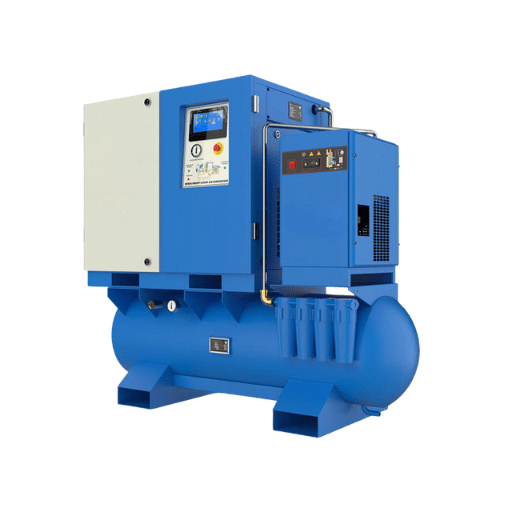
How to Choose the Right Screw Compressor for Your Needs
Air Demand Analysis
Calculate total CFM requirements by inventorying all air-consuming equipment and adding 15-20% safety margin. Consider peak demand versus average demand – variable speed compressors excel with fluctuating demand.
Pressure Requirements
Most applications operate at 100-125 PSI. Higher pressures (150+ PSI) may require two-stage compression or higher-rated units. Avoid over-pressurization, as each 10 PSI increase raises energy costs 5%.
Duty Cycle Considerations
Continuous operations (>6 hours daily) mandate industrial-grade screw compressors designed for 100% duty. Intermittent use may allow smaller capacity with suitable storage.
Space and Installation Constraints
Evaluate available floor space, ventilation requirements, electrical infrastructure (voltage and phase), and accessibility for maintenance.
Future Expansion
Select compressor capacity allowing 20-30% growth potential, or design modular systems where additional units provide scalable capacity increases.
Industrial Applications for Rotary Screw Air Compressors
Manufacturing Facilities
Screw compressors power pneumatic tools, material handling, process control, and automation systems. Continuous duty capability and reliable compressed air supply support 24/7 production schedules without interruption.
Construction and Contracting
Mobile and stationary configurations provide high-volume air flow for sandblasting, concrete spraying, pneumatic tools, and heavy equipment operation. Robust construction withstands harsh environments on job sites.
Food and Beverage Processing
Oil-free compressors or oil-injected units with extensive air treatment deliver certified oil-free air for direct food contact applications, packaging, bottling, and pneumatic conveying.
Automotive Industry
High air demand for painting, assembly tools, tire inflation, and lift operation requires the consistent air delivery and pressure stability that rotary air compressors provide.
Textile and Garment Manufacturing
Compressed air powers weaving looms, spinning machinery, and automated cutting systems. Low noise levels and vibration-free operation are essential in these environments.
Why Choose Screw Compressor Technology Over Piston Compressors
Rotary Screw Compressors
- Duty Cycle: 100% (Continuous)
- Air Quality: Cleaner air with very low oil carryover.
- Efficiency: More energy-efficient for demands over 10 HP.
- Noise: Significantly quieter.
- Best For: Industrial applications requiring a constant and reliable compressed air supply.
Traditional Piston Compressors
- Duty Cycle: Typically 50-75% (Intermittent)
- Air Quality: Higher oil content in the air stream.
- Efficiency: Efficient for very small, intermittent use cases.
- Noise: Loud and high vibration.
- Best For: Small workshops, garages, or tasks with low, infrequent demand for compressed air.


Understanding Total Cost of Ownership for Screw Air Compressor Systems
Initial Investment: Equipment, installation, piping, electrical, and air treatment (typically $3,000-$150,000+ depending on capacity)
Energy Costs: 70-80% of total ownership cost over 10-year life. A 50 HP compressor operating 6,000 hours annually at $0.10/kWh costs approximately $22,000 yearly in electricity.
Maintenance Expenses: Parts, labor, and consumables average 5-10% of annual operating costs with proper preventive maintenance.
Downtime Costs: Production losses from compressor failures can exceed all other costs. Reliable equipment and backup capacity minimize this risk.
Investing in premium efficiency motors, variable speed drives, and proper sizing typically recovers additional cost within 18-36 months through reduced energy consumption.
Our Latest News
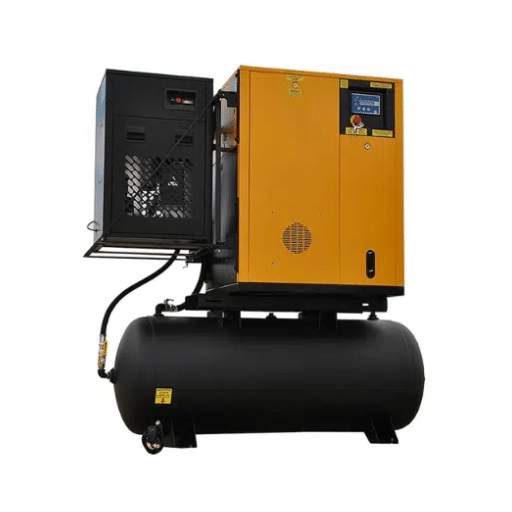
Screw Compressor Oil Carryover: Causes, Diagnostics, and Fixes
Read MoreScrew Compressor Oil Carryover: Causes, Diagnostics, and Fixes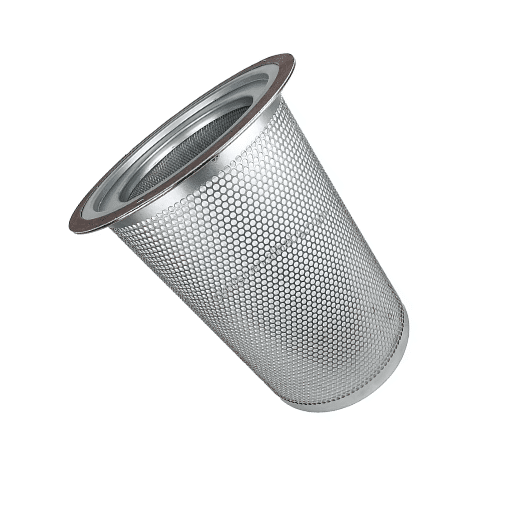
Screw Compressor Air Oil Separator: Replacement Guide
Read MoreScrew Compressor Air Oil Separator: Replacement Guide
Rotary Screw Compressor Oil: Types, ISO Grades, Intervals
Read MoreRotary Screw Compressor Oil: Types, ISO Grades, Intervals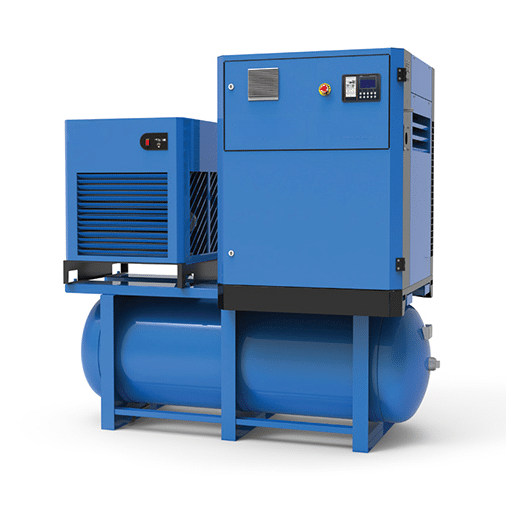
How Does an Oil-Injected Rotary Screw Compressor Work?
Read MoreHow Does an Oil-Injected Rotary Screw Compressor Work?Request a Quote for Your Screw Air Compressor
Ready to enhance your operations with a reliable and energy-efficient air solution? Contact our expert team today. We will help you select the right screw compressor based on your specific CFM, PSI, and application requirements, ensuring you receive a total air system that delivers performance and value.
Frequently Asked Questions (FAQs)
Rotary screw compressors use two meshing helical screws (rotors) to compress air continuously, while piston compressors use reciprocating pistons. Screw compressors offer 100% duty cycle capability, lower noise levels, reduced vibration, and longer maintenance intervals, making them preferred for industrial applications requiring continuous compressed air supply.
You need to list all the pneumatic tools and equipment youCalculate total air consumption by adding CFM requirements of all simultaneously operating equipment, then add 15-20% safety margin. Most industrial applications operate at 100-125 PSI. Consult with equipment manufacturers for specific pressure requirements, and conduct a compressed air audit for large or complex systems.
use, find their individual CFM requirements (usually found in the manufacturer’s specs), and add them up for the tools that will be used at the same time. This total represents your minimum required CFM.
Variable speed compressors adjust motor RPM to match real-time air demand, delivering 20-35% energy savings in applications with fluctuating demand. They maintain more stable pressure, reduce mechanical stress through smooth speed changes, and eliminate wasteful load/unload cycling. Fixed speed units cost less initially and work well for steady-demand applications.
Basic maintenance (air filter cleaning, condensate draining) is weekly or monthly. Oil and filter changes occur at 2,000-8,000 hour intervals depending on operating conditions. Air/oil separator replacement is typically every 4,000-8,000 hours. Major overhauls are needed at 40,000-60,000 hours. Following manufacturer schedules ensures reliable operation and warranty compliance.
An air dryer is essential for removing water vapor from the compressedOil-injected compressors with proper air treatment (coalescing filters, activated carbon) can achieve ISO 8573-1 Class 1 purity suitable for many food and pharmaceutical applications. However, applications with direct food contact or critical contamination concerns require oil-free compressors or certified oil-free air to eliminate any oil carryover risk.
air. Without it, moisture can cause corrosion in your air receiver tanks and piping, damage sensitive pneumatic equipment, and compromise the quality of your final product, especially in applications like painting or food processing.
Small shops typically require 5-30 HP screw compressors delivering 18-120 CFM. Calculate specific needs by listing all air tools and equipment: impact wrenches (3-5 CFM), grinders (5-8 CFM), spray guns (10-15 CFM), etc. Add 20% margin and select a compressor delivering required CFM at your working pressure. A compressed air specialist can perform detailed load analysis for optimal sizing.