
Selecting the Right Compressor for Heavy-Duty Manufacturing

Understanding the Basics of Manufacturing Air Compressors
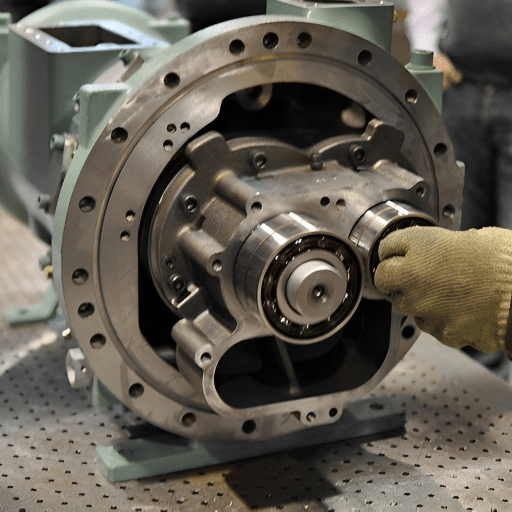
Air compressors are among the key devices applied for power; in the manufacturing sector, is where they are highly used by converting the power to compressed air, then stored in a reservoir for various reasons. The basic concept is the fuel that increases in pressure for usage which is possible by pressure or volume reduction of air, generating compressed air that serves to help in work, machinery, and procedures, among other things. There are also three basic categories of air compressors, which are reciprocating, rotary screw, and centrifugal. It supports the easy usage of each type. Generally, the amount of known pressure, flow, and operational features of the factory limits the principle. To provide the best level of utility and minimize costly losses or downtime, there should be effective and timely reactive and proactive practices.
Definition and Purpose of Air Compressors in a Manufacturing Context
An air compressor is a mechanical apparatus used to convert any type of force into potential energy stored in the form of air under pressure. This is mainly done by compressing the air with the help of a storage tank, which allows the air to be stored at the required levels. In manufacturing, the main function is to provide energy to different tools, devices, and machines. They drive devices like pneumatic drills and grinders, and can also power conveyor systems, thus providing effective and uniform results. Moreover, air compressors are also used in applications where the precision as well as the quality is of utmost importance; for example, in assembly lines, material transport, and spray painting. Combining such a feature and the application of delivery of regular streams of air makes them a vital part of the present-day industry.
Key Components and How They Work
Air compressors are made up of several key components, which are all interdependent for proper functioning and performance. The main component of any air compressor is the compressor or the pump, which does the actual work of compression. However, while some air compressors rely on a piston to do the compression (i.e., reciprocating compressors), others use a complete rotor system, such as in rotary screw compressors. There is also another component of the manufacturing air compressor, and that is the motor, which is powered by either electricity or gas to accomplish compression.
⚙️
Intake & Discharge Valves
Ambient air enters through the intake valve; the discharge valve releases compressed air into the unit.
🛢️
Air Receiver Tank
Provides an air reservoir balance, maintaining airflow without uncontrolled surges even during high demand.
🔧
Pressure Switches & Regulators
Control pressure to avoid unworthy conditions caused by over- or underpressure working ranges.
🌡️
Cooling & Lubrication Units
Air and oil-cooled systems prevent excessive temperature build-up; lubrication units decrease harmful temperature and motion effects.
Overview of Different Types of Compressors Based on Technology
Compressors are available in several designs: reciprocating compressors, rotary compressors, and centrifugal compressors – to name a few.
TYPE 1 Reciprocating Compressors
By definition, it is any air compressor that operates with a piston within a cylinder. It falls under the positive displacement compressors classification since the theory of operation involves reducing the inner volume of a cylinder to allow for compression to take place. They are most often used in industrial workshops and other processes of small production where high pressure is required while the volume is relatively lower. Such classes of compressors are manufactured in either single or multiple stage versions, such that one-stage compressors can achieve high pressure if that is the requirement.
TYPE 2 Rotary Compressors
There are many types of rotary compressors, among which are the rotary screw compressors and the rotary vane compressors. These compressors rely on, for instance, screws or vanes that rotate and allow for air to be trapped, which in turn allows for the volume to decrease and thereby compress the air. Such rotary compressors are quite efficient; it is easy to guarantee a continuous supply of compressed air, and they are adapted to working without interruption in factories. Medium and large-sized businesses also tend to like using such compressors as they are small in size and do not vibrate much compared to other options.
TYPE 3 Centrifugal Blowers
Dynamic compression is the working principle of centrifugal compressors, where air is accelerated by means of a rotating impeller and consequently decelerated in the diffuser in order to compress it. These compressors are widely used in cases with large air volumes, such as chemical industries, gas pipelines, etc., due to their high flow rate capacity. They operate at very high speeds and are efficient and suitable for Scalise-type operations, but their complex structure may lead to the fact that when manufacturing an air compressor, these considerations must be taken into account, and more careful maintenance must be practiced.
These different types of compressor technologies have been developed to meet the varied needs of different industries and businesses, from manufacturing air compressor units to the various industrial applications where compressed air plays a vital role.
Top Factors to Consider When Choosing an Air Compressor for Heavy-Duty Manufacturing
- 1
Power and Efficiency
Assess how much energy the manufacturing techniques consume, and the correct size of air compressor that will provide the required amounts will allow for efficient energy consumption. Instead of the models that have constant speed drives, a VSD model will help in the control of the energy used during the less demanding times. - 2
Capacity and Output
Check that the capacity of your air compressor is sufficient for your operation. That means as many cubic feet per minute and pressure (PSI) should be taken less than expected in order to avoid production losses. - 3
Durability and Reliability
In heavy manufacturing industries, such equipment is required to meet the demands of these industries. Equip the working space with compressing devices made of tough yet effective elements that can withstand high workloads. - 4
Maintenance Requirements
Decide on an air compressor with a low level of maintenance, for which a variety of spare parts are available. Reducing maintenance requirements means, therefore, reducing service interruptions and enhancing the operational life of a plant. - 5
Noise and Environmental Impact
Consider the impact of noise and the environment, especially in a confined or open office. Check if the air compressor comes with any additional noise reduction technology and adheres to the existing environmental protocols.
With the above considerations taken into account, choosing an appropriate manufacturing air compressor that will efficiently assist in overcoming high-performance challenges becomes feasible.
Power Requirements (CFM and PSI)
The main factor to be considered while buying an air compressor is the understanding of power requirements, with particular emphasis on CFM and PSI being met by the components employed. CFM or Cubic Feet per Minute is one of the most common evaluation units that describes the amount of air that a manufacturing air compressor can produce, and the tools employed are supposed to be capable of at least that amount of CFM. For instance, impact wrenches work at about 4 to 5 CFM at 90 PSI, while others in heavy-duty come with capacities exceeding 30 CFM.
| Measurement | Definition | Typical Range |
|---|---|---|
| CFM | Cubic Feet per Minute — volume of air produced | 4–5 CFM (light tools) / 30+ CFM (heavy-duty) |
| PSI | Pounds per Square Inch — pressure applied to compressed air | 90–120 PSI (most tools) / Higher for sandblasting |
PSI, or pounds per square inch rating, measures the pressure directly applied to the compressed air, and most tools are efficient operating within a 90 to 120 PSI range. However, because certain practices, such as those involving spray painting or sandblasting, require higher PSI, compressors are generally recommended. It’s just as critical to check if the compressor you intend to use can handle these CFM and PSI requirements continuously, more so in high-production facilities. Be sure to look at what the manufacturer’s equipment standards are, as well as the operational standards required by you, in order to prevent low performance or even the wearing out of the manufacturing air compressor.
Compatibility with Manufacturing Machinery
Whenever considering the purchase of a manufacturing air compressor, it becomes extremely important to be careful that the air compressor will meet the operational parameters of the equipment concerned. To begin with, one should determine the required CFM, PSI, and voltage specification for the machinery, as it may vary widely with the equipment. Further, it should be ensured that the use of compressors, whether intermittent or continuous in nature, aligns with the use of the machine, as otherwise, there would be low efficiency and mechanical deformation in case of under-capacity compressors.
Other considerations include fitting sizes between connection points with the compressor, types of hoses, their coupling mechanisms, and the pattern itself to avoid connectivity problems. An air compressor’s life, as well as a manufacturing air compressor, may demand more advances like an auto-drain system, integrated controls, and variable speed drives to facilitate optimization while saving energy. It is imperative to study the operating manual for both pieces of machinery, especially the compressor, as well as the machinery, to ensure that their hair resting points are in alignment.
Durability and Maintenance Needs
Significantly, the longevity and maintenance of the industrial compressors should be kept in mind to help in their long-term performance and dependability. The durability of these compressors is enhanced by the quality of the constructed product, corrosion-resistant items, and the design principles that reduce the rate of wear and tear. While purchasing the manufacturing air compressor, go for models that have been built to withstand intensive operations for long, often indicated by service hours per machine.
Correct maintenance practices on manufacturing air compressors shall be carried out depending on which class it falls under: either reciprocating, rotary screw, or centrifugal type. General procedures encompassed but not limited to checking oil level, assessing filters and wear-out elements, inspecting loose fittings, as well as checking for any belt slackness. In situations where the system is advanced, preventive maintenance can be informed by feeder mechanisms rather than the traditional method, as it can afford sensors and mathematical models, or rather an architecture with data analytics enabling issues like heat, excessive pressure, etc., to be addressed without failure emerging.
🔧 General Maintenance Checklist
- Checking oil level
- Assessing filters and wear-out elements
- Inspecting loose fittings
- Checking for any belt slackness
- Monitoring heat and pressure via data analytics
Keeping up with maintenance schedules will help prolong the serviced compressor’s lifespan, reduce the power demand, and avoid unexpected stops. Never miss the manufacturer’s recommendations in terms of maintenance period and components used in the equipment; otherwise, the warranty may become invalid.
Types of Air Compressors Suitable for Manufacturing Applications

| Compressor Type | Best For | Key Advantage | Consideration |
|---|---|---|---|
| Screw (Rotary) | Continuous-duty factory floor | High efficiency, stable airflow | Higher initial cost |
| Reciprocating (Piston) | On/off operations, high pressure | Durable, flexible, affordable | More maintenance needed |
| Centrifugal | Large-scale, high-volume production | Oil-free, low noise, energy-efficient | Complex structure, careful alignment needed |
Reciprocating Compressors
Piston-driven air compressors also go by the name of reciprocating air compressors. They typically operate by compressing air as a piston moves within a cylinder in several stages. Such air compressors are suitable for high-pressure operations and those requiring the occasional air supply, such as in vehicle repairs, industrial spray painting, and even oil refineries. Because the steady state delivery of such compressors can be adjusted to different levels, they are most commonly used in small and medium-scale enterprises. Most reciprocating compressors, however, have more extensive maintenance needs, chiefly because of the increased stress on moving parts, such as the pistons, cylinders, and valves. In any case, the longevity of such compressors, considering their price and the limited number of work hours, makes them one of the most common industrial air compressors, accounting for popular demand in the manufacturing industry.
Rotary Screw Compressors
One of the most used compressors is the dry screw compressor, which is a type of positive displacement pressure compressor, as it is able to work efficiently without interruptions while being relatively easier to repair than other compressors. Two intermeshing screws are used in these compressors, with the result of an uninterrupted air output, avoiding the vibrations of reciprocating compressors. This type of compressor is more preferable than any other type of compressor because wherever there is a need for continuous discharge of air, like in the case of manufacturing air compressors, the food sector, or gigantic factories, this compressor is needed.
Rotary screw compressors boast more advantages over reciprocating compressors owing to enhanced energy efficiency, serviceability, and high volumetric air handling capability. They, too, are designed with high machine duty cycle parameters, and such systems usually incorporate cooling, filtering, and control systems, reducing the complexity of the whole system. Although it may cost more initially, these machines lower overall costs in the long run due to their extended life span and minimal maintenance costs, thus proving to be a crucial factor in any manufacturing air compressor facility.
Centrifugal Compressors
Centrifugal compressors are based on the generation of dynamic pressure, which is achieved due to the rotation of the impellers. Subsequent conversion of such energy is made to obtain its mechanical equivalent – pressure – rather than its kinetic form. Essentially, they are not noisy, and this makes them very useful in high-capacity applications since they provide air flow at constant pressure. Unlike positive displacement compressors, centrifugal compressors do not use oil, which reduces the risk of contamination in sensitive applications.
✅ Advantages
- Low energy consumption
- Space-saving design
- Less servicing — fewer moving parts
- No oil contamination risk
- Quiet operation
⚠️ Considerations
- More costly at the initial purchase stage
- Need careful alignment and application for maximum effectiveness
Centrifugal compressors find extensive application in the petrochemical, power industry, and HVAC sectors, where performance and dependability are extremely important.
Importance of Energy Efficiency in Manufacturing Air Compressors

Reducing energy consumption is among the major steps undertaken by manufacturing air compressor companies to lower operational costs and also to improve the performance of the systems. The use of energy-efficient compressors, which are capable of cutting down how much power is used, is encouraged, as electricity is the major bill incurred while running a compressed air system. Eco-friendly devices are also meeting the objectives of minimizing carbon footprint as well as limiting the consumption of conventional energy. Energy rationing is further improved by smart technology, including variable speed drives (VSDs) and control devices that work in specific situations to meet the needs without wasting excessive amounts of energy. In general, efforts that are economical of energy save money, honor legal and standing obligations, while improving the dependability of industrial equipment.
How Energy-Efficient Compressors Reduce Operating Costs
The most effective way to reduce energy-related operating costs is to enhance the energy efficiency of compressors because this will impact the cost spent on electricity. Most of the compressors are fixed-speed type, based on the prevalent designs, and therefore can consume higher energy levels even when the demand is low. Variable speed drive compressors are one type of energy-saving air compressors that reduce motor wear by automatically adjusting the supply of air according to the consumption of the air to a minimum. Moreover, surfactant-based control systems improve the performance by avoiding compression of the container and allowing for the evaluation of the system’s effectiveness. Another advantage is the lower cost of service, as the current designs of energy-saving compressors are long-lasting and safe with minimal servicing needs. Together, all of the above-mentioned considerations bring the investment cost down and make the environmentally friendly compressors worth purchasing.
Influence on Carbon Footprint and Sustainability Goals
With the help of the energy efficiency compressors that increase the efficiency of the energy used in a given application, this can help reduce the amount of CO2 emissions described in this paper two chapters ago. The reason is that for most of the operating machines, the compressors work in a regime of not maximum efficiency, thus spending too much power. In such a context, modern compressors work on the principles of new power demand management, with the ability to save power thanks to, for example, using variable speed drives (VSD) or smart control systems. This is in line with the global goal of decarbonisation, such as zero-emission ambition or fulfillment of the energy efficiency management requirements ISO 50001. This is because systemic solutions incorporated in these systems allow for generation from renewable energy sources, which reduces fossil fuels, in turn improving consumption indicators.
Key Certifications to Look For
In deciding which systems to opt for due to sustainability and efficiency, there are some certifications enhancing the credibility of the systems. These, for example, and not limited to:
⭐
ENERGY STAR Certification
A standard organization that is globally recognized as an indication of high energy efficiency. Any equipment that displays the ENERGY STAR labeling meets certain conditions, including energy consumption reduction as stipulated by the United States Environmental Protection Agency.
🏅
ISO 50001 Certification
Companies and other entities that possess the ISO 50001 certificate work according to a Standard of Energy Management, which addresses the issue of energy efficiency clearly and resolutely.
🌿
LEED Certification
Leadership in Energy and Environmental Design — more commonly associated with structures and the processes of erecting the same- LEED certification enables a given system to claim a high degree of energy efficiency, resource protection, and a non-consumptive, non-pollutant operational model.
These certifications are really helpful for businesses in that they can be carefully selective about the particular manufacturing air compressor and system that meets high standards and ensures energy efficiency and sustainability.
Industrial Applications of Air Compressors in Heavy-Duty Manufacturing

In any constrained manufacturing environment, an air compressor is indispensable because of its versatility, efficiency, and ability to power various tools and systems. A few instances include the use of pneumatic tools like drills, hammers, and wrenches, which apply to assembly lines and fabrication works. Furthermore, compressors are very useful and critical in any spray painting tasks in the car and metal industries, as they can control or atomize the material evenly. Apart from this, they are ideal for conveying bulk materials like grains and powders using pneumatic conveyors and similar other systems. Other significant applications include the supply of pure compressed air for cleaning and cooling away machines in order to increase the productivity of the equipment, thereby extending their life. In the long run, these principles facilitate employment of high production rates within the manufacturing air compressor environment.
Specific Industries That Rely on Air Compressors
Air compressors are an important aspect of many industries as they can be utilized in a variety of ways to increase plant efficiency and facilitate the use of many power tools.
| Industry | Key Applications |
|---|---|
| Manufacturing | Pneumatic actuators, painting spray lines, assembly systems, robotic systems |
| Construction | Jackhammers, nail guns, compactors |
| Oil & Gas | Drilling, cleaning, and processing equipment |
| Sterilization / Automotive / Food Packing | Precision operations, packaging, and sanitation processes |
How Compressors Integrate with Automated Systems
Automized manufacturing air compressor systems work in conjunction with these compressors, wherein they are controlled utilizing developed distribution of controllers and sensors inside compressors in order to enhance the degree of efficiency to the highest. Through observations, I have discovered that manufacturing/industry automations monitor things like pressure gauges, thermometers, and flow rates—all in real time, with the purpose of making the work of corporations with compressors adjust this work accordingly. IMO, the use of such systems also reduces waiting time as there’s no need for operators to come over to the site just for a simple diagnostic and other integrated systems.
Emerging Trends in Industrial Applications
Developments in the industrial applications driven by automation, digitalization, and environmental protection are most noticeable today.
- 🤖
AI & Machine Learning for Predictive Maintenance: Systems can collect large assessments of sensor data to enable prediction and preventive actions regarding machine breakdowns, reducing costly unplanned downtime. - 🌐
IoT Technology Expansion: Several devices can be connected in a network to communicate and improve the process in real-time, thus increasing productivity across industrial operations. - 🌱
Green Manufacturing Air Compressors: Corporations aim to minimize energy consumption by the use of advanced equipment, clean energy, and the use of reusable resources, aligning with global sustainability mandates.
Overall, these changes resonate with advanced ways of conducting business that are much more integrated, intelligent, and sustainable across all manufacturing industries.
Summary: Key Takeaways
- Choosing the right compressor type — reciprocating, rotary screw, or centrifugal — is critical to matching operational demands.
- Evaluate CFM and PSI requirements carefully to ensure the compressor supports your specific tools and processes.
- Prioritize durability and plan for regular maintenance to maximize equipment lifespan and minimize downtime.
- Energy efficiency, including VSD technology, reduces both operating costs and environmental impact.
- Look for certifications like ENERGY STAR, ISO 50001, and LEED to ensure sustainability compliance.
- Emerging technologies such as AI, IoT, and green manufacturing are transforming how air compressors are managed and optimized.
Reference Sources
Selection and Application of Industrial Screw Compressors
A detailed academic paper on the selection and application of industrial screw compressors.
Compressed Air – Engineering and Engineering Technology
This resource provides insights into compressed air systems designed for industrial applications.
Frequently Asked Questions (FAQs)
How might the use of compressed air determine manufacturing air compressor selection?
Compressed air is an indispensable component in a variety of manufacturing activities making it imperative to carefully choosing the right manufacturing air compressor, beginning with such factors as the cubic feet per minute (CFM), the pressure rating – 100 psi, 125 psi, 150 psi or 175 psi, the duty cycle, as well as the utilization of oil or no oil applications. Think about what type of pump is required such as a reciprocating piston, two-stage, single-stage, scroll compressors, or compressor pumps, and even a variable speed drive or hp variable speed motor to control where necessary to measure airflow and reduce energy consumption. The proper adjustment will ensure that the compressor can deliver and does not lead to cyclic wear or inefficient working up.
Which industrial air compressors can operate consistently and effectively?
Considering uninterrupted application in production operations, one should give preference to such air compressors that are designed to cope with continuous duty, such as a durable manufacturing air compressor with a cast iron cylinder or robust compressor pumps and a high capacity motor. Compounding twin lobe and dual compartment reciprocating compressors and properly measured compressors with improved means of cooling (ex, a heat exchanger and lubrication, where necessary and provided) offer an impediment to the premature failure of the compressor. Proper service from a qualified technician or service technicians, observance of recommended oil quality and strain limitations would ensure the compressor does not lose its efficiency and reliability.
In such circumstances, is it better to purchase the oil-free air or the class zero manufacturing air compressor?
Oleophobic compressors often use what is called diet oil compressor technology, dryers, and filters, but are primarily used in applications such as those mentioned in the previous section, which involve clean compressed air that is not likely to be contaminated. Scroll compressors and dry versions of reciprocating compressors are examples of these oil-free mechanisms, which remove the requirement of separating oil by means of dryers and filters, and thus protect the quality of the end product. Scroll compressors, however, can have different maintenance practices and costs throughout their lifecycle compared to oil-injected compressors, and hence it is good to take advice from experts in compressors on various compressor life cycle and compliance issues.
Does selecting a specific pressure rating (100 psi, 125 psi, 150 psi, 175 psi) depend on parameters such as the manufacturing air compressor?
Choosing the right pressure rating ensures that over-pressurization and energy wastage are avoided. Most pneumatic tools and processes use lower pressures to perform better; excessive delivery pressures increase the horsepower requirement and costs of energy. Consider the specific pressure needs of each application, and more specifically, compressors should be able to accommodate peak requests without excess. Achieving the set pressure and saving energy whilst prolonging the functionality and durability of the compressor is possible when either a pressure controller or a variable speed drive is used.
How do variable speed drives and HP variable speed pumps work in industrial air compressors?
Adjustments in the speed through variable speed drives and variable speed compressors aid the motor in synchronizing only to the required compressed air demands. This reduces the cycles that are frequent in unloading, minimizing the inrush current during start-up and energy consumption during partial loading conditions as well. This efficiency concept enhances the life of the compressor by minimizing the wear and tear of the pumps and the motor that drives them. It also improves the flexibility of the operating cycle and increases the energy savings in the overall compressed air system, thereby reducing the cost of owning the system.
What needs to be considered regarding the configuration and the capacity of the manufacturing air compressor?
Outline a compressor’s design composition meeting the necessary levels of capacity in CFM and motor’s horsepower, operating pressure rating, and duty cycle. Figure out airflow needs, single or two-stage compressors, the size of the tank, e.g., a 10 gallon may be sufficient for small uses and available size for expansion. Evaluate compressor pumps, the lubrication requirements, oil vs oil-free lubricated systems, i.e., pump size, their motors, and control systems used for cutting down peaks and stages. Such a construction of the compressing mechanism can rightly serve for the compressor needs then and later, owing to the easter egg: manufacturing air compressor.