
CFM, PSI and Horsepower Explained: How to Read Air Compressor Specs
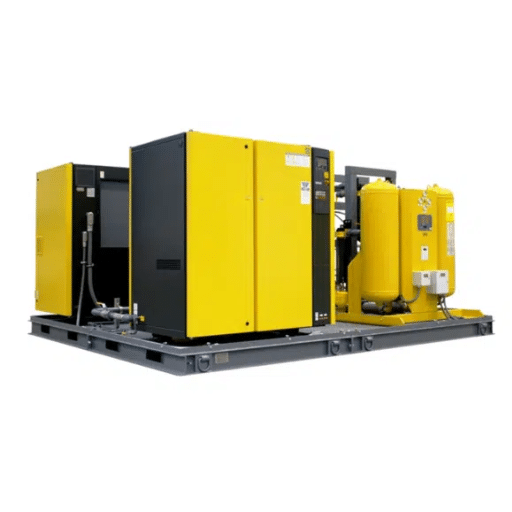
A Thailand-based buyer set eyes on “10 HP, 35 CFM at 90 PSI, 175 PSI max” on the technical data sheet of a compressor. When it came to the quantity of horsepower, it resembled his old one so he took it. In the course of eight months after that, the compressor would overheat every week and barely more than 70 PSI could be detected on the tearing gauge during the peak hours. Plainly, the blasting machine got jammed. As well as the impact wrench became weak. There were three pulp downs on the equipment during the day.
The main issue was not with the compressional it was with the buyer. He purchased a compressor by horsepower regardless of its CFM rating. On this figure, the fresh-from-the-factory piston design machine would supply only 32 CFM at 90 PSI. But his air tools required 45 CFM. The ends of the motor were always in use, hence it was forced to operate far beyond its duty cycle.
In case you are scrutinizing the technical datasheet of air compressors and questioning what CFM, PSI or HP mean in reality, then you are in good company as most people focus on what number is wrong. This article will delve into what each specification measures, the relationship amongst them and how they can all be beneficial in selecting a new compressor combination that fits the user scenario.
Need the complete framework for choosing a compressor? Our guide on how to choose an air compressor for your factory covers demand audit, system design, and total cost of ownership.
What CFM Means on an Air Compressor

CFM = Volume of Airflow
CFM stands for Cubic Feet per Minute. Compressors provide airflow using CFMs to measure the amount of air output delivered by them within a clearly defined time period. You can visualize it as a water pipe span. The greater the pipe diameter, the more water it will carry. The larger the CFM, the more air is blown out.
CFM is typically the number one for both consumers and producers. Surprisingly enough, if the tools demand a supply of air in excess of the compressor, they operate at reduced speed, lower power or do not work at all. A spray gun, which requires 12 CFM, will cope only with interruptions and not perform evenly in case the air compressor does not meet the optimal demand of 8 CFM, for example.
SCFM vs ACFM vs FAD: Which Rating Should You Trust?
Not all CFM ratings are measured the same way. Manufacturers use different standards, and some inflate their numbers.
CFM is the raw volume at current conditions. It changes with temperature, humidity, and altitude.
SCFM (Standard CFM) corrects the measurement to standard conditions: 14.7 PSIA at 68 degrees F. This lets you compare compressors fairly.
ACFM (Actual CFM) is the real volume delivered at your specific operating conditions. If your factory is hot or at high altitude, ACFM is what actually reaches your tools.
FAD (Free Air Delivery) is the most trustworthy and concrete data. This is the air which the compressor will discharge at various temperatures at various pressures and at various altitudes under ISO 1217 conditions. Always check for FAD when comparing the packages.
Why CFM Changes with Pressure
Here is the critical point most buyers miss. CFM is not a fixed number. It changes with pressure.
At 90 PSI, the oil-free air compressor offers 10 cubic feet per minute (CFM), but then reduces to as low as 8 CFM at 125 PSI, due to the inverse relationship of the two values with each being inversely proportional to the other. This should not be taken as a defect; it is a matter of physics. Increased injection (expansion) pressure without a temperature drop will reduce the specific (volume) efficiency further before it increases the specific power (output without air). This is because the effective head (if not the shaft work) for the given airflow rate has to increase with the increase in the pressure ratio.
There is a saying, it is good to compare such performance information like CFMs at the same loads. A manufacturer writing 12 CFM at 60 PSI works just the same as another manufacturer writing 10 CFM at 90 PSI. The second will offer more workable CFM at the given load.
What PSI Means on an Air Compressor
PSI = Force or Pressure
PSI is short for pounds per square inch measuring how hard air is being pushed. Think of this as the water pressure of a hose. The higher the pressure is, the harder and further the object sprays. Higher PSI gives you the ability to support your tools with the energy required for their operation.
PSI is a basic condition for the operation of any kind of tool. For instance, a full torque of a rotational pressure wrench, commonly known as an impact wrench, is developed when 90 PSI is reached. In the case of a tire changer, the air operating pressure may be 125 PSI. For a sandblaster, the range might be 100-150 PSI depending on the media and surface to be treated
How PSI Determines What Tools You Can Run
Whenever a pneumatic tool is employed, the compressor needs to maintain at least the minimum pressure requirement. That means that if the pressure cannot reach the tool, regardless of the tool’s capability, the tool won’t be able to do anything.
But here is where most of us are misled. – The Pressure as read at the point of compressor discharge is not the working pressure at the tool. Control drops – for example, dryer, filter, adjuster, hose, pipe and all of their components. If a compressor is adjusted to work at 120 PSI, the final pressure at the tool is, on average, 100 PSI, assuming system losses.
Every system or piece of equipment is built with a contingency margin within a particular tolerance. Typically, pilots should determine the allowable pressure drop between the highest and lowest working pressure of all the tools in the system and make the cut in their credit card of about 10-15. This is important if the indicator on the base of the tool reads 90 PSI. In this case, a 105 to 110 PSI setting on the compressor discharge will be ideal.
The Danger of Overshooting PSI
Using more PSI than what your tools actually need is a pointless measure because, rather than being more efficient, the tools only work harder. Approximately 2 PSI of extra energy expenditure raises electricity use by about 1 percent for your tools.
Employing 120 PSI in a plant where tools work at 90 PSI wastes continuously 15% more of energy. Where the compressor is 50 HP, and it works in shifts, $1,800 excess payment in electricity bills every year.
What Horsepower Actually Measures
HP = Motor Power Input, Not Air Output
The power of the pump driver in the working principle is determined by the horsepower. This is the material underneath the bonnet. While it is about air being produced, it is technically not about the usable air.
This is where most buyers make their biggest mistake. They see “10 HP” and assume it means “more air than a 7.5 HP unit.” That assumption is often wrong.
Why Two Compressors With the Same HP Can Have Very Different CFM
Two compressors with identical horsepower can deliver dramatically different CFM outputs. The difference comes from:
- Pump design: Single-stage vs two-stage compression, airend geometry, rotor profile
- Efficiency: Motor efficiency, cooling effectiveness, thermodynamic losses
- RPM: Higher RPM can increase output but also increases wear
- Compressor type: A screw compressor typically delivers 4-6 CFM per HP. A piston compressor delivers 3-4 CFM per HP
A well-designed 7.5 HP rotary screw unit can out-deliver a poorly designed 10 HP piston unit. Horsepower alone tells you almost nothing about actual performance.
The Marketing Problem With HP Ratings
HP is the first manufacturer to be well aware of this and they cater to it when declaring power listed. As such, most manufacturers have failed to provide running hp and instead provide peak or starting hp. Take a ”5 HP” motor as an example, where only 3.5 HP is the real running power that can be offered constantly. The other 1.5 HP is all for show.
The only numbers that matter are CFM at your required PSI. Everything else is secondary.
Want help matching specs to your tool list? Our guide on what size air compressor you need includes a step-by-step CFM calculation method with worked factory examples.
How CFM, PSI, and HP Work Together
The Relationship: You Cannot Max All Three at Once
The three – CFM, PSI and HP are linked to each other; it is not possible to maximize all three- CFM, PSI and HP values simultaneously. Something has to be improved.
If the pressure (PSI) is to be increased, the power (HP) required also needs to be increased in order to maintain the same airflow (CFM). If the aim is to increase the airflow at a constant pressure, it means that additional power will be required. If, however, power is maintained and the pressure increased, the airflow will decrease.
The Inverse Relationship: As PSI Rises, CFM Falls
This is the part that’s a bit more difficult to follow. In a compressor that already has its work output assigned, boosting the outlet pressure diminishes the airflow. The power drives the compressor harder to compress air to a higher pressure. However, less air can pass through each minute than would be the case otherwise.
| Pressure | Typical CFM Drop | Effective Output |
|---|---|---|
| 90 PSI | Baseline | 100% |
| 125 PSI | -15% to -20% | 80-85% |
| 150 PSI | -25% to -30% | 70-75% |
| 175 PSI | -35% to -40% | 60-65% |
If it was rated to give 50 CFM at 90 PSI, the compressor may generate 35 CFM at a pressure of 175 PSI. In the event you are after high-pressure, with the pancake compressor, you are likely to go beyond the size that was first bought.
Why You Cannot Convert CFM to PSI (or HP to CFM Exactly)
Air flow is measured by CFM. Pressure is measured by PSI. Power is measured by HP. They are completely different units of measurement and the question is meaningless because they refer to different things.
You can’t ask – “How many PSI is 20 CFM?” For the same reasons, you cannot ask, “How many miles per hour is 10 gallons?” The thing is: this question doesn’t make sense to start with.
Your best bet under these circumstances is an approximation. Engineers often employ step-down factor ratios as per the compressor type and operative efficacy which, however, are either efficiencies rather than conversion tables.
HP to CFM Conversion: Rules of Thumb That Actually Work

While exact conversion is impossible, these guidelines help you estimate real-world output.
Screw Compressor: 4-6 CFM per HP
Rotary screw compressors are more efficient than piston units. At 90 PSI, a well-designed screw compressor typically delivers 4-6 CFM per horsepower.
| HP | Approx. CFM at 90 PSI (Screw) | Approx. CFM at 125 PSI (Screw) |
|---|---|---|
| 5 HP | 20-25 CFM | 16-20 CFM |
| 7.5 HP | 30-38 CFM | 24-30 CFM |
| 10 HP | 40-50 CFM | 32-40 CFM |
| 15 HP | 60-75 CFM | 48-60 CFM |
| 20 HP | 80-100 CFM | 64-80 CFM |
| 30 HP | 120-150 CFM | 96-120 CFM |
| 50 HP | 200-250 CFM | 160-200 CFM |
Piston Compressor: 3-4 CFM per HP
Piston compressors are less efficient due to cyclic compression and heat losses. At 90 PSI, expect 3-4 CFM per horsepower.
| HP | Approx. CFM at 90 PSI (Piston) | Approx. CFM at 125 PSI (Piston) |
|---|---|---|
| 1.5 HP | 5-6 CFM | 4-5 CFM |
| 3 HP | 9-12 CFM | 7-9 CFM |
| 5 HP | 15-20 CFM | 12-15 CFM |
| 7.5 HP | 22-30 CFM | 18-22 CFM |
| 10 HP | 30-40 CFM | 24-30 CFM |
| 15 HP | 45-60 CFM | 36-45 CFM |
The Pump-Up Test: How to Measure True CFM
If you already own a compressor and want to verify its real output, measure it directly.
Method:
- Find the tank volume in gallons. Convert to cubic feet: Tank Volume (ft3) = Gallons / 7.48
- Record the time in minutes it takes to pump the tank from a lower pressure (P1) to a higher pressure (P2)
- Calculate: CFM = (Tank Volume in ft3 x (P2 – P1)) / (14.7 x Time in minutes)
Example: A 60-gallon tank (8.02 ft3) pumps from 0 to 120 PSI in 2.5 minutes. CFM = (8.02 x 120) / (14.7 x 2.5) = 962.4 / 36.75 = 26.2 CFM.
This test accounts for real-world inefficiencies. It is more reliable than any manufacturer’s spec sheet.
Understanding screw vs piston efficiency differences? Our screw vs piston compressor comparison explains why screw units deliver more CFM per HP and what that means for your energy bills.
How to Calculate the CFM and PSI Your Factory Needs
Step 1: List Every Tool and Its CFM/PSI Requirements
Take a walk in the factory and note on a piece of paper the CFM and PSI rating of every AIR pneumatic tool. Search for nameplates or data plates in case of doubt. Usually, dimensions are given as “CFM at 90 PSI” or “SCFM at 90 PSI”.
It is recommended to increase the nameplate value by 10-20 percent. This is because real-world usage is generally more than that due to worn-out seals, set regulators and hose contact.
Step 2: Add Simultaneous Use (Not Total Use)
Your compressor does not need to power every tool at once. It needs to power the tools that run simultaneously during your peak demand window.
For intermittent tools, apply a usage factor. A tool used 25% of the time counts as 0.25 of its rated CFM. A tool used continuously counts as 1.0.
Step 3: Apply a 20-30% Safety Margin
Multiply your peak simultaneous demand by 1.25 to 1.30. This buffer addresses system leaks (approximately 20-30% in unregulated plants), pressure drop, and future expansion.
Step 4: Match to Compressor FAD at Your Required PSI
Now that you have a target CFM, you should choose a compressor that has a Free Air Delivery rating at your PSI of interest, which meets or surpasses the stipulated value. For estimation purposes, make sure that FAD and not the volumetric output is used. The number of outputs is counted with additional tariffs.
Common Factory Tools: CFM and PSI Requirements
Here is a reference table for typical factory pneumatic tools at 90 PSI. Always verify with your specific tool manual.
| Tool | Average CFM | Pressure (PSI) | Use Type |
|---|---|---|---|
| Impact wrench (1/2″ drive) | 4-5 | 90 | Intermittent |
| Impact wrench (3/4″ drive) | 6-8 | 90 | Intermittent |
| Die grinder | 4-6 | 90 | Continuous |
| Angle grinder | 6-8 | 90 | Continuous |
| DA sander | 6-9 | 90 | Continuous |
| HVLP spray gun | 8-15 | 40-60 | Continuous |
| Conventional spray gun | 12-20 | 90 | Continuous |
| Air hammer | 4-12 | 90-100 | Intermittent |
| Sandblaster (small cabinet) | 10-15 | 80-125 | Continuous |
| Sandblaster (production) | 15-100+ | 100-150 | Continuous |
| Tire changer | 1-2 | 125-150 | Intermittent |
| Dusting blow gun | 2.5 | 90 | Intermittent |
| Pneumatic cylinder (2″ bore, 10 cyc/min) | 0.04 | 90 | Continuous |
| Pneumatic cylinder (4″ bore, 10 cyc/min) | 0.15 | 90 | Continuous |
Continuous-use tools set your minimum CFM requirement. Intermittent tools create peaks that your compressor plus tank must handle.
Real-World Factors That Reduce Your Effective CFM

Altitude Correction
It should be remembered that as the geometric height increases, the amount of air available that the compressor can induct also decreases. So a compressor at 5000 feet ingests air for every single cycle which is less and will produce correspondingly lesser output. Every 1000ft above the sea level results in about a 3-4% reduction in the output.
| Altitude (feet) | Output Correction Factor |
|---|---|
| Sea level | 1.00 |
| 2,000 | 0.94 |
| 4,000 | 0.88 |
| 5,000 | 0.85 |
| 6,000 | 0.82 |
| 7,000 | 0.79 |
| 8,000 | 0.76 |
If your calculation says you need 100 CFM and your factory is at 5,000 feet, divide by 0.85. You need a compressor rated for approximately 118 CFM at sea level.
Temperature Effects
In addition, it is also true that warm air will be associated with the intake fan, causing the air particles to be less dense and therefore less efficient. In the context of such a climate, the increased air temperatures may also place some additional load on the cooling systems. Provided that the temperature in the room with the compressor exceeds 40°C (104F) on a regular basis, it may be necessary to install more outlets or increase the size of the apparatus.
Pressure Drop Across Piping and Fittings
Every foot of the plumbing system, every joint, every control valve and every strainer – it all means lost energy in the form of head. This head loss is equivalent to a drop in pressure. A compressor delivering 120 PSI exhaust pressure that is sitting at the end of a compressed air line that is too small or blocked might discharge the pressure at the tool at 100 PSI only.
Common pressure drop sources:
- Undersized distribution piping: 5-10 PSI loss
- Long hose runs: 3-5 PSI per 100 feet
- Clogged filters: 2-5 PSI loss
- Excessive fittings and elbows: 1-2 PSI each
Leak Loss
Even a single 1/4-in sized leak at 100 PSI will consume approximately 100 SCFM. This is also the work of a 25 HP compressor which is running constantly. Under normal conditions within a neglected industrial facility, typically, the expected leakage would comfortably reduce 20-30% of the theoretical production, that is, the rated capacity.
The Cost of Getting It Wrong
Undersized: Pressure Collapse and Downtime
When the air compressor taps out whereas Total Primary Flow Limit is below the minimal quantum, only the pressure to drive tools becomes disappointingly low. This will in turn, lead to a decline in the power and speed capacity of tools causing a diminution in the quality of output. Due to continuous running, the compressor also tends to overheat. As a result, the compressor ends up failing before its time.
Hidden costs exceed the initial investment cost associated with the purchase of a compressor. They are loss of output, returns, and a higher-cost speedy delivery for a replacement.
Oversized: Wasted Energy and Motor Wear
Oversized was selected based on higher purchase rather than practical thermal dow. Switching from a smaller capacity to a larger one leads to frequent starts and stops of the compressor. Every stop wastes the energy used to build pressure. Motor wear accelerates. Operating costs increase. The same happens to the efficiency of the system.
The factor of energy costs accounts for 69-75% of the lifetime of compressors. Exaggeration of the size by only 15% can cost more than $30,000 in additional energy charges for a 75 kW machine of medium size in ten years.
Energy Cost per HP: What One Extra Horsepower Costs You Per Year
At 0.12 per kWh and based on 4,000 hours per year of operation (two shifts), one extra horsepower would cost about $360 per year in electricity throughout the year. Within ten years, that implies $3,600 for one extra horsepower you don’t need.
The power efficiency translates into monetary terms. By using only 20 HP instead of 15 HP, approximately $1,800 is lost in a cauldron of sorrows annually. Over a decade, a sum of $18,000 amount is wasted on unnecessary electrical energy consumption.
Decision Framework: Which Spec Matters Most for Your Factory?

Prioritize CFM If:
- You run continuous-use tools (sanders, grinders, spray guns, sandblasters)
- Multiple tools run simultaneously
- Your production line cannot tolerate pressure drops
- You are sizing for a factory with high simultaneous demand
Prioritize PSI If:
- You run high-pressure specialty tools (tire changers, some sandblasters)
- Your application requires pressure above 150 PSI
- You need force more than volume (some clamping and pressing applications)
When HP Actually Matters
One should not pinpoint the importance of horsepower. Relate to horsepower generally and not in screening selections for sizing of the motors that are most appropriate. For example, a larger 50 HP air compressor will deliver a larger volume of air as compared to a smaller 10 HP air compressor. However, a 10 HP air screw compressor may be expected to discharge more air than a 15 HP air piston compressor.
The correct priority is: CFM first, PSI second, HP last.
Frequently Asked Questions
What is the difference between CFM and PSI?
CFM is unit of air flow that the compressor can deliver in a minute. In particular, the figure of PSI is a measure of the strength which the air is impelled. The more CFM there is, the more tools you can afford to operate. The more PSI, the more efficiently the tools tend to be operated.
How many CFM per horsepower?
This air flow distribution is heavily dependent on the type of compressor and its degree of compression. Mechanical imperfection and basic engineering inefficiency is so much that in reality, 90 PSI at around 4 CFM/HP is impossible in a rotary compressor. Where piston type delivers 3-4 CFM/HP. Even two motor-driven compressors having the same horsepower can be a milestone apart in volume conversion depending on pump types and efficiency input.
What does SCFM mean vs CFM?
SCFM (Standard CFM) stands for standard cubic feet per minute and its value is obtained at standard conditions which are 14.7 PSI at 68°F. CFM on the other hand, is the volume rate of flow at the present conditions. This is an advantage for SCFM since it allows fair comparison between compressors while temperatures, elevations and levels of humidity can change CFM.
Is higher CFM or PSI better?
There is no one-size-fits-all answer to this question. There is typically a need for certain levels of CFM to ensure that tools can be supplied with air and for the pressure in them to work on the required resources. Go above these levels and you will be wasting energy to air. Go less than these levels and you have a compressor that is more overpowered than it needs to be.
How do I calculate CFM for my air compressor?
Use the pump-up test: measure the time to fill your tank from P1 to P2, then calculate CFM = (Tank Volume in ft3 x (P2 – P1)) / (14.7 x Time in minutes). Alternatively, use the rule of thumb: screw compressors produce 4-6 CFM per HP; piston compressors produce 3-4 CFM per HP.
Conclusion
CFM, PSI, and HP are the top 3 figures that every customer will look at. The majority of customers concentrate on the horsepower as their primary motivation. This is the incorrect approach.
CFM interprets the amount of air that your equipment consumes. It is the characteristic that determines the capabilities of your compressor. The PSI is actually the force that powers your equipment. It should be able to be your maximum equipment need plus systems’ losses. Horsepower is basically the engine but it is not able to define the amount of compressed air you are going to get.
The best policy is very convenient. First, go with CFM. Then check the PSI level. The HP value can only be checked last. Such an order of things will prevent you from making investments in one of the most costly errors while buying an air compressor: buying a unit simply because it looks impressive but being incapable of producing the air actually needed by the factory.
Should you need professional assistance in correctly specifying the air compressor for use with your tools and according to your working environment, contact Shandong Loyal Machinery for a free compressed air audit. We shall require that you provide us with an inventory of your equipment, information concerning the magnitude of simultaneous demands, the pressure requirements, and the environment. At the end of such an interaction, we shall present a recommendation which will prevent the generation of air more than the need of CFM in combustion and thus complexities of money and energy wastage as well.