
When to Rebuild or Replace a Screw Compressor Airend
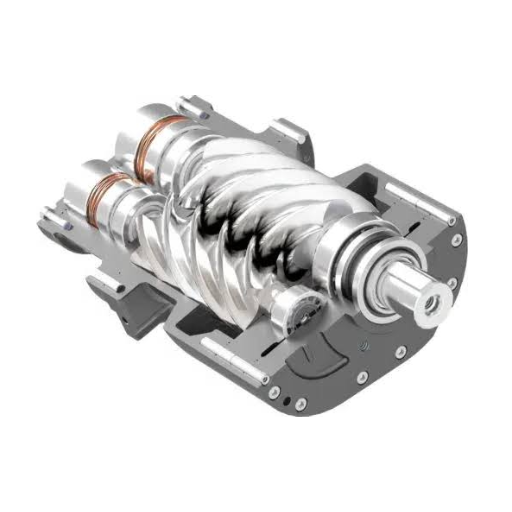
Rebuild a screw compressor air end when the rotors and housing are still within tolerance, the rest of the machine is sound, and the rebuild quote stays well under half the cost of a comparable new unit. Replace it when the rotors are scored past recovery, the machine is obsolete, or the motor, drive, and cooler are all due at the same time.
Before either, prove the fault is the air end at all. That step saves more money than the choice between rebuild and replace.
Dario, a maintenance manager at a plastics plant, faced this decision twice in one year. The first time, a shop replaced the bearings at 34,000 hours and returned the unit in nine days. The machine failed again at 38,000 hours.
The thermostatic valve had been stuck in bypass the whole time, so the new bearings cooked in oil that never reached the cooler. The second time, the shop measured first, fixed the valve, and the same rebuild design ran past 60,000 hours.
The difference was not the parts. It was the order of the questions.
Key Takeaways
- Airend design life is 30,000-80,000 operating hours; the bearings inside are rated 20,000-40,000 hours (L10), so oil discipline and cooling move the number more than the clock does
- Prove the fault first: capacity loss, heat, and noise have many causes outside the airend, and rebuilding an innocent component buys nothing
- The 50% rule works only when you fix the denominator: rebuild cost against a like-for-like new unit, not against a new airend alone
- A real rebuild includes documented clearances, a run-in, and a free air delivery (FAD) check; starting up is not acceptance
- Never rebuild the failure mode: oil quality, cooling, and contamination decide whether the new bearings last 8,000 or 30,000 hours
How Long Does a Screw Compressor Airend Last?
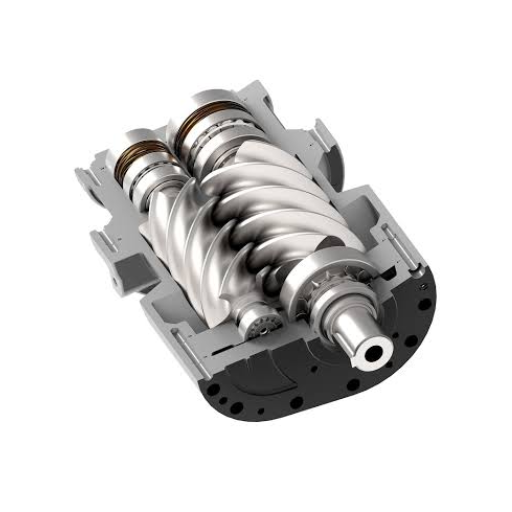
An airend, the screw element at the heart of a rotary screw compressor, has a design life of roughly 30,000-80,000 operating hours under correct oil, cooling, and load. Overhauls are commonly planned at 50,000-60,000 hours, and some programs express the interval in years as well as hours.
Inside the housing, the bearings set a shorter clock. Bearing basic rating life, defined as L10 in ISO 281, is commonly 20,000-40,000 hours for Airend bearings, or about four to eight years at 5,000 hours per year.
L10 means 90% of a large sample reaches that life under the rated conditions. It is a statistical rating, not a replacement date. The bearing life calculation method in ISO 281 also shows why lubrication and contamination change the outcome as much as load does.
| Factor | Effect on bearing life |
|---|---|
| Oil quality and change discipline | The strongest lever. Hot, dirty, or wrong-grade oil shortens bearing life sharply |
| Cooling and ambient temperature | Oil oxidation roughly doubles for every 10 °C above 60 °C (140 °F), so a hot room ages the oil and the bearings together |
| Load profile | A machine that runs at full load with clean oil outlasts one that cycles wet and varnished |
| Water and dust ingress | Contaminants embed in bearing races and cut L10 life early |
| Changes after service | Wrong rotation, overfill, or disturbed hoses cause failures that have nothing to do with hours |
Because of that spread, hours alone never decide anything. A clean machine at 70,000 hours may deserve an overhaul; a neglected one at 30,000 hours may deserve a different conversation.
For the oil and interval side of that discipline, see our rotary screw compressor oil grades and change intervals and the oil-injected screw compressor maintenance schedule. If you’re already holding a quote, send us the model, hours, and readings, and we’ll help you judge the evidence.
Signs Your Airend Is Wearing: Evidence, Not Noise
No single symptom proves an airend needs a rebuild. The list below is an evidence ladder, strongest signal first. Each sign needs a confirming check before it counts.
| Sign | Confirming check | What it rules out |
|---|---|---|
| Capacity down at unchanged power draw | FAD measurement at rated pressure against the nameplate | Downstream leaks and demand (they do not change motor load this way) |
| Amp draw at full load trending down | Clamp meter against full-load amps (FLA); about 60% of FLA at full-load command is a classic field indicator, not a specification | A mechanical drag fault, which raises current instead |
| Metal particles in the oil | Trend iron and copper across the last three samples, not one lab report | One-off contamination; a rising trend points at bearings or races |
| New whine or knock under load | Stethoscope or noise recording compared with the same load last month | Belt whine, inlet noise, and valve flutter sit at different pitches |
| Discharge temperature rising with a clean cooler | Cooler ΔT test at stable full load, plus a sensor cross-check | Fouling and thermostat faults; if those check out, internal friction is left |
| Vibration rising on the same axis | Trend in mm/s against the machine’s own baseline | Loose mounts and pipework, which shift direction after alignment |
| Oil carryover starting with a fresh separator | Separator differential pressure and scavenge line condition | A saturated element; if ΔP is normal, rotor clearances move up the list |
Treat the trend as the evidence. One bad reading is a conversation; three samples moving the same way is a decision.
If several of these appear together, the fault trees in our oil-injected screw compressor troubleshooting guide separate airend wear from the lookalikes.
Before You Decide: Prove It Is the Airend
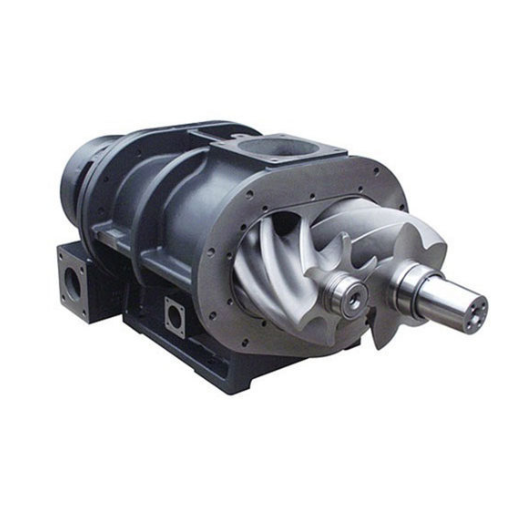
The most expensive mistake in this decision is rebuilding the wrong component. Work the rule-out ladder in order and stop as soon as the evidence clears the machine.
- Isolation and FAD test. Close the discharge valve and load the machine. If it builds and unloads, the fault is downstream: leaks, demand, filtration, or storage. If it will not build, continue.
- Drive and motor. Belts, coupling, rotation after electrical work, and motor condition. A slipping belt mimics an aging air end exactly.
- Inlet and unloader valves. A valve that will not open fully limits capacity without touching the rotors.
- Filters and separator. A restricted air filter and a loaded separator both cut delivery and raise temperature.
- Only then, internal inspection. If the ladder clears everything else, the airend is the remaining suspect, and a qualified party opens the machine.
Bring four readings to the decision: measured FAD against nameplate, amp draw at full load, the oil analysis trend, and the alarm history with running hours. A rebuild quote built on a symptom list alone is a quote built on a guess.
Opening anything on the machine requires lockout/tagout and verified zero pressure. Pressing Stop isn’t isolation; stored pressure and hot oil remain after shutdown. OSHA 29 CFR 1910.147 sets the boundary.
Airend Rebuild or Replace: The Decision Framework
Once the fault is proven, run three gates in order. Skip a gate, and the quote in your hand will decide for you.
Gate 1: The Mechanical Gate
Rebuild is on the table only if the rotors and housing are still within tolerance. Rebuilding replaces bearings, seals, and gaskets. It cannot restore metal that has left the rotor surface.
- Rebuildable: localized bearing wear, seal failure, light scoring that stays within the manual’s clearance limits, a sound housing.
- Replace: deep scoring, pitted or rubbing rotors, a worn or cracked casing bore, seizure damage.
Published clearance guidance varies by OEM. One widely quoted set of figures puts new radial clearance at 0.03-0.08 mm, a warning band near 0.12 mm, and a fail condition above 0.15 mm, with each 0.05 mm of extra clearance costing roughly 15-20% of airflow. Treat those as published ranges, not universal specs. The manual on your machine has the final word.
Gate 2: The Machine Gate
An air conditioner does not live alone. Rebuilding into a machine with a failing motor, a fouled cooler, obsolete controls, or no parts availability buys a short second life.
- Motor, drive, cooler, and controls: sound, or priced into the same project?
- Parts: available within weeks, or obsolete with long lead times?
- Demand: does this machine still match the plant’s air profile, or has the load changed?
If three of these fail together, replacement wins regardless of what the airend itself costs.
Gate 3: The Economic Gate
The familiar 50% rule says rebuild when the quote comes in under 50% of a comparable new unit, and replace above it. Critical and backup service often uses a 65% threshold instead, and some OEM framing runs 50-60%.
The rule fails in four situations:
- The denominator is wrong. Fifty percent of a new air end and fifty percent of a complete compressor are different tests, often apart by a factor of four or five. Name the denominator every time.
- The rest of the machine is due. A rebuild plus a motor plus a cooler approaches the price of a new unit with none of the warranty.
- The efficiency gap is ignored. A rebuild restores function, not specific power. Published comparisons put 15-year-old fixed-speed units 15-25% above modern specific power, with replacement paybacks of three to five years on energy alone.
- Demand has changed. An oversized or undersized machine stays wrong after any rebuild.
Because published cost figures disagree so widely, normalize them before comparing. This table shows ranges as their publishers present them: a US dealer analysis of whole-unit rebuild versus new, and a manufacturer’s figure for the airend alone.
| Basis | Rebuild | New | Rebuild as % of new |
|---|---|---|---|
| 25-40 hp, whole unit (published dealer range) | USD 8,000-14,000 | USD 22,000-35,000 | ~35-45% |
| 40-60 hp, whole unit (published dealer range) | USD 10,000-18,000 | USD 30,000-50,000 | ~35-40% |
| 75-150 hp, whole unit (published dealer range) | USD 15,000-28,000 | USD 55,000-95,000 | ~25-35% |
| 150-250 hp, whole unit (published dealer range) | USD 25,000-45,000 | USD 110,000-180,000 | ~20-30% |
| Airend only (published manufacturer range) | 30-50% of a new airend | New airend ≈ 20-30% of unit price | Different denominator |
These are directional vendor-published ranges, regional and unsourced by their own publishers. Use them to sanity-check quotes, not to set a budget.
Then get three quotes on one page: the rebuild, a like-for-like new unit, and an efficient-equivalent new unit with current controls. Add the downtime cost to each. Electricity is commonly cited at roughly 70-75% of a compressor’s lifetime cost, with purchase price at 10-15%, so the third quote often wins even when it looks the most expensive. Our total cost of ownership calculator and the energy efficiency and TCO guide put numbers on that comparison.
What a Proper Airend Rebuild Includes
A rebuild is a defined scope, not a promise. Before you approve one, confirm the checklist.
Scope
- Full disassembly, cleaning, and dimensional inspection of rotors, housing, and bearing journals
- New bearings and seals to OEM specification, new gaskets, seal strips re-cut
- Metalizing and machining of bearing journals where limits allow
- Rebalance and reassembly to documented clearances, with a spin check
Acceptance
- Documented clearance measurements before and after, on paper
- A run-in period under controlled load
- FAD verified at rated pressure against the nameplate
- Noise, vibration, and temperature recorded against the pre-rebuild baseline
- Warranty in writing: the common industry norm is 1 year or 8,000 hours
Starting the machine is not acceptance. If a shop can’t show measurements, it’s selling labor, not a rebuild.
Turnaround commonly runs 10-14 working days, with some shops at five to seven and new-unit lead times at eight to sixteen weeks. That gap is why planning matters more than price shopping.
A cheap bench job without a clearance record is the rebuild you pay for twice: once at the counter, again when the whine returns inside a year.
Do Not Rebuild the Failure Mode
New bearings in a machine that killed the last set fail early. The root-cause rule has no exceptions.
Before the air end goes back in:
- Oil system: flush or decontaminate, verify the grade, and confirm the change interval against the analysis trend. Oil oxidation doubles roughly every 10 °C above 60 °C, so a machine running hot ages its oil even with fresh fills (Machinery Lubrication).
- Cooling: clean the cooler, prove the ΔT at full load, and confirm the thermostatic valve opens where the manual says.
- Contamination: change filters, check the scavenge line, and keep the room’s dust out of the intake.
- Controls and load: verify setpoints, inlet valve action, and whether the machine spends its life at part load.
This is the cheapest section in the article and the one that decides whether the rebuild lasts. The maintenance schedule for oil-injected screws covers the intervals; the point here is simpler. Do not return a wearing part to a killing environment.
Plan the Downtime Before You Need It
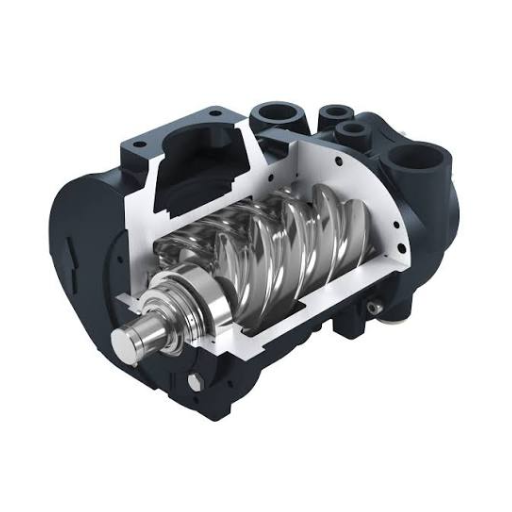
A planned rebuild and an emergency rebuild are different projects with different prices.
| Planned | Emergency | |
|---|---|---|
| Decision | Measured, quoted, scheduled | Made at the machine, under pressure |
| Window | 10-14 days with rental or backup air | Unplanned; production waits |
| Parts | Pre-ordered to the inspection findings | Expedited, often incomplete |
| Root cause | Fixed with the rebuild | Often left in place for the next failure |
The cascade is predictable: bearing wear leads to rotor scoring, scoring leads to housing contact, and contact leads to seizure that takes the motor, drive, and separator with it. One supplier’s warning that a neglected unit can lose 30-45% of its output is the same story told in capacity instead of hours.
Condition monitoring is the cheap way out of the cascade. Oil samples in the tens of dollars per test plus a periodic vibration reading cost less than one unplanned strip-down, and they move the decision from “this week” to “next quarter.” Budget the sample schedule with the maintenance plan rather than after the alarm.
Ready to compare your options? Send the model, running hours, amp draw, last oil analysis, and alarm history, and we will help you weigh the rebuild quote against replacement for your duty cycle.
FAQ: Airend Rebuild Questions
How long does a screw compressor airend last?
Design life is commonly 30,000-80,000 operating hours, with bearings rated around 20,000-40,000 hours (L10) inside them. Oil quality, cooling, and load profile move the number more than the hour meter does.
When should you rebuild a rotary screw airend?
Rebuild when the fault is proven to be the airend, rotors and housing are within tolerance, the rest of the machine is sound, and the quote sits comfortably under 50% of a comparable new unit.
How do I know if my airend is bad?
Capacity falls at unchanged power draw, amp draw at full load drops, metal appears in the oil trend, and a new noise arrives under load. Confirm each with a measurement before acting, and rule out valves, filters, and drive faults first.
How much does an airend rebuild cost?
Published whole-unit rebuild ranges run roughly 20-45% of a new unit by horsepower class, while airend-only rebuilds are quoted at 30-50% of a new element. The denominators differ, so compare rebuild, like-for-like new, and efficient-equivalent new on one page.
Can a scored air-end be rebuilt?
Light scoring within the manual’s clearance limits can be. Deep scoring, pitted rotors, or rubbing cannot be fixed: rebuilding replaces bearings and seals, not lost rotor metal.
Does a rebuild restore the compressor’s efficiency?
It restores capacity and mechanical condition, not the specific power of a modern machine. A rebuilt 15-year-old unit still carries its original efficiency gap against current designs, which is why the third quote in the comparison matters.
Conclusion: Run the Decision in Order
A screw compressor airend rebuild is a good investment in the right conditions and an expensive mistake in the wrong ones. The sequence decides which you get.
- Prove the fault with the isolation ladder and four readings before anyone opens the housing.
- Pass the three gates: sound rotors, a machine worth saving, and a quote measured against the right denominator.
- Demand acceptance criteria: documented clearances, a run-in, and an FAD check, not a start-up and a handshake.
- Fix the root cause in oil, cooling, and contamination, or the new bearings will follow the old ones out.
- Plan the window while the machine still runs.
This week, pull the last three oil analysis reports and the amp trend. That small stack of paper tells you whether the next conversation is an overhaul or an upgrade.
When you are ready, contact our team with your model, hours, and measurements for a rebuild-versus-replace opinion. For machine context, see our industrial screw air compressors and the complete guide to oil-injected rotary screw compressors.