
Oil-Injected Rotary Screw Compressor: The Complete Industrial Buyer’s and Operator’s Guide
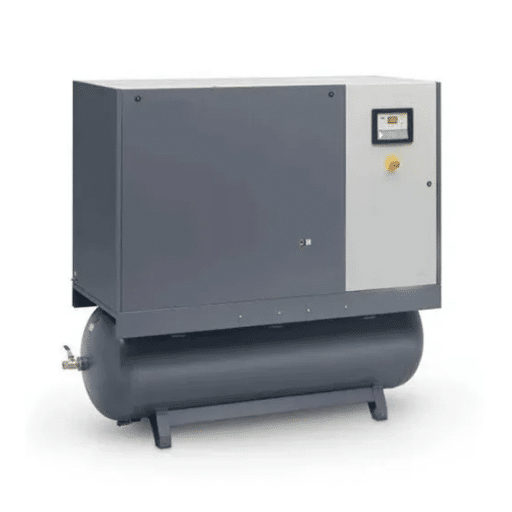
Walk into almost any factory, and you will find the same machine doing the heaviest work in the compressed air room: an oil-injected rotary screw compressor. It is the workhorse of industrial compressed air. It is reliable, efficient, and built to run around the clock.
Yet most online guides treat it only as a side topic inside oil-free comparisons. Or worse, they stop at a thin product page.
This guide covers the technology from the ground up. You will learn how an oil-injected rotary screw compressor works. You will learn why the oil circuit is the heart of the system.
You will learn how to pick the right oil and ISO grade, how to manage oil carryover against air-quality standards, and how to plan maintenance and rebuilds. You will also get an honest cost comparison with oil-free systems, so you can decide with confidence — not from a sales brochure.
Whether you are upgrading an existing system, replacing a failed unit, or building a new production line, we can help. Contact our team for expert guidance tailored to your application.
What Is an Oil-Injected Rotary Screw Compressor?

An oil-injected rotary screw compressor is a positive-displacement air compressor. It uses two intermeshing helical rotors — a male rotor and a female rotor — to compress air continuously. Oil is injected directly into the compression chamber to lubricate, seal, and cool the rotors.
You will see this same machine described three different ways:
- Oil-injected (what the oil does — injected into the chamber)
- Oil-flooded (describes the oil-rich environment inside the airend)
- Oil-lubricated (emphasizes the lubrication function)
All three terms refer to the same technology, and manufacturers use them interchangeably. When you compare options, treat them as synonyms.
Where does it fit among air compressor types? For continuous industrial duty, the two dominant positive-displacement technologies are rotary screw and reciprocating piston. The oil-injected rotary screw compressor is the most common choice for factories that need steady, high-volume airflow. It runs at 100% duty cycle, with no cool-down periods like piston compressors need.
If you are deciding between the two, our screw compressor vs piston compressor comparison walks through the differences in detail.
Why Oil Is the Defining Feature
The oil is not an accessory. It is what makes the screw compressor efficient, quiet, and durable. Inside the compression chamber, the oil:
- Lubricates the rotors and bearings, preventing metal-to-metal contact.
- Seals the clearance between the rotors and the housing, preventing compressed air from leaking back to the inlet.
- Cools the air as it compresses, keeping the process near-isothermal and protecting internal components.
- Dampens noise and vibration, which is why oil-injected units run noticeably quieter than dry oil-free designs.
This is why an oil-injected rotary screw compressor runs at higher efficiency and lower discharge temperatures than an equivalent oil-free machine. The trade-off? You must manage the oil system properly. That is exactly what this guide helps you do.
How an Oil-Injected Screw Compressor Works
An oil-injected screw compressor operates through two separate circuits: the air circuit and the oil circuit. Understanding both explains everything else about the machine.
The Air Circuit
- Intake: Atmospheric air is drawn through an intake filter and into the inlet valve.
- Compression: The air enters the screw element, where the two helical rotors trap it in pockets. As the air moves down the length of the rotors, the space between them shrinks, squeezing the air to the required pressure.
- Mixing: Oil is injected into the chamber during compression, so the compressed air leaves the airend as an air-oil mixture.
- Separation: The mixture enters the separator tank, where centrifugal force removes most of the oil, and a coalescing separator element removes the fine droplets that remain.
- Delivery: Clean compressed air passes through the minimum pressure valve, an aftercooler, and any downstream dryers or filters before entering your distribution system.
The Oil Circuit
- Injection: Oil is injected into the compression chamber and into the bearings.
- Separation: The oil is carried out with the compressed air into the separator tank, where it is separated from the air.
- Collection and scavenging: Separated oil collects at the bottom of the separator element and returns to the sump through the scavenge line.
- Cooling and filtering: Oil flows through the thermostatic bypass valve, the oil cooler, and the oil filter.
- Reinjection: Clean, cool oil is injected back into the airend to start the cycle again.
The minimum pressure valve plays a crucial role in this cycle. It holds pressure inside the separator tank (typically 4 to 5.5 bar) so that the oil can be driven through the cooler, filter, and back into the airend with enough force. If this valve fails, the whole oil circuit loses its driving pressure — and oil carryover often follows. For technical information, please read our article on screw compressor air oil separator.
Real scenario: A maintenance supervisor in a packaging plant asked why his compressor kept tripping on high temperature even though the filters were new. The answer was in the oil circuit, not the airend: the oil cooler was caked with dust, the thermostatic valve was stuck open, and the oil level was low. The oil was never being cooled, so the discharge temperature climbed. Once the cooler was cleaned and the thermostat replaced, the unit ran 15°C cooler.
To understand how it works, please read our article on oil-injected rotary screw compressor working principle.
Key Components of an Oil-Injected Screw Compressor
Knowing the main components helps you talk to suppliers, troubleshoot faults, and plan maintenance. These are the parts every oil-injected unit shares:
| Component | Function |
|---|---|
| Airend (screw element) | The twin helical rotors that compress the air |
| Inlet valve | Controls how much air enters; opens to load, closes to unload |
| Air/oil separator tank | Removes most oil from the compressed air by centrifugal action |
| Separator element | Coalescing filter that captures the remaining fine oil mist |
| Minimum pressure valve | Maintains separator tank pressure to drive the oil circuit |
| Oil filter | Removes contaminants from the oil before reinjection |
| Oil cooler | Cools the oil (air-cooled or water-cooled) |
| Thermostatic bypass valve | Bypasses the cooler until the oil reaches operating temperature |
| Scavenge line | Returns separated oil from the separator element to the sump |
| Control system | Monitors pressure and temperature, manages load/unload cycles |
Each of these components has a service life, and most are inexpensive to replace compared with the cost of a failed airend. The two components that get the most attention in practice are the separator element and the oil filter, because they directly affect both air quality and oil consumption.
The Oil Circuit: The Heart of the System
If you take one thing from this guide, make it this: the oil circuit is the heart of an oil-injected screw compressor. When it is healthy, the machine runs efficiently for tens of thousands of hours. When it is neglected, you get high temperatures, oil in your air lines, and expensive failures.
The complete oil circulation path is:
Injection → compression chamber → separator tank → separator element → scavenge line → sump → thermostatic valve → oil cooler → oil filter → reinjection
Each link in this chain matters. A blocked scavenge line starves the separator of its return path. A dirty oil cooler raises the oil temperature.
A contaminated oil filter restricts flow. A worn minimum pressure valve robs the circuit of pressure. Any single failure can cascade into a fault that looks like a compressor problem but is really an oil-circuit problem.
This is why oil management is the single most important maintenance task on these machines, and why the next three sections focus on oil selection, oil carryover, and the maintenance schedule.
Rotary Screw Compressor Oil: Types, ISO Grades, and Change Intervals
Choosing the right oil is one of the most consequential decisions you will make for an oil-injected rotary screw compressor. The wrong oil shortens separator life, raises operating temperatures, and can eventually damage the airend.
Mineral vs. Synthetic Oil
Rotary screw compressor oils come in two broad families:
- Mineral oils are refined from crude oil. They are the lowest-cost option and are perfectly adequate for moderate duty in clean, temperate environments. Their weakness is oxidation: under sustained heat, mineral oil breaks down faster and forms varnish that can blind the separator element.
- Synthetic oils (PAO, ester, and PAG chemistries) cost more per litre but resist oxidation far better. They allow longer change intervals, keep the separator cleaner, and are the better choice for continuous, high-temperature, or humid operation. For a factory running 24 hours a day, synthetic oil is usually cheaper per operating hour despite the higher price.
ISO Viscosity Grades: 32, 46, and 68
Rotary screw compressors use ISO viscosity grades 32, 46, and 68. The grade describes oil thickness, and it must match your operating conditions and the manufacturer’s recommendation:
| ISO Grade | Best For |
|---|---|
| ISO 32 | Cold environments, high-speed units, indoor stable temperatures |
| ISO 46 | General industrial duty at normal ambient temperatures (most common) |
| ISO 68 | Hot compressor rooms, high ambient temperatures, heavy loads, larger units |
ISO 46 is the most common grade for general industrial rotary screw compressors. Always confirm the exact grade in your machine’s service manual, because selecting the wrong viscosity can void your warranty and shorten component life.
Oil Change Intervals by Chemistry
Change intervals depend primarily on oil chemistry and operating conditions:
| Oil Type | Typical Change Interval |
|---|---|
| Mineral oil | 1,000-2,000 hours (or every 6 months) |
| Semi-synthetic oil | Up to ~4,000 hours |
| Synthetic oil (PAO) | 4,000-8,000 hours (Atlas Copco synthetic grades extend to 8,000-12,000 hours) |
Even with synthetic oil, change it at least once a year if you run light duty. Change it sooner if an oil analysis shows degradation — rising viscosity, acidity, or wear metals. Never mix mineral and synthetic oils. And never top up with an incompatible chemistry without flushing the system.
Why You Must Never Use Engine Oil
This warning appears on every serious maintenance guide for a reason. Automotive engine oil is not built for continuous rotary screw duty. It lacks the oxidation stability and anti-foaming additives that compressor oils need.
It also forms varnish and carbon deposits that destroy separator elements and restrict oil flow. If you use engine oil to save money, this one choice can cost you far more in separator replacements and downtime than you ever saved.
For more information, please read our rotary screw compressor oil guide.
Oil Carryover and Air Quality: Managing Contamination
Oil carryover is the technical term for what operators call “oil in my air lines.” A small amount of oil always remains in the compressed air from an oil-injected compressor — normally about 2 to 5 parts per million (ppm). That trace is harmless for most industrial applications. But when you see visible oil mist, wet lines, or oily residue on tools, the separation system is failing.
ISO 8573-1 Air Purity Classes
Air quality is classified under ISO 8573-1. The oil-content classes are:
| Class | Oil Content | Typical Application |
|---|---|---|
| Class 1 | 0.01 mg/m³ | Electronics, precision instruments |
| Class 2 | 0.1 mg/m³ | Paint spraying, food packaging |
| Class 3 | 1 mg/m³ | General manufacturing |
| Class 4 | 5 mg/m³ | Pneumatic tools, general plant air |
With a well-maintained separator and a coalescing filter, an oil-injected compressor can achieve Class 1 or Class 2 air. Some applications cannot tolerate any oil at all. That includes product-contact food and beverage, pharmaceutical, and semiconductor processes.
For these, an oil-free compressor or Class 0 certification is required. This is the key distinction when choosing between technologies.
Root Causes of Excessive Oil Carryover
Carryover is a system diagnosis, not a separator-only diagnosis. The most common causes, in order of likelihood:
- Oil overfill: Too much oil submerges the separation area and whips it into foam. The correct level is about two-thirds of the sight glass during unloaded operation.
- Blocked scavenge line: The small line that returns separated oil to the sump can clog with carbon and sludge. A cold scavenge line while the compressor is loaded indicates a blockage.
- Saturated separator element: The element blinds over time as dust and oxidized oil build up. Watch the differential pressure — more on this below.
- Degraded or wrong oil: Old, oxidized oil forms sludge that a new separator cannot filter.
- Failing minimum pressure valve: If the valve does not hold tank pressure, the oil circuit loses drive and carryover worsens.
- High operating temperature: Above about 100°C, oil vaporizes into a mist that passes straight through the separator media and condenses downstream.
Real scenario: A workshop owner replaced his air/oil separator twice in one month and still saw oil pooling in his receiver tank. A technician finally checked the scavenge line and found the orifice blocked solid with carbon deposits. Cleaning the 1 mm return orifice — a ten-minute job — fixed the carryover completely. The separators had never been the problem.
How to Diagnose Oil Carryover in Order
Follow this sequence instead of guessing:
- Confirm it is active carryover and not old oil trapped in downstream piping.
- Check the oil level using the correct shutdown and depressurization procedure.
- Review the oil type, age, and contamination.
- Check the separator differential pressure against the machine’s limit.
- Inspect the complete scavenge circuit: tube, orifice, check valve, and seals.
- Verify vessel pressure, minimum pressure valve function, and operating temperature.
Need more information? Please read our article on oil carryover in rotary screw compressors.
Monitoring Separator Differential Pressure
The most reliable early indicator of separator health is the differential pressure across the element. A new separator element reads about 0.1 to 0.2 bar. When the reading climbs toward 0.8 to 1.0 bar, the element is saturated and should be replaced.
Note that you can only read differential pressure while the compressor is on load. A heavily restricted element can waste power and raise internal temperature before any visible oil appears.
For a deeper walkthrough of the causes and fixes, our guide on oil-free vs oil-lubricated compressor systems covers the full picture, including ISO 8573-1 class standards.
Oil-Injected vs Oil-Free: Which Is Right for Your Operation?
The honest answer is that there is no single “better” technology. The decision comes down to one question: does your process require guaranteed oil-free air?
When Oil-Injected Is the Right Choice
Choose an oil-injected rotary screw compressor when:
- Air purity is not critical — general manufacturing, machining, metalworking, automotive assembly, construction, and pneumatic tools.
- Cost control is a priority — oil-injected units have a lower purchase price and simpler, proven technology.
- You need continuous, high-duty operation — the oil circuit gives 100% duty cycle capability and stable discharge temperatures.
- Class 1 or 2 air is sufficient — with proper filtration, oil-injected systems meet most industrial air-quality requirements.
When Oil-Free Is Required
Choose an oil-free compressor when:
- Product contact is direct or indirect — food, beverage, pharmaceutical, and medical applications.
- Regulatory compliance demands Class 0 — ISO 8573-1 Class 0 certification, food-safety standards, or clean-room requirements.
- Environmental or disposal constraints — no oil disposal or condensate handling.
The Hybrid Strategy
Many large plants use both. Oil-free compressors serve the critical zones where air touches the product, while oil-injected compressors handle utility air for tools, actuators, and general automation. This balances cost and air quality without overpaying for oil-free capacity across the entire factory.
The Cost Reality
Energy is the dominant cost in any compressor’s lifecycle. It typically runs 70-80% of total cost of ownership, according to lifecycle analyses from Tamturbo and other industry sources. Oil-injected units tend to be more efficient in standard industrial use, and they cost less upfront. So they usually win on total cost of ownership for general applications.
Oil-free earns its premium only where the air-quality requirement justifies it.
How to Choose and Size an Oil-Injected Screw Compressor

Sizing an oil-injected rotary screw compressor follows the same discipline as any compressed air system. Match the machine to your demand, your duty cycle, and your operating environment. For a step-by-step decision framework, our factory air compressor selection guide covers the full process from demand analysis to final specification.
Step 1: Determine Your Air Demand
Add up the CFM requirements of every tool and process that runs at the same time. Then add a safety margin of 20-30% for future growth and leaks. Never size to average demand alone — your system must handle peak demand without running continuously at full load.
Step 2: Set the Pressure
Most industrial systems run at 90 to 125 PSI. Find the highest-pressure application in your plant and size to it. But do not oversize the pressure setting.
Every 1 bar (14.5 PSI) of unnecessary pressure costs roughly 7-8% in energy. If you need the fundamentals, our article on what size air compressor you need explains the full sizing methodology.
Step 3: Match the Duty Cycle
Oil-injected screw compressors are built for continuous duty, so duty cycle is rarely a limiting factor. The real question is how variable your demand is. If demand is steady across shifts, a fixed speed unit is often the most cost-effective choice. If demand swings a lot, a VSD unit or a hybrid fixed-speed-plus-VSD system will save more energy.
Step 4: Evaluate the Supplier
Beyond the machine, evaluate the manufacturer on:
- Air end quality and the warranty that backs it.
- Oil system design — how easy are the separator, filter, and scavenge line to service?
- Spare parts availability and delivery times.
- Technical support response, especially for export markets.
- Cost performance — total cost of ownership, not just the sticker price.
This is where a manufacturer like Shandong Loyal Machinery adds value. Our oil-injected screw compressors are built for continuous industrial operation, configured to your voltage and ambient conditions, and backed by responsive export support. Request a customized solution for your specific requirements.
Applications by Industry
Oil-injected rotary screw compressors are the default technology across most of industry. Here is where they fit:
| Industry | Typical Use | Notes |
|---|---|---|
| General manufacturing | Pneumatic tools, actuators, controls | Standard utility air, Class 3-4 |
| Automotive | Assembly lines, pneumatic tools, lifts | Class 2 with paint-grade filtration for spray booths |
| Packaging | Conveyors, film sealing, case packing | Class 1-2 with coalescing filtration |
| Textile | Looms, spinning, humidification | Continuous-duty airflow |
| Metal fabrication | Cutting, machining, grinding | Standard utility air |
| Construction | Pneumatic tools on site | Often portable/diesel units |
| Food and pharma | Plant air (non-contact) | Class 0 required for product contact; oil-injected OK for utility zones |
Looking for application guidance? Our article on oil-injected screw compressor applications covers more sectors in depth.
Oil-Injected Screw Compressor Maintenance Schedule
A well-maintained oil-injected screw compressor runs reliably for decades. A neglected one fails expensively. Use this operating-hour schedule as your baseline:
| Interval | Task |
|---|---|
| Daily | Check oil level (sight glass), drain condensate, check for leaks, note discharge temperature |
| Weekly | Check air filter restriction indicator, inspect for unusual noise or vibration, verify pressure settings |
| 2,000 hours | Change air filter; inspect belts and couplings |
| 2,000-4,000 hours | Change oil and oil filter (mineral oil) |
| 4,000 hours | Replace separator element; inspect valves and hoses |
| 4,000-8,000 hours | Change oil and oil filter (synthetic oil); perform oil analysis |
| 8,000 hours | Inspect cooler and clean if needed; check thermostatic valve; test safety controls |
| 40,000-80,000 hours | Plan airend overhaul or rebuild (see below) |
Oil Analysis
For continuous-duty plants on synthetic oil, an annual laboratory oil analysis is a low-cost investment. It catches varnish, acidity, and wear metals before they cause failures. It also lets you safely extend drain intervals.
Maintenance Cost Expectations
Maintenance is a real, recurring cost on oil-injected machines. Oil, filters, and separator elements are consumables. But the total is small compared with energy cost. A reasonable rule of thumb: maintenance runs about 5-15% of lifecycle cost, while energy runs 70-80%.
Spending on quality oil and timely separator replacement pays back many times over in efficiency and uptime. For more detailed maintenance guidance, we offer a practical oil-injected screw compressor maintenance schedule.
Troubleshooting Common Oil-Injected Screw Compressor Problems

Most failures on oil-injected compressors are oil-circuit problems wearing a different costume. Use these fault-cause-fix guides to get to the root cause quickly.
High Discharge Temperature
| Likely Cause | Fix |
|---|---|
| Dirty oil cooler | Clean the cooler fins or heat exchanger |
| Failed cooling fan | Replace the fan motor or blades |
| Stuck thermostatic bypass valve | Replace the valve |
| Low oil level | Top up to the correct level and check for leaks |
| Poor room ventilation | Improve airflow around the compressor |
High Oil Consumption / Oil Carryover
| Likely Cause | Fix |
|---|---|
| Oil overfill | Drain to two-thirds of the sight glass |
| Blocked scavenge line | Clean the return line and orifice |
| Saturated separator element | Replace and reset the hour meter |
| Failing minimum pressure valve | Rebuild or replace the valve |
| Degraded or wrong oil | Change to the correct OEM-grade oil |
Loading and Unloading Failures
| Likely Cause | Fix |
|---|---|
| Faulty pressure switch | Test and replace |
| Stuck inlet valve | Clean or replace the valve and solenoid |
| Worn solenoid coil | Replace the coil |
| Control wiring fault | Trace and repair the control circuit |
Low Pressure / Low Capacity
| Likely Cause | Fix |
|---|---|
| Air leaks in the distribution system | Audit and repair leaks |
| Clogged intake filter | Replace the air filter |
| Slipping belts | Tension or replace belts |
| Inlet valve not fully opening | Adjust or repair the inlet valve |
Field test worth knowing: If you suspect a blocked scavenge line, feel the line while the compressor is loaded. A line that should be returning hot oil but feels cold is blocked. Disconnect it, blow through it, and check the orifice before you spend money on a new separator.
Energy Efficiency and Total Cost of Ownership
Energy is the biggest line item in any compressor’s lifetime cost. Industry lifecycle analyses put electricity at 70-80% of total cost of ownership. The purchase price is only 10-18%, and maintenance is 5-15%. That means efficiency decisions matter far more than the sticker price.
Where Oil-Injected Units Win on Energy
Because the oil film seals the rotors and cools the compression process, an oil-injected rotary screw compressor delivers high efficiency in standard industrial duty. It also runs at lower discharge temperatures than oil-free machines, which reduces the load on downstream dryers and filtration.
The Filtration “Filter Tax”
One hidden cost of oil-injected systems is the pressure drop across the coalescing filters needed to reach high air purity. Every 1 bar of pressure you produce costs about 7-8% of energy, so a well-designed filtration train with minimal pressure loss matters. Oversized or neglected filters waste energy year-round.
The 5-10 Year TCO Decision
When comparing oil-injected and oil-free, model the decision over 5 to 10 years:
- Calculate purchase price (inclusive of installation).
- Estimate annual energy cost from power draw and operating hours.
- Add annual maintenance cost (oil, filters, separators, service).
- Add the cost of any downstream treatment (dryers, filters, condensate handling).
In most general industrial scenarios, the oil-injected system wins on TCO because the energy efficiency is comparable and the purchase and maintenance costs are lower. The oil-free system wins only where the air-purity requirement justifies its higher capital and energy cost. Our guide to reducing compressed air energy costs covers the optimization tactics that improve either system’s economics.
Looking for energy-saving options? See our guide on oil-injected screw compressor energy efficiency.
Airend Life and Rebuild: When to Rebuild or Replace
The airend — the screw element — is the most expensive component in the compressor. It also has a finite life. Understanding the economics helps you plan instead of react.
How Long Does an Airend Last?
Design life varies with speed, load, and maintenance. Industry guidance ranges from about 30,000 to 80,000 operating hours for single-stage airends. Many manufacturers recommend planning an overhaul around 50,000 to 60,000 hours. For a unit running 6,000 hours a year, that is roughly an 8- to 10-year horizon.
Signs of Airend Wear
Catching wear early allows a rebuild instead of a replacement. Watch for:
- Chronic overheating that persists after cleaning coolers and changing oil.
- Excessive noise — a metallic rumbling or knocking from the airend.
- Reduced capacity — the unit struggles to hold pressure.
- High oil consumption — often follows an internal seal failure.
- Metal particles in the oil — the clearest sign of internal wear.
Rebuild vs. Replace: The 50% Rule
When the airend fails, use the 50% rule. If the rebuild cost exceeds about half the price of a new airend (or new compressor), replacement is the better economic choice.
A professional rebuild typically costs 50-70% less than a new airend. It also restores tens of thousands of hours of life. So it is often the right call when the failure is caught early.
The single most important factor in airend longevity is oil quality and change discipline. Clean, correct oil protects the bearings and rotors from day one. Neglecting oil changes is the fastest way to turn a 50,000-hour airend into a 15,000-hour problem.
To make the most appropriate choice, please read our article on how to choose an oil-injected screw compressor.
Frequently Asked Questions
What is an oil-injected rotary screw compressor?
An oil-injected rotary screw compressor is a positive-displacement compressor that uses two intermeshing helical rotors to compress air continuously, with oil injected into the compression chamber to lubricate, seal, cool, and dampen the rotors. It is the most common industrial air compressor for continuous, high-volume duty.
Why is oil injected into a screw compressor?
Oil is injected to lubricate the moving rotors, seal the clearance between them, cool the compressed air, and dampen noise. This is what allows oil-injected screw compressors to run at high efficiency and low discharge temperatures, and to operate continuously at 100% duty cycle.
What oil does a rotary screw compressor use? Can I use engine oil?
Rotary screw compressors use compressor-specific oils in ISO viscosity grades 32, 46, or 68, with either mineral or synthetic (PAO/ester/PAG) chemistry. You should never use engine oil, because it lacks the oxidation stability and additives compressor oil needs, and it forms varnish that destroys separator elements.
How often should I change screw compressor oil?
Mineral oil should be changed every 1,000-2,000 hours or every 6 months. Synthetic oil can run 4,000-8,000 hours, and high-performance synthetic grades up to 8,000-12,000 hours. Always follow your manufacturer’s service manual and consider oil analysis for extended intervals.
Oil injected vs oil free: which is better?
There is no universal winner. Oil-injected is better for general industrial air where trace oil is acceptable — it is cheaper, more efficient in standard duty, and handles continuous operation well. Oil-free is required where air purity is critical, such as food, pharmaceutical, or semiconductor applications that demand Class 0 certification.
Why is there oil in my compressed air lines?
A small amount of oil (2-5 ppm) is normal, but visible oil means the separation system is failing. The most common causes are an overfilled oil sump, a blocked scavenge line, a saturated separator element, degraded or wrong oil, a failing minimum pressure valve, or high operating temperature.
Conclusion
An oil-injected rotary screw compressor is not a compromise. It is the proven workhorse of industrial compressed air. With the right oil, the right maintenance, and the right air-quality setup, it delivers years of reliable, efficient service. For most applications, it also wins on total cost of ownership.
Here are the key takeaways:
- The oil circuit is the heart of the machine. Protect it with the correct oil, clean filters, and a healthy scavenge line and minimum pressure valve.
- Oil selection matters. Use the manufacturer’s recommended ISO grade and chemistry. Never use engine oil.
- Manage carryover as a system. Check oil level, scavenge line, separator differential pressure, temperature, and the minimum pressure valve before replacing parts.
- Match the technology to the requirement. Choose oil-injected for general industrial duty; choose oil-free where Class 0 air is truly required.
- Plan for the long term. Follow the operating-hour maintenance schedule, monitor energy cost, and plan the airend rebuild around the 50% rule.
If you are evaluating a new oil-injected screw compressor, upgrading an aging unit, or expanding your compressed air system, we can help you select the right configuration for your industry and operating conditions.
Contact Shandong Loyal Machinery today for a customized oil-injected rotary screw compressor solution, backed by global export support and responsive technical service.