
Understanding CFM, PSI, and HP in Screw Air Compressors

To choose the right screw air compressor for your requirements, it is crucial to have a good grasp of the key metrics of performance such as CFM, PSI, and HP. Although these terms might initially sound technical, they are the ones that will determine whether the compressor you are buying is going to suit your particular operational needs in the most efficient way possible. This is the reason why we have got this blog posting, which aims at shedding light on these concepts, analyzing them step by step into simple yet actionable insights that everybody can comprehend. If you are a seasoned professional or just starting your inquiry, you will find out how these elements influence performance, energy efficiency, and the effectiveness of the whole equipment. After this article, you will acquire the power of an informed decision and the ways to make your compressor’s strengths work for you. We will take you through the metrics’ significance and how they relate to each other in the case of screw air compressors.
What is CFM and Its Importance

Definition of CFM
CFM, which stands for Cubic Feet per Minute, is a unit of measure that conveys the amount of air a compressor can pump out in a minute. CFM is considered a vital indicator of screw air compressor performance since it relates directly to the capability of the machine to run tools or equipment successfully. A compressor that has a higher CFM rating does automatically provide much air, and this is the case in those instances where the air supply has to be steady and large. It is CFM that makes it possible to select the right compressor according to the operational demand, thus avoiding both inefficiency and performance deficit.
Air Tools and CFM Relationship
CFM, or cubic feet per minute, is the determining factor that decides how much air an air tool gets, and thus it has a direct influence on the operation and the performance of the tool. Air-powered tools like impact wrenches, nail guns, and sanders have a certain CFM requirement to work at an optimum level. The more powerful air tools, such as grinders and spray guns, typically need greater capacity compressors operating at higher CFM output to provide labor-free pressure and no break time while in use. The latest trends and data reflect that users often have one common question: how to match an air compressor and the tools so that the latter do not suffer from underperformance? It is important to match the required CFM rating of your air tools with the compressor’s output, which will lead to smoother operation, longer tool life, and shorter downtime. This synchronization will not only speed up the work but also assure that the equipment is reliable even in difficult situations.
Requirement of CFM Calculation for Applications
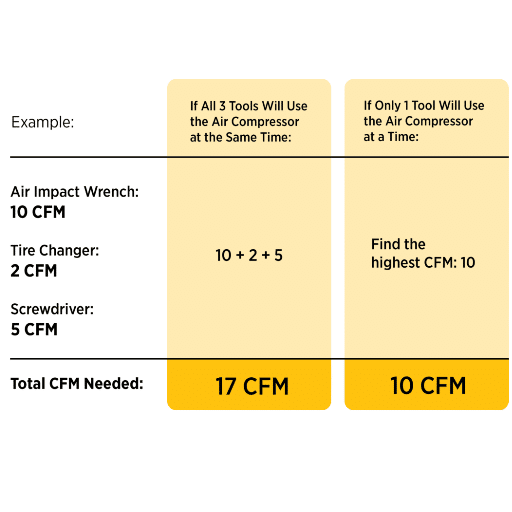
The method of determining CFM needs for applications is based on tool specification and their demand in the process. To get started, point out the power tool having the maximum CFM necessity and include its demand along with the CFM of any other tools that are going to be used at the same time. For example, if you are going to use a spray gun that needs 6 CFM and a sander that requires 9 CFM, then the overall demand will be at least 15 CFM.
Currently trending searches is a question about the impact of environmental conditions, such as altitude or temperature, on compressor performance. It is true that such factors can have an effect on the volume of air that a compressor can discharge. For example, operating a compressor at a high altitude generally means that its delivery rate will be lower; hence, it is better to go for a unit whose capacity is a little more than your calculated CFM to account for these conditions. Try to maintain a 20-30% margin over your requirement so that you get the best performance and the system can manage peak loads without any difficulty.
Understanding PSI in Air Compressors

Definition of PSI
PSI, or pounds per square inch, is a pressure measurement unit that is very often used to indicate the power of compressed air in a certain area. It determines the maximum amount of pressure an air compressor can provide, which impacts directly on the power of tools and equipment the compressor can support. Knowing the PSI needs of your tools is very important. Supplying a compressor with less PSI than needed will lead to low work output and, on the other hand, if you supply excessive PSI, the result will be a fast wearing off of the tools or even damage. Check the manufacturer’s recommendations all the time so that the air compressor conforms to the specified PSI of your applications.
Difference Between PSI and CFM
Both PSI (Pounds per Square Inch) and CFM (Cubic Feet per Minute) are important measurements in the performance of air compressors, however, their functions are different. PSI shows the amount of power the compressor can provide, that is the reason it being the main factor in its ability to produce pressurized air and running heavy-duty tools. CFM on the other hand displays the amount of air the compressor can give out in a specific time, indicating its output capacity over time. In addition, PSIs deal with power while CFM focuses on volume. It is important to find the right compromise between the two measures since tools may need a precise mix of PSI and CFM to work properly. For example, high-impact tools such as impact wrenches might require high PSI with a moderate CFM, while paint sprayers that are used continuously will need high CFM even at low PSI. Always check your tool’s specifications to know the best ratio that will give you consistent and effective performance.
Impact of PSI on Air Pressure
PSI or pounds per square inch is a direct measure of the air pressure that an air compressor is capable of delivering. The higher the PSI level the more powerful the compressor which is necessary for driving tools that need a quick release of high pressure like nailers or impact guns. However, excessively high PSI may cause damage to the tools or the materials if not very carefully controlled. On the contrary, not enough PSI will make the tools work poorly or not work at all. Therefore, knowing the PSI requirements of your tools is critical for both their good and safe functioning. Always use the compressor’s PSI capability that matches your tool’s specifications for the best output.
Choosing the Right Air Compressor
Key Specifications to Consider
When you are picking an air compressor, there are several main characteristics that you have to consider to be sure that it will work out for your purposes. First of all, check the needed PSI and CFM ratings of the tools you are going to use and see if the compressor can give you power and airflow that is enough. Tank size is yet another very important aspect, because big tanks are more appropriate for heavy use of continuous demanding tasks while small tanks are very good for portability and light duty tasks. What is more, decide if you need a single stage or dual stage compressor according to the applications’ pressure requirements. Finally, think if an electric or gas-powered compressor would be a better fit for your workplace and power sources. Taking these specifications into account will allow you to buy the right compressor that will improve performance and efficiency.
Corresponding CFM and PSI to Air Needs
To correlate CFM (Cubic Feet per Minute) and PSI (Pounds per Square Inch) to air needs, begin by determining the air tools that you will use and their corresponding CFM and PSI ratings. Double-check that the air compressor you opt for can not only meet but also slightly surpass the highest CFM requirement at the necessary PSI for your tools. In case several tools are going to be working at the same time, add up their CFM ratings to get the total air demand. Keeping a good relationship between these two factors will help you to have the best tool performance and the most effective operation.
Advantages of SCFM in the Decision-Making Process
SCFM (Standard Cubic Feet per Minute) is an important factor in choosing the right air compressor as it signifies a clean measure of airflow that meets the conditions of the standard thus assuring the compatibility with tools. When SCFM ratings are utilized, users can precisely select the compressor’s output that is equal to the requirements of their equipment, and thus the performance and efficiency will be better. This uniformity makes it easier to determine which compressor to use without a doubt, especially in the case of operating several tools or in the situation where precise airflow is a must for the task. Besides, taking SCFM into consideration means that the chosen compressor will not only satisfy the present needs but also those of the future thus being a reliable and adaptable solution.
Air Compressor Capacity and Performance
Understanding Compressor Capacity
Compressor capacity is the measurement of the volume of air that a compressor can push out in a certain time, usually given in cubic feet per minute (CFM). Knowing this capacity is crucial to guarantee that the compressor is capable of fulfilling the airflow needs of the attached tools or equipment. It is influenced by the size, design, and operating pressure of the compressor. The selection of a compressor with the right capacity avoids underperformance and at the same time, ensures the operation is constant. Furthermore, being aware of the capacity helps in the compressor’s allotment for both present operational needs and the possible future expansion making it dependable and efficient in the long run.
Factors Influencing Compressor Performance
There are many factors that determine the performance of a compressor, the most important ones being: operating pressure, airflow requirements, and environmental conditions. Operating pressure is the main factor which decides the air delivered by the compressor and it has to comply with the demands of the connected tools or systems. The airflow (in CFM) should be adequate to cover the entire operational needs without suffering from delays and inefficiencies. Also, environmental factors, such as temperature and humidity, play a considerable role in the compressor’s efficiency; the extreme conditions could impact the functionality and life cycle. Regular maintenance and selecting the right size and design for specific applications are key factors that would improve performance and guarantee reliability.
Comparing Different Compressor Sizes
When making a comparison between different compressor sizes, it is very important to take into account aspects like CFM rating, horsepower (HP), tank size, and that of the application. Small compressors are those with a tank size of 1 to 5 gallons and a CFM rating of below 5 and are highly suitable for light tasks like tire inflation or small pneumatic tools’ powering. Although the compact units are portable and economical, they are not suitable for long-term heavy-duty operations.
Medium-sized compressors, which have tank capacities ranging from 20 to 60 gallons and CFM ratings of 6 to 20, are usually portable and powerful at the same time. They are capable of doing demanding applications like airbrushing, auto repair, and moderate industrial use thereby catering to both professionals and DIY-ers with their versatility.
Large industrial compressors having tank sizes of above 60 gallons and CFM ratings of 30 or more, are meant for continuous heavy-duty operations in places like manufacturing plants, automotive workshops, and even construction sites, thus offering high efficiency and power at the same time. However, these units are often high-power-consuming and, as a result, might require three-phase electricity and specialized maintenance.
In accordance with data from a recent market research, it has been estimated that compressors having energy efficiency ratings (the ones with variable speed drives (VSD) and advanced cooling systems) can effectively bring down their operational costs by up to 25% as compared to conventional models. Thus it follows that while making a decision on the appropriate size of a compressor for your specific application, it is very important to consider the total lifecycle costs including energy consumption, maintenance, and productivity.
Using Pneumatic Tools Effectively
Air Requirements for Various Pneumatic Tools
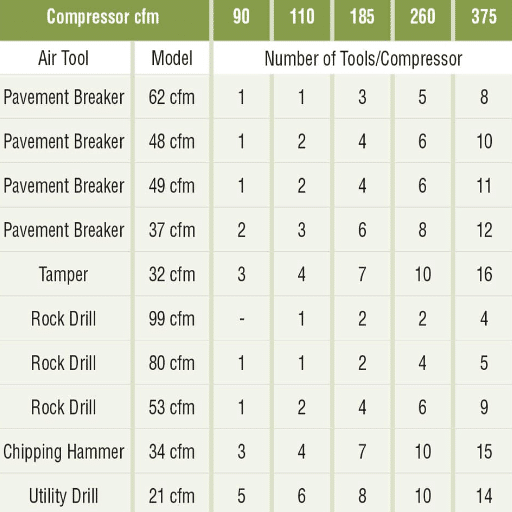
Various pneumatic tools have different air requirements for compression based on their dimensions, styles, and applications. For example, small-sized tools such as nail guns typically require low volumes of air that usually fall within the range of 0.3 to 4 cubic feet per minute (CFM) at 70-90 PSI. On the other hand, large-sized tools like impact wrenches or grinders need a higher airflow, which can be anywhere from 4 to 20 CFM or more, depending on how often they are used and how heavy the workload is. To avoid overloading the system and to guarantee consistent performance, it is vital to synchronize the compressor’s capacity with the tool’s air demand. The manufacturer’s specifications for your pneumatic tools will give you precise air requirements and allow you to make educated decisions.
Optimizing CFM and PSI for Tool Efficiency
In order to optimize CFM and PSI for tool efficiency, first learn the air needs of all pneumatic tools you plan to operate based on the manufacturer specifications. Choose an air compressor whose total CFM output is equal or greater than the combined CFM requirement of your tools, and add a buffer of 20-30% to account for variability and simultaneous usage. Make sure the PSI output of the compressor matches the recommended operating pressure of your tools, as too much PSI can break tools while too little pressure will slow down their performance. Cleaning filters and checking for leaks on a regular basis are some of the maintenance practices on the compressor and tools that will help you get the best results and longevity.
Common Mistakes in Using Air Compressors with Tools
Matching the air compressor’s specifications to the tools being used is one of the common mistakes that people make. Sometimes over or under air pressure can negatively affect the performance of the tool or even lead to its destruction. Another mistake that is often made is the neglect of routine maintenance, which includes tasks like filter cleaning, accumulated moisture draining, and leak checking—problems that can result in reduced efficiency and the early retirement of the equipment. Furthermore, improper hose usage, such as too-long or narrow hoses, can cause pressure drops that negatively affect the operation of the tool. Finally, running too many tools at the same time, which results in overloading the compressor, can weaken the system and cause premature wear or overheating.
Reference Sources
-
VMAC Air: What’s The Difference Between PSI And CFM? – This article explains the difference between PSI (air pressure) and CFM (air volume) and how they work together in air compressors.
-
Atlas Copco: CFM vs. PSI Air Pressure: What You Need To Know – A detailed guide on how PSI and CFM are measured and their importance in air compressor performance.
-
Rolair Systems: UNDER PRESSURE — PSI, CFM & AIR FITTINGS Explained – This blog provides an in-depth explanation of CFM and PSI, focusing on their roles in pneumatic tools and air compressors.
Frequently Asked Questions (FAQs)
How does size air compressor affect cfm and psi for pneumatic tools?
The selection of an air compressor size mainly plays a decisive role in determining the cfm and psi of your tool. This is due to the fact that volume and pressure are correlated in the case of a compressed air system. A compressor that has a capacity of 5 cfm at 90 psi may be able to operate pneumatic tools without difficulty, while for heavy-duty tools, 10 cfm or more at the same pressure might be demanded. To make sure there is enough air without any loss in pressure, you should compare the cfm rating of the tool and the cfm of the compressor at 90 psi. Duty cycle and air storage also count since a compressor may create the necessary pressure but not the continuous flow for uninterrupted usage. Deploy a pressure regulator to align with the tool’s requirement and prevent applying higher pressure than what the tool can endure. Selection of a compressor that offers at least the tool’s rated cfm at the specified pressure will help to avoid underperformance and to put strain on the compressor.
Why does my compressor size air compressor show different cfm at 100 psi versus 90 psi?
As the psi increases, the cfm reduces since pressure and flow are inversely related for a given compressor displacement, consequently, the compressor’s cfm at 100 psi will be lesser than at 90 psi. The cfm and psi relationship often leads manufacturers to, as a standard practice, state scfm at a specific pressure like 90 psi when quoting so that comparisons can be made. If the pneumatic tool you use necessitates a certain pressure and flow, verify the tool’s cfm rating at the pressure you plan to operate, for pressure without flow will not perform useful work. The atmospheric pressure and the internal design of the compressor, for example, rotary versus piston, influence the amount of air that the compressor can produce at a higher pressure. Pressure is expressed in psi, while cfm represents cubic feet per minute, the unit for measuring airflow or volume. To ensure the compressor does not fall short of meeting the demands, select a compressor that offers adequate cfm at the required pressure, and additionally, consider air storage to buffer load spikes.
Can a small size air compressor run larger pneumatic tools and what about duty cycle?
If the tool’s cfm demand is intermittent and sufficient air storage is available small compressor can sometimes run larger tools for short bursts, but continuous tasks will reveal limitations in flow rate and duty cycle. The compressor’s duty cycle is low, the unit can overheat or cut out due to extended use, and pressure will drop under load. Compare the tool’s cfm and the advertised cfm of the compressor at the target psi to gauge whether the compressor can deliver adequate air volume and pressure. Pressure and volume determine the pneumatic power available; pressure is measured in psi while flow rate is in cfm, and both are essential for tool performance. An increase in air storage tank can facilitate smoother flow during intermittent high-demand periods, but it cannot make up for a compressor that cannot replenish the used air. For consistent heavy use, select the appropriate compressor that generates the required cfm at the designated psi.
How do I choose a size air compressor when considering cfm vs psi for my workshop?
Selecting a compressor that guarantees dependable performance begin by listing all the pneumatic tools’ cfm ratings and the pressure each tool requires, add these up to know the maximum and average air requirements. Take into account the tools that will be used at the same time and pick a compressor that provides the total cfm at the highest required psi, keeping in mind the relationship between cfm and psi so that you do not undersize the unit. It is often suggested to purchase a compressor that provides at least the combined sum of tool demands or to oversize by 20-30% to cover pressure drops, leaks, and the possibility that compressor rated output is not achieved under load. Bear in mind that cfm is the abbreviation for cubic feet per minute, whereas psi is the measure of how much pressure there is per square inch; both need to be sufficient for the air tools to work correctly. Also, consider the compressor’s duty cycle and if it is suitable for larger applications or intermittent use only. Finally, incorporate a pressure regulator to accurately set psi air for different tools and to prevent supplying higher pressure than each tool needs.
What is the relationship between size air compressor, scfm, and pressure regulator settings?
The SCFM rating of the air compressor corresponds to a genuine flow that is usable at a particular pressure. While the pressure regulator allows you to adjust the psi to the optimum pressure of the tool, thus increasing utility, the compressor gets gaseous if a tool requires cfm that exceeds the compressor’s scfm at the regulator’s pressure; hence, you will observe pressure drops and tool power reduction. The pressure regulator is invaluable in such a scenario that there is more than one tool requiring different pressures connected to the same air supply line. The operator must think about the flow rate, air storage, and the kind of compressor that can provide consistent scfm at his or her working psi in order not to run out of air in the middle of a job. It is best to select a compressor that can produce the required cfm at the pressure set by the regulator instead of depending on the tank pressure alone.