
Compressed Air System Design for Production Lines
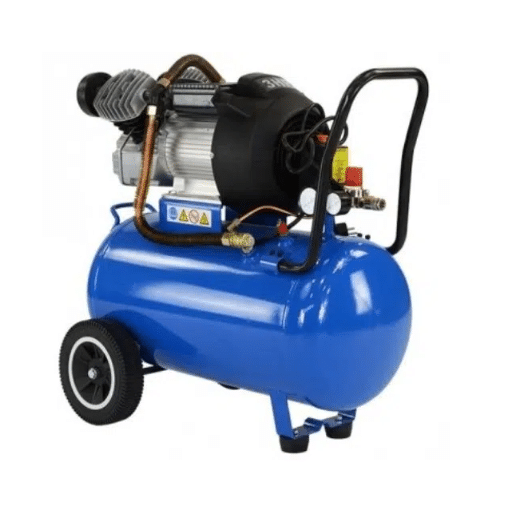
A food manufacturer in Auckland had sauce production lines tripping on low pressure every single shift. The compressor ran at full output but could not maintain pressure 80 feet away. Data logging showed a 2.2 bar pressure drop from the compressor room to the production floor. The problem arose when a singular 1/2-inch pipeline was being used for the entire factory pipeline. Replacement of it with a 2 1/2-inch pipe was estimated to cost 8,400 dollars. The production that was lost during the time that the problem persisted was priced at 12,000 dollars per week.
It is widely prevalent across factories engaging in the design of compressed air systems to use rough estimates, any of the previous designs or even to delegate the determination of the pipe sizes to the installing contractor. Overriding the line pressure drops and the air is dirty and it goes into the production of bad quality products. And if that is not bad enough, the electricity costs may be inflated by 20% to 30%. Properly designed systems can serve their purpose for 20 years and work out cost-effectively. A badly designed system is more costly than the air compressor itself.
This guide provides a step-by-step compressed air system design process for production lines. You will get pipe sizing tables, pressure drop calculations, material selection criteria and actual cost data in the context of factory buildings. Be it a completely new line or an extension, these steps warrant the achievement of consistent pressure, good quality air and the lowest possible running costs.
Want more information? Our complete guide on how to choose an air compressor for your factory covers the full selection framework from demand audit to total cost of ownership.
Step 1: Map Your Compressed Air Load

Before you buy even a single pipe fitting, it is important to first know the exact anticipated air demand that the production line(s) in question need, where it is needed and practically in which pressure.
Identifying Every Point of Use
Walk your production floor and list every piece of equipment that uses compressed air. Pneumatic actuators, spray guns, CNC machines, packaging equipment, and air knives all have published air consumption ratings. Do not guess. Check nameplates or operating manuals for CFM or L/min ratings at the required pressure.
Defining CFM and Pressure Requirements
Each device has a minimum operating pressure. Most pneumatic tools need 90 PSI. Some spray applications need 100 to 120 PSI. If you are unsure how CFM, PSI, and horsepower relate, read our guide on CFM, PSI and horsepower explained. Add the CFM of all devices that could run simultaneously. This is your peak demand.
Calculating Simultaneous Demand
Not every tool runs at once. Apply a simultaneity factor based on your process. A continuous assembly line might need 90% of the total demand available at all times. A batch operation with intermittent tool use might only need 60% to 70%. When in doubt, size for 80% simultaneous use. It is far cheaper to oversize a pipe than to lose production.
Planning for Future Expansion
Add 20% to 30% to your calculated demand for future growth. Pipe is difficult and expensive to replace once walls and ceilings are closed. Oversizing the distribution main by one diameter reduces pressure drop by approximately 60% and leaves room for new equipment.
Step 2: Choose Your Piping Layout
The shape of your piping network determines how evenly pressure is distributed across the factory.
Ring Main (Looped) System
As a practice, the ring main extends all the way back to the compressor room, giving two ways for a pathway for air to each end-use point to occur. Most factories are advised to use this model because it reduces the possibility of pump inhibitors and equipment malfunction should one of the sections need replacement. Sections have isolation valves so that you can service that specific section without shutting down the entire plant.
Branch (Dead-End) System
A branch system runs a single header with smaller pipes dropping down to each workstation. It is cheaper to install but creates a higher pressure drop at the far end. Branch layouts work for small workshops or when production equipment clusters in one area. For factory production lines, a branch system should only be used if the total length is under 100 feet and demand is low.
Hybrid Layouts for Irregular Floors
Hybrid approaches are usually applicable in L-shaped buildings, facilities that have many floors or are tall, and buildings with mezzanines. For example, when we consider the primary production floor of the building, there is the possibility of using branch lines that serve the secondary areas or levels, while a number of ring circuits will be disposed on this level as well. This approach is required so that the ring main is the same height as the compressor at all times. Trays are not necessary for serving sets of pipes that have to rise and fall, as any condensed liquids cannot move.
Redundancy for Critical Lines
Designing redundancy into that branch is a must if one production line cannot stop without stopping the entire factory. For strategic purposes, a secondary branch should run from the other side of the ring main. If a primary feed is cut off, pressure will be maintained by the secondary feed. It is expensive as far as the piping is concerned but one should never work with the line designs containing single points of failure.
Step 3: Size Your Piping Correctly
While planning the design of the powerhouse, the size of the pipes is the most crucial parameter. If the pipe under consideration is comparatively small, it causes pressure drop, velocity erosion, and is energetically non-credible.
Pipe Diameter by CFM and Distance
The table below shows recommended pipe diameters for common factory flow rates and distances. These values target a velocity of 20 to 30 feet per second in the main line and keep pressure drop under 0.1 bar.
| CFM Demand | 50 ft Run | 100 ft Run | 150 ft Run | 200 ft Run | 300 ft Run |
|---|---|---|---|---|---|
| 25 CFM | 1 in | 1 in | 1 in | 1 1/4 in | 1 1/4 in |
| 50 CFM | 1 in | 1 1/4 in | 1 1/4 in | 1 1/2 in | 1 1/2 in |
| 100 CFM | 1 1/4 in | 1 1/2 in | 2 in | 2 in | 2 1/2 in |
| 200 CFM | 2 in | 2 in | 2 1/2 in | 2 1/2 in | 3 in |
| 400 CFM | 2 1/2 in | 3 in | 3 in | 3 1/2 in | 4 in |
| 600 CFM | 3 in | 3 1/2 in | 4 in | 4 in | 4 in |
| 800 CFM | 3 1/2 in | 4 in | 4 in | 4 in | 5 in |
Again, these are approximate. Always perform a pressure drop calculation for your particular layout before finalizing any aspect where the system operates.
Velocity Limits: Why They Matter
Among compressed air mains, velocity should be maintained at 20 to 30 feet per second. Speed in the present cases over 50 feet per second only means you are dropping a lot of pressure, and you have noise as well as a very bad turbulent flow, which actually throws water and dirt within tools. In drop lines to the individual workstations, keep the velocity down to 50 feet per second. With high speed comes erosion of the aluminum and steel tubes over time.
Pressure Drop Targets
Your total pressure drop from the compressor discharge to the most remote point of use should be less than 0.1 bar, or about 1.45 PSI. Every 1 bar of unnecessary pressure drop reduces pneumatic tool power by approximately 25%. It also forces the compressor to run at a higher setpoint, increasing energy consumption by 6% to 8% per additional bar.
The Hidden Cost of Undersized Pipe
In one instance, a granulation process ran skewed for one pharmaceutical company. This was the composite effect of impure, oily compressed air with its moisture and particulates thrown straight into a batch process. Consistently failing batches would of course not meet the required limits. Its compressor was not the root cause. It was, rather, undersized piping effecting turpulence, no filtration at point-of-use, and lack of an air dryer on the production line. So far, $14,000 were spent on Air piping, Dryers, Filters & Installation audit together with a monitoring program. Already the wrong batch cost $28 000 in scrap and rework.
Step 4: Select Piping Materials
The material you choose affects installation cost, air quality, pressure drop, and system lifespan.
| Material | Pressure Drop | Air Quality | Installation | Cost per Foot | Best For |
|---|---|---|---|---|---|
| Aluminum | Low | Good (no rust) | Fast (push-fit) | 8–15 | Most factory systems |
| Stainless Steel | Very Low | Excellent | Moderate (threaded/welded) | 15–30 | Food, pharma, electronics |
| Black Steel | Moderate | Poor (rust risk) | Slow (threaded) | 4–8 | Legacy systems, budget builds |
| Copper | Low | Excellent | Moderate (soldered) | 10–20 | Small systems, clean air |
| Plastic (PP/PE) | Moderate | Good | Fast | 3–6 | Outdoor burial, corrosive areas |
Aluminum: The Modern Standard
Aluminum piping is the leading choice for air systems in most of the industrial world today. It is a lighter weight, is not subject to corrosion, and facilitates a smoother lining with less internal friction. Modular aluminum piping systems such as AIRnet and Transair installations require no threading or welding and are lightning fast. Given the configuration and tools available, a seasoned pair could possibly lay down 500 ft of aluminum main in a single day.
Stainless Steel: For Purity
Stainless steel is most appropriate in cases where it is a priority to ensure that air is kept pure. Industries like food, pharmaceutical or electronics production often require air of approximately ISO 8573-1 Class 2 or better and in these cases, stainless is the metal of choice as aside from not rusting it also does not flake. It is more costly and more elaborate to assemble, but it will also last as long as the brick and mortar structure.
Black Steel: The Legacy Choice
Black steel pipe is the cheapest option and, at the same time, it is the sturdiest option. However, the downside is the possibility for it rusting from the inner parts. When it rusts, the rust particles will clog the air, destroy the filters and worry even the rest of the tools that are fitted with plates. In case there is a black steel pipe already installed at the factory, there is a need to cater for additions to the filtration system and replacement in the future. Whereas, in cases of needing a new installation, the use of black steel should only be the last option, unless the budget will not allow otherwise.
Copper and Plastic Options
Copper is ideal for use in small structures and in clean air systems, but for making factory mains of substantial size, the material cost is high. Other options are the use of plastic pipes for purposes of burial, as well as for corrosive environments such as plastic pipes, but it’s not recommended for use within high temperature locations close to the compressor discharge. Make sure to always check the pressures and temperatures when looking at plastic piping.
Step 5: Route for Minimum Pressure Loss

How you run the pipe matters as much as what size it is.
Ceiling Mounting and Drop Lines
For such reasons, it is better to install the main distribution pipes on the ceiling level in order to keep them from interference with traffic and other detrimental effects. Mount drop lines from the mains to each machine station. Drop lines should be the same size of the branch. A common mistake is to picture the 2-inch main and then immediately reducing it to 3/4-inch for the drop. There is no reason to have a neck downsize here.
Slope and Condensate Drainage
Vent rise distribution lines. The slope of the vent rise should have a slope of 1:100. This is equivalent to one vertical inch height for every 10 feet of horizontal run. As the compressed air cools within the pipe, water created by condensation will form. Should the pipe be horizontal, the other way round or lying out flat without any slope, it means the condensed water will gather into pools and end up seeping into the machine and even the products. Put in drain traps with automatic drain valves for e…
Branch Connections from the Top
Branched lines are always made of outlets at the top of the horizontal headers, never from the bottom. There is a benefit to attaching branches at the top of the pipes. All of the moisture and dirt collect at the bottom of the pipe. Connecting from the bottom, however, simply draws the dirt into the branch. A clear improvement of the connection is placement from the upper section of the pipe as it taps into the clean air at the top of the flow.
Step 6: Size Components and Treatment
Connecting pipes are but a constituent of the piping arrangements. The compressor, drier, receiver, and all the filters must be proportionate to the demand to be met.
Air Receiver Tank Placement
Immediately after the compressor, locate the primary receiver to smooth out pulsations and provide air storage. Work out the storage as equal to 3-5 gallons cfm of the compressor capacity. A 500 CFM compressor demands at least 1500 gallons or more of the receiver. Secondary receivers at key or high demand areas can help maintain the necessary pressure levels during sudden load Steps.
Dryer Selection and Location
A refrigerated type compressed air dryer could be used in most general industrial applications. This method includes cooling air to 3-5 degrees Celsius, which promotes the discharge of the accumulated moisture content. But in addition to that, share the moisture content by the chilling nature of the air and drain off the collected condensate.
However, in rooms with food, pharmaceutical or other industries operating machines, apparatus, or gadgets and in regions with cold climates, shall need to bring some build such as of a desiccant dryer for the attainment of low dew points if necessary. Locate the dryer after the primary receiver and before the distribution main.
Filtration at Point of Use
Even with a central dryer, put point-of-use filters in every possible consumption spot. An average 5-micron filter with a cheeky 0.01-micron coalescing filter is the perfect bypass filtration system for protecting pneumatics as well as the quality of the product. If the application is spray painting or in contact with products such as food, then add an activated carbon filter to remove oil vapor and deodorize the system.
FRL Units for Each Workstation
Every workstation should have a Filter-Regulator-Lubricator (FRL) unit. The filter removes particulates. The regulator drops pressure to the exact level the tool needs. The lubricator adds a controlled mist of oil to pneumatic tools that require it. Do not over-lubricate. Excess oil contaminates product and wastes money.
Step 7: Calculate Total Pressure Drop

Pressure drop is the enemy of efficiency. Here is how to calculate it for your system.
Darcy-Weisbach Method
The Darcy-Weisbach equation is the most accurate method for calculating pressure drop in compressed air piping:
Pressure Drop (psi) = (f x L x V^2) / (D x 2g)
Where f is the friction factor, L is pipe length, V is velocity, D is internal diameter, and g is gravitational acceleration. For most practical factory designs, an empirical formula is faster and sufficiently accurate.
Empirical Formulas for Quick Estimation
A simplified rule of thumb for compressed air: pressure drop in PSI per 100 feet of pipe equals approximately 0.5 times the square of the flow rate in hundreds of CFM, divided by the fifth power of the pipe diameter in inches. This shows why pipe diameter is so critical. Doubling the pipe diameter reduces pressure drop by roughly a factor of 32.
Fitting Equivalent Lengths
Use the table below to convert fittings into equivalent lengths of straight pipe for your pressure drop calculation.
| Fitting Type | Equivalent Length (feet) |
|---|---|
| 90-degree standard elbow | 3 – 5 ft |
| 90-degree long-radius elbow | 2 – 3 ft |
| 45-degree elbow | 1.5 – 2 ft |
| Tee (flow-through) | 3 – 5 ft |
| Tee (branch flow) | 10 – 15 ft |
| Gate valve (full open) | 1 – 2 ft |
| Globe valve (full open) | 15 – 25 ft |
| Butterfly valve | 3 – 5 ft |
Worked Example: 100 HP Factory System
Think of the following situation. You are in charge of a factory with one 100 HP screw compressor which produces 450 CFM at 115 psi. The aluminum distribution main is 2 1/2 inches, 150 feet in length and has four 90-degree elbows and two branch tees.
Straight pipe equivalent: 150 ft
Fittings equivalent: (4 elbows x 4 ft) + (2 tees x 12 ft) = 40 ft
Total equivalent length: 190 ft
Using the empirical formula, the pressure drop at 450 CFM in a 2 1/2-inch pipe is approximately 0.08 bar for the total equivalent length. This is within the 0.1 bar target. If the pipe were 2-inch instead, the drop would exceed 0.2 bar, forcing the compressor to work harder and wasting energy.
What are the requirements to meet when installing an air compressor? Please learn through our article on Air Compressor Installation Requirements for Factories.
Common Design Mistakes and Their Costs
Undersized Piping: The $50,000 Error
A furniture manufacturer with CNC machines faced dropping air pressure across the factory. CNC machines lost performance, causing spoiled product. One compressor had already suffered a catastrophic failure from running overloaded. The new system design included a properly sized ring main, two compressors with alternation control, and point-of-use regulators. The result was stable pressure, zero spoilage, and energy savings of 3,200 per year. The cost of the original, oversized design was estimated at over 50,000 in lost product, repairs, and excess energy.
Ignoring Future Expansion
Factories grow. A system designed for today’s demand becomes a bottleneck in three years. Replacing a buried pipe or one inside a finished ceiling costs 3 to 5 times more than installing it during initial construction. Always size mains for 1.5x current demand.
Wrong Material for the Application
Using black steel in a humid environment creates rust. Rust clogs tools, contaminates product, and increases filter replacement costs. One food processor spent $6,000 per year on extra filter elements and tool repairs before switching to aluminum pipe.
Neglecting Condensate Management
The fact that water is present in compressed air is the worst enemy of finishing, with the said water causing corrosion to the tools and food contamination, as well as pollutants. An effective drainage system that has either gravity or mechanical automatic discharges is estimated to cost between $500 and $2,000. Loss of reproduction costs $20,000 for each occurrence, for example, of a failed batch contaminated by pharmaceutical products.
No Redundancy on Critical Lines
If your entire factory depends on one pipe run to the assembly line, a single leak or isolation valve failure stops production. A redundant loop adds 20% to 30% to piping cost but eliminates this risk.
Design Checklist and Commissioning

Before you start installation, verify every element of the design.
Pre-Installation Verification
- Load map completed with CFM and pressure for every point of use
- Future expansion demand calculated (1.5x current)
- Pipe sizes selected and pressure drop calculated
- Material selected for air quality and environment
- Route planned with slope toward drains
- Fitting count minimized; long-radius elbows specified
- Compressor, dryer, receiver, and filters sized
- Electrical service confirmed adequate
Pressure Testing
Test all piping at 1.5x maximum working pressure for a minimum of 30 minutes with no visible drop. This identifies leaks before the system goes into service. A small leak on a 100 PSI system wastes thousands of dollars per year in electricity.
Leak Detection Survey
Upon completion of the construction commissioning, schedule and conduct an inspection of the facility to check for leakages using ultrasonic devices. It has been observed in practice that 30% of the total compressed air gets lost in leaks in the average industrial facility. It is very costly because even a single 1/4 inch can reduce against 100 PSI, which would set your annual payment of about $6000 for the wasted power. Every known leak must be marked and repaired in order of priority, followed up with another inspection in a quarter.
Performance Validation
Measure pressure at the compressor discharge and at the most remote point of use under full production load. The difference is your actual system pressure drop. If it exceeds 0.1 bar, identify the restriction and correct it.
Frequently Asked Questions
How do you design a compressed air system?
Look at the number of applications, their required CFM and pressure. Then select a ring or branch layout according to the volume of the plant. Choose the piping size, concentrating on the velocity and pressure drop limits. Also, choose what materials should be used according to the air quality requirements. And after that, slope the pipes towards the drains with as few fittings as possible. Lastly, determine the capacity of the compressor, dryer, receiver and filters that will cater to the total demand as well as include a redundancy of a 20 or 30% increase.
What size pipe do I need for compressed air?
Duct diameter versus CPM demand is distance-relative. At 100 feet, use 1 1/2-inch diameters for a 100 CPM demand, for a 200 CPM demand, utilize 2-inch diameters and for a 400 CPM demand, 3-inch diameter ducts, but this should still be verified by a pressure loss calculation on your specific project. Referring to the common cases in this handbook, consult the duct sizing table.
What is the best layout for compressed air piping?
A ring main (looped) system is best for most factories. It provides even pressure distribution, natural redundancy, and lower pressure drop than a branch system. Branch systems work for small workshops under 100 feet in length. Hybrid layouts combine both for irregular buildings.
How much pressure drop is acceptable?
In addition, ensure that the pressure drop from the compressor’s discharge to the furthest spot is less than 0.1 bar, or 1.45 PSI. Every additional bar of pressure loses 6% to 8% in energy consumption and about 25% in the power of pneumatic tools.
Conclusion
Good compressed air system design saves energy, prevents downtime, and lasts 20 years. Bad design costs more than the compressor itself. The seven steps in this guide, load mapping, layout selection, pipe sizing, material selection, routing, component sizing, and pressure drop calculation, give you a complete framework for designing a system that delivers stable pressure and clean air to every workstation.
Going wrong in guessing is the most costly mistake. Measure your demand. Do your pressure drop calculations. Pipe-size for tomorrow, not just today. Design properly costs that can come back to you in lower energy bills, less maintenance, and more uptime.
For factory-direct compressed air systems, engineering support, and equipment sizing, contact Shandong Loyal Machinery. We provide detailed system design assistance, pipe sizing calculations, and complete compressed air packages so you can build with confidence.