
Screw Compressor Duty Cycle Explained: 100% vs Intermittent
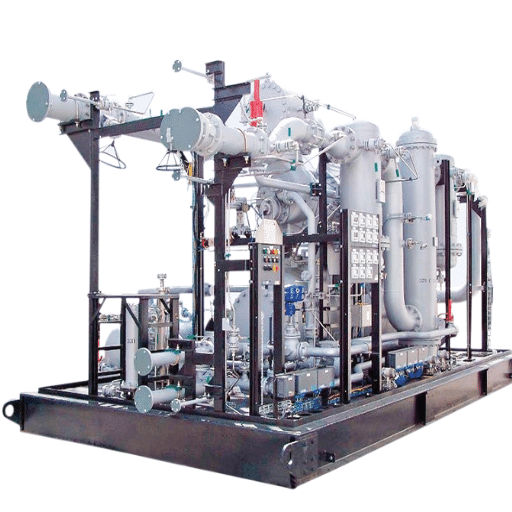
Introduction to Screw Compressors and Duty Cycles

Screw-type compressors, for instance, are very popular in high-end applications owing to their energy efficiency and robustness. The functioning principle of a screw compressor consists of confining the air between two cutting screws that rotate against each other, which compresses the air. The Duty Cycle of Compressors – The calculation of compressor duty cycle is the ratio of their working duration to the period they work. And this is almost always given in percentage. The knowledge of duty cycles becomes inevitable given that it influences all the aspects of the compressor, including its output level, effectiveness in the use of electricity, and also the service intervals.
Hence, in applications where the machine is expected to operate on a continuous basis, a 100% cycle is preferable to limit any break in production and employ any standby equipment. On the other hand, certain applications that would require only occasional functionality may be better served with a lower duty cycle in order to limit the energy usage as well as the wear.
What Are Screw Compressors and Why Do They Matter?
Screw or twin rotary compressors are displacement compressors that use rotary screw action to compress gases or compressed air. Such compressors are best known for non-stop duty since they are robust and continue delivering at various operational parameters, and therefore, are perfect for working in harsh conditions. The rotating elements are the air intake, making sure that they trap all the air and compress it, consequently increasing the pressure.
Screw compressors are very popular in many industrial applications due to their great energy efficiency, while not requiring frequent maintenance, and delivering a uniform amount of air at the outlet. The devices are used in various industries, including manufacturing, oil and gas, medical, and food industries, where compressed air is used in machinery, tools, and sometimes even production lines. In addition, screw compressors are well known for being less noisy and having a longer duty cycle, explained as less mechanical wear within the short term, thereby cutting down on replacement and repair costs in big industries.
🏭
Manufacturing
⛽
Oil & Gas
🏥
Medical
🍶
Food Industry
Understanding the Concept of Duty Cycle in Compressors
Let’s discuss what is meant by the “duty cycle” of a compressor in layman’s terms: it is the number of minutes that a compressor is allowed to run, out of a total given number of minutes, to prevent overheating of the engine. Duty cycle is officiated as a time frame, and much more particularly, as a percentage, i.e., the percentage of load over time ratio, meaning the ratio of how many hours of compressor load in hours (b) is allowed, to hours in a rest or cold period (a) constituents/ratio.
📌 Practical Example
Take, for example, a compressor with a 50% duty cycle; such a compressor can last only up to 5 minutes in every 10-minute cycle.
This indicator is of great importance in order to be able to select and operate a compressor in accordance with the required specific application. Industrial-type compressors generally have much higher duty cycles than their residential or commercial counterparts and, thus, allow for continuous or nearly continuous running of the equipment. A compressor used above the above duty cycle explained results in overheating, increased wear, and possible breakdown of the compressor, which can hinder the process as well as shorten the life of the equipment. Hence, an appropriate compressor that is selected with the right duty cycle helps to keep the systems functional and limits the amount of idling time.
Understanding 100% Duty Cycle

A 100 percent duty cycle is another way of saying that the compressor can be operated or ‘run’ continuously without having to stop and rest the machine by letting it cool down. It means that the machine is built to withstand heavy-duty continuous operation, which is a requirement for some applications where the air pressure or delivery should not be interrupted. Such compressors with 100 percent duty cycles employ heavy structure, improved cooling systems, and are used with rugged materials, which prevents the equipment from overheating and thus increases the machine’s life. One has to examine the duty cycle explained in relation to working air patterns in the said application and whether or not the duty cycle of a particular compressor will withstand such loads without affecting performance and reliability.
What Does a 100% Duty Cycle Mean?
How is 100% duty cycle explained, focusing on air compressors’ possibilities? At this duty cycle, the user can safely keep the compressor running at full, permitting the air supply without shutting it down. These compressors are designed with high-grade components and materials to facilitate extensive cooling and operation without damage or breakdown. Such a range of duty cycle is definitely important in cases that require a continuous flow of air for a longer duration of time, where any breaks in this process will cause inefficiency or stoppage from being sustained.
Applications Where Continuous Operation Is Essential
There are a myriad of sectors and services that require continuous operation, as the functionality of systems therein is defined by the availability of air.
- 🔧
Pneumatic Systems in Factories
Pneumatic systems involve constant air pressure in order to operate tools and conveyors, as well as other automated equipment. - 🍾
Gas and Beverage Processing
The processing of gas and beverage products calls on constant air compressors in bottling and other processing tasks. - 🏥
Healthcare and Medical Facilities
Machines such as ventilators use medical-grade air compressors in health facilities to operate them. Such areas cannot afford to have breakdowns as maintenance costs are very high and, more so, in terms of morality. - ⚓
Offshore Industry
In the industry, offshore, for instance, compressors are used as backup power sources to aid in the pumping of gas and pipe laying systems, among others. - 🖥️
Data Centers and Telecommunications
In enclosed telecommunication facilities, continuous operation compressors are used to cool the data centers because these structures can tend to overheat, causing crucial systems to collapse. It is the dependability of those continuous air compressors that allows the devices to function without hassle, safeguard the system, and promote efficiency in operation.
Advantages and Limitations of 100% Duty Cycle Operation
✅ Advantages
- The air compressor can be used throughout the day without the need for cooling breaks.
- Continuous use is achievable in manufacturing industries, medical sectors, and the energy sector.
- Productivity is enhanced due to the provision of efficient, uninterrupted services.
- Compressors are built to last longer, reducing the chances of breakdown during use.
⚠️ Limitations
- Operating such compressors is likely to cost more in the long run, as they tend to consume more energy.
- Bearings, pistons, and similar parts may start developing friction-related wear under high pressure and fast movement.
- Challenge in maintaining the availability of this equipment all the time.
- Efficient cooling and lubrication must always be in place to prevent overheating and decreased system efficiency.
Explaining the Intermittent Duty Cycle

The intermittent duty cycle will refer to a machine or component that alternates between operating and non-operating modes. Such systems will operate for a pre-determined period, after which they will stop to cool down and recover. Intermittent duty is different from a 100% duty cycle device because it is avoided where thermal processing of the machine will develop continuously, or for such reasons, the machine will work continuously. With the aid of restricted running time, the possibility of damage due to overheating is lessened, and the condition of the machine is improved. Determination of the best duty cycle, explained in more minute details, still rests on the requirements of the duties.
Defining Intermittent Duty Cycle with Examples
An intermittent duty schedule refers to the required operation of a machine or a device for a certain period of time, with necessary halts in usage to avoid overheating and mechanical wear. This mode of operation is very useful in systems where very high power is required, but only for short periods of time. The duty cycle is explained as the proportion or percentage of a given time the machine is in active use and not in active use that includes the time for the rest of the system.
Electric Motor — S3 Cycle
An S3 intermittent duty cycle will have 10 minutes of operation and 20 minutes of resting period, which is essentially a one-third duty cycle.
Welding Machines & Power Tools
Usually made to function at a duty cycle of 50%, meaning they cannot operate optimally for more than 5 minutes of every 10 minutes without downtime.
Industrial standards have proved that higher duty-cycle devices are more prone to increased thermal load and, therefore, are designed with more sophisticated heat exchangers. This is unlike the lower duty-cycle systems that would be more focused on energy saving and structural stress. Making intermittent duty cycles optimal helps to prolong the service life of the components, reduce the frequency of repairs, and ensure the entire operation is carried out smoothly.
How It Operates with Start/Stop Intervals
Start-stop devices use short duty cycles to enable as much performance as possible within a specific period without overheating. This is possible when the machine is doing some kind of processing, producing energy, or producing any mechanical work. After that, the machine is either shut down very slowly or immediately for the purposes of thermal management, decreasing component fatigue, and consuming less energy. The programmer or the operator usually sets the timings because it has a counter that limits or runs all activities according to the total load, the substance being carried, and/or the temperature limits. More electrical appliances have sensors and programs that alter frequencies for various reasons, extending machine life and operation efficiency.
Applications Suited for Intermittent Duty Cycles
Sometimes functional systems are designed to operate in cycles instead of continuous operation. Such functional systems are called intermittent systems, and they have periods of rest for improved thermal loads or energy conservation purposes. The main reasons or areas that can be given as an explanation and examples of this are as follows:
⚡ Electric Motors and Drives
Intermittent-duty motors that facilitate use in cranes, hoists, elevators, and conveyor systems are commonly used because the load is not constant and does not require continuous operation. This type of system uses time fractions to manage excessive temperature conditions and face load conditions efficiently.
💧 Compressors and Pumps
Operates in a manner, particularly referring to some HVAC systems or water facilities, which operate in a given mode to maintain the pressure, systems of controls of fluids, or stasis, aiming at energy conservation, enabling mechanical wear over time to be reduced.
🔥 Industrial Welding Machines
Welding equipment is primarily used in short intervals, as switchoff occurs more to prevent overheating from excessive operation than for any other reason. This cycle consists of a span of time during which the machinery is allowed to spring back to the external thermal equilibrium temperature of the surrounding air and drops thermal loads to other components of the equipment.
The optimum economy, dependability, and efficiency of the system can all be achieved by the application of suitable operation to such intermittent working habits as found in these cycles.
Key Differences Between 100% Duty Cycle and Intermittent Duty Cycle
Length of Operation
100% Cycle: Continuous without breaks, but internal heating forces periodic downtime enforcement to prevent durable damage.
Intermittent: Requires planned time breaks to cool the mechanism down to prevent overheating and equipment damage.
Thermal Control
100% Cycle: Control features include sufficient cooling turns to handle uninhibited power usage.
Intermittent: Operates on natural wind-down periods, allowing system temperatures to stabilize between each cycle.
Effectiveness & Durability
100% Cycle: Operating continuously enhances equipment life as there is no wear from repeated stopping and starting.
Intermittent: When duration is limited by design, longer duty cycles are typically more energy efficient than continuous duty cycles.
Detailed Comparison of Characteristics
-
1
Energy Efficiency
100% Duty Cycle: Machines that come with the capability to operate at 100% duty cycles are constructed to work non-stop, and thus tend to use more power because of the associated workload that doesn’t end, and resume work. This makes such machines suitable for processes where stopping machines regularly is out of the question, like industrial manufacturing lines. Nevertheless, these machines are likely to consume greater resources due to their operations being capable of working around the clock.
Intermittent Duty Cycle: Systems that function depending on the intermittent duty cycle explained above are less on the consumption of energies because they are designed to shut down or go into a standby mode during any period when such systems are not required. For example, compressors or even motors having 50% duty cycle are configured to run in an active mode only half of the time in a certain time frame, thus reducing the electricity consumption for those particular applications quite significantly. Reports are showing that the energy savings potential of an intermittent duty cycle can be in the region of 20% to 40%, but depending on the load requirements.
-
2
Thermal Management
100% Duty Cycle: Equipment that works without breaks becomes very hot, and hence, needs effective cooling and heat release devices to function continuously without damaging the parts due to high temperature. Consequently, the maintenance workload is increased, though mechanical design avoids failures and ensures longevity for any desired period.
Intermittent Duty Cycle: It allows the machine to work only when necessary while giving enough time for the components to cool down naturally before the next cycle, therefore cooling need is less. That leads to tolerable ambient temperatures and extended use of components that are vulnerable to excessive heat.
-
3
Maintenance Demands
100% Duty Cycle: Such operations lead systems to shorter servicing cycles, especially when all the components are subjected to load without interruption. There is sustained pressure on substractive elements such as seals, lubricants, and bearings, which requires very tight and rigorous maintenance procedures in the event of failures.
Intermittent Duty Cycle: Since the system is inherently strained less often, each cycle runs for longer without damage, meaning one has to service equipment after a long time or at cheaper costs. Especially when used in systems whose load does not remain constant, this advantage comes to the fore.
-
4
Application Suitability
100% Duty Cycle: Such type of systems come into their own in such settings where dependability is second to none, such as in power production, industrial conveyor belts, or automated lines. Such devices promise much, including their more expensive initial cost, which can be explained by the need for such excellent and long-lasting devices in such applications.
Intermittent Duty Cycle: These systems are targeted at flexible activity and, in this connection, work rather as household appliances, climate control equipment, and work equipment where there is or can be a break in the duty cycle explained, and such breaks do not have much significance. These low duty cycle demands are very well within the capabilities of such designs, thus making them economically viable.
-
5
Expenses Incurred
100% Duty Cycle: While 100% duty cycle systems tend to have higher design, material, and accessory expenses (usually a cooling system is required), no such design ‘cost’ is attached to these reliable machines because they are worth investing in and last longer even in harsh environments. As such, investing in them takes time, but there are many chronic work areas where this is an asset that pays back.
Intermittent Duty Cycle: In these types of systems, however, there is little or no initial investment since the need for consequent elaborate design or heavy components is not there. Moderate use cases, especially in non-industrial or duty-varying applications, take advantage of this.
These features show that it is a matter of necessity whether to adopt 100% duty cycle or the other, and this depends on the UPS load profile to be handled versus the duty cycle explained, among other criteria. Both of the options can be extremely useful depending on the change in the workload conditions involved.
Impact on Longevity, Maintenance, and Energy Consumption
There are a number of important differences that need to be understood in order to compare the expected life, maintenance, and energy usage of 100% duty and intermittent duty cycles. Duty is prolonged in continuous duty cycles, which causes more wear and tear on the parts and ultimately the entire system, and its components’ lives as a whole are reduced; it was not designed for this purpose. The schedules for carrying out maintenance of these systems often have to be shortened because of the danger that, after working for long durations, they will collapse if not attended to on time. Other than maintenance, which could be higher, the energy consumption may appear to be more stable, which could be disadvantageous in the sense that more energy is consumed over a period of time.
Let’s consider now how these extreme duty cycles turn out to be more beneficial to the systems. Such in-service conditions, also known as intermittent duty cycles with a different timing sequence, shift from the idea of components being used all the time and have therefore lessened the wear and tear of the components. This duty cycle explained reveals that it is applicable to working conditions that peak at a certain weight of the workload before coming to an end, without working for a prolonged period. Minimal energy may be required to activate a machine; the key part of such machines is powered at varying operating intervals and consequently load levels. Optimizing the use of any one system or another, it is necessary to match the parameters of every apparatus operation with the specifics of this application most accurately to provide the maximum periods of activity and rest.
At-a-Glance Comparison Table
Factors Influencing Duty Cycle Selection

When it comes to choosing from these models, there are various aspects that need to be taken into account in order to achieve the highest level of performance and efficiency.
🔍
Which Functions Must the System Perform?
Take into account how the system will be used and how often it will be utilized, in simple terms duty cycle. In most cases, intensive applications will require very durable systems that can work for prolonged periods without overheating too much.
🌡️
What Are the Working Conditions?
Determine the range of temperatures, the level of humidity, and the presence of any aggressive atmosphere. These conditions are important because they affect the quality of materials and cooling requirements.
🔩
How Many Repairs Will Be Needed Monthly?
Opt for the simplest installations possible with easily accessible parts to minimize downtimes and operating expenses.
💰
How Profitable Is This Expense?
Attempt to weigh the costs, which would include the amount spent to purchase the item, and work out the level of savings that contribute from energy efficiency, and the frequency of service.
Assessing Operational Demands and Usage Frequency
To strategize on operational expectations and the frequency of use, a few things need to be considered:
- Duty Cycle Explained
This is the extent of time in a day that a machine is used. Duty cycle is also explained as the number of times a system is used in a day. This duty cycle consisted of light and heavy peaks, which underline the changes in the duty cycle, and for some devices, each cycle needs corresponding changes in the duty cycle.
- Level of Loading Factors
It is necessary to understand how the business operates and when the demand is highest. Though systems should operate even when the demand is low, they should be efficient enough to cope with the stress as well.
- Ability to Conform to Environmental Aspects
This involves a range of factors, including extreme heat or freezing, the presence of moisture, and environmental chemicals. These factors tend to dictate if there is a need for extra protection, be it in terms of casing or special parts, to prevent the system from malfunctioning.
- Expectations as to the Lifecycle
Appraise the length of time the system is expected to last, particularly with regard to its usage rate. The implications of the aforementioned concept may be tied to an institution’s base expectations of how many times a system should be used and for how long, as the Expected Duty Cycle in this case will have a buying interest in once thinking surfaces.
Attending to these aspects at hand guarantees that the selected system facilitates and improves performance during different usage levels, and enhances productivity in line with the needs and requirements of the equipment in particular groups.
Impact of Cooling, Ambient Temperature, and Load Conditions
Any system efficiency and reliability depend greatly on such factors as cooling, environmental conditions, and load, to name a few. The effectiveness of cooling measures under various operational loads must be considered, since incompetence of the cooling process can cause thermal breakdown of the components. Also, as is apparent, in order to assess external temperature is important, as too much heating or varying external conditions can also decrease the efficiency of the system and render it useless over time. Furthermore, the variations in fixed load would also mean varying load on the system, causing it to underperform, which is why the capacity that the system would have at any given moment in time must be considered, so that it will perform to its maximum potential without being worn out quickly. These issues go to the heart of the system’s robustness in operational conditions.
Consideration of Energy Efficiency and Cost
If you analyze the energy and economic aspects, firstly, sophisticated components like high-quality engines, insulation, or heat pumps can help in lowering the operational demands of energy consumption. Components such as the variable frequency drive (VFD), enable adjusting power to waste less energy because the output is reduced in facilities where supply exceeds demand. A major point of consideration when designing a system is the capital cost savings and the maintenance cost versus the operating cost over the whole life cycle. Since any material undergoes wear, so do the costs and benefits over time, as well as variability. Thus, systems can be optimized without losing energy efficiency and cost effectiveness, sustainable, and also cost-reducing measures.
Conclusion
Furthermore, the readers will be able to understand the concept of duty cycle explained comprehensively, with the aim of enhancing performance and cutting down maintenance costs. Choosing between a 100% duty cycle and an intermittent duty cycle is not a one-size-fits-all decision — it requires a precise understanding of your operational demands, thermal environment, maintenance capacity, and long-term cost expectations.
Organizations apply the criteria above to the advantage of the particular operational goal that they have set, and therefore, a well-informed decision is made, fitting both efficiency and durability. By matching the duty cycle to your specific workload profile, you protect your equipment, reduce your energy footprint, and ultimately maximize the return on your industrial investment.
Reference Sources
Optimisation of Screw Compressors
Key Findings: This study discusses the optimization of screw compressor designs tailored to specific duties, capacities, and manufacturing capabilities. It highlights the use of advanced mathematical modeling and computer simulations to optimize rotor profiles, compressor geometry, and operating conditions. The research demonstrates that optimized designs achieve higher delivery rates and better efficiencies compared to traditional approaches.
Theoretical and Experimental Research on Screw Refrigeration Compressors
Key Findings: This research focuses on the performance of twin screw refrigeration compressors under superfeed conditions. It introduces a mathematical model to simulate the working process, validated by experimental p–V diagrams. The study concludes that superfeed processes significantly enhance refrigeration capacity and efficiency.
Frequently Asked Questions (FAQs)
What Does Duty Cycle Mean and How is Duty Cycle Expressed in Percentage?
Duty cycle refers to the measure of the time in percentage, how long a signal, or system, is active within one period or cycle. Furthermore, it represents the measured time where the signal is on (pulse width or constant state) divided by the period or regular motion time by 100. Duty cycle for any kind of square wave, for example PWM waveform, is the percentage value of how much of each duty is dedicated to the voltage and/ or the target output power in the entire cyclic period.
What is the formula for calculating duty cycle in terms of pulse width and whole cycle time?
The expression for duty cycle is as follows: duty cycle (%) = (pulse width/one complete cycle) * 100. For instance, if the total time is 0.1 seconds and the pulse width is 0.05 seconds, then the duty factor is 0.5 or the duty cycle is 50%. This computation is crucial in conceptualizing the duty cycle and pulse width for applications such as switching power supplies and PWM control.
Would you give me an explanation duty cycle in relation to a PWM signal?
20kHz PWM wave, which has a duty cycle of 25% understood to turn on in any given cycle for 12.5 microseconds and turn off for 37.5 microseconds. With PWM, the modification of duty cycle or mean square voltage and power is possible without any alteration of fundamental voltage, and it is a very useful technique in motor control, LED dimming, as well as in solenoid exertion.
What is the significance of changing the duty cycle on the average and heating?
The average voltage for each duty ratio changes as the duty cycle changes, and the average power that comes out from the load changes as well. More duty cycle means more average output voltage and number of watts that may lead to an increase in the heat of a system. All devices have what is termed as duty cycle or rated duty cycle, meaning the ability of the device to lose energy in the form of heat; once a device is exhausted through its cyclic limit, it will heat excessively or spoil due to too much heat.
What are the consequences of exceeding the duty cycle or rated duty cycle in a solenoid or welder?
Exceeding the duty cycle or rated duty cycle in a solenoid or welder can lead to overheating issues, as the means of cooling the device will not be adequate. For welders, duty cycles specify how long a unit can operate continuously in ten-minute intervals at a particular current or power, if this stated duty cycle urprovided acknowledges failure, or even parts break down.
Does the Duty Cycle Chart and the Duty Cycle rating aid in choosing a duty achievement?
Duty cycle charts, in conjunction with a duty cycle rating shows how much should be achieved at given times, allowing for percentage duty cycles. This will aid individuals in determining what cycle to use in order to match the load, cycle time, and power to the cooling capacity of that particular device. After all, such charts also help to avoid heating the system above the permissible conditions, preventing continuous load in the designed working limit period includes between the designed duty cycles.