
How Does an Oil-Injected Rotary Screw Compressor Work?
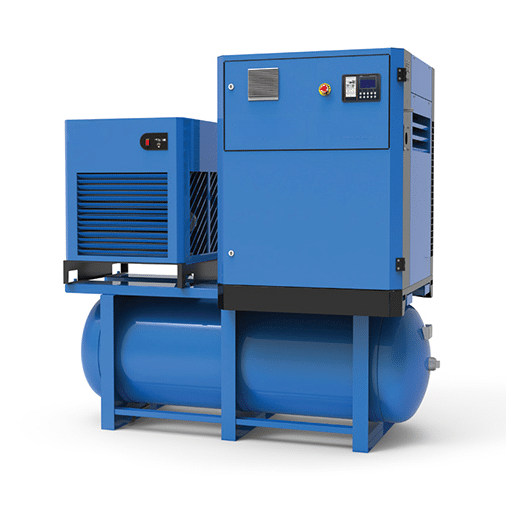
Walk into almost any factory compressor room, and you will hear the same steady hum. That is an oil-injected rotary screw compressor feeding a production line that rarely stops. Inside that housing, two helical rotors spin at thousands of revolutions per minute. A stream of oil is injected into the compression chamber, mixed with the air, then separated and recycled again. The whole cycle repeats dozens of times every minute.
This guide explains the oil-injected screw compressor working principle in plain English. By the end, you will understand the compression cycle, why oil is injected at all, and how the air circuit and oil circuit each do their job. That understanding is the difference between running a compressor for years and troubleshooting it every month.
For the full picture, including sizing, oil selection, and total cost of ownership, see our complete oil-injected rotary screw compressor guide.
What Is an Oil-Injected Rotary Screw Compressor
An oil-injected rotary screw compressor is a positive displacement compressor that uses two intermeshing helical rotors to compress air continuously, with oil injected into the compression chamber to cool, seal, and lubricate the rotors. It is also called an oil-flooded or oil-lubricated screw compressor. These three names describe the same machine.
The technology dominates industrial compressed air. It handles continuous duty, delivers a steady supply of air, and costs less upfront than oil-free alternatives. Most factories run an oil-injected screw compressor as their primary air source without ever thinking about what happens inside the housing.
Because it is a rotary machine, it delivers smooth, non-pulsating flow. A piston compressor pushes air in bursts, one surge per stroke. A screw compressor produces a constant stream, which is why it suits automation, packaging lines, and other continuous loads. For a full comparison of the two technologies, read our article on screw compressor vs piston compressor.
The Airend: Two Rotors That Never Touch
The heart of the machine is the airend, the compression element that contains the two rotors. One rotor, called the male rotor, carries helical lobes that stick out. The other, called the female rotor, carries matching helical grooves. In a typical industrial airend, the male rotor has four lobes, and the female rotor has six grooves. This 4:6 profile, based on the asymmetric SRM design, balances efficiency, pressure range, and running speed.
The male rotor is driven by the motor, either directly or through a gearbox or belt. As it turns, it drives the female rotor. In an oil-injected machine, the two rotors mesh through a film of oil, so no separate timing gears are needed. The rotors run with small clearances, typically 0.02 to 0.08 mm, about the thickness of a sheet of paper.
Oil makes this close running possible. Without oil, the rotors would need the larger clearances and external timing gears used in oil-free designs. With oil, the clearances can be small, which directly improves how efficiently the machine seals and compresses air.
The Compression Cycle: From Intake to Discharge

The working principle comes down to a single idea. Air is trapped between the rotor grooves and the housing, then pushed along the length of the rotors into an ever-shrinking space. Four stages make up the cycle.
Stage 1: Intake
Atmospheric air is drawn through an intake filter and inlet valve into the space between the rotors as they separate at the suction end. The inlet valve also controls how much air enters, opening fully when the machine is loaded and closing when it is not.
Stage 2: Trapping
As the rotors continue to turn, the male lobe rolls into the female groove. Together with the housing wall, the lobe and groove seal a pocket of air and carry it forward. From this point, the air is trapped and can no longer escape back to the intake.
Stage 3: Compression
The trapped pocket travels down the length of the rotors toward the discharge end. Because the space between the rotors and the housing gets smaller along the way, the pocket is squeezed. Volume drops and pressure rises. Think of the male lobe as a continuous piston rolling down the female groove, which acts as the cylinder. Every groove does this in turn, hundreds of times per second, so compression is continuous rather than pulsed.
Stage 4: Discharge
When the pocket reaches the end of the rotor, it opens to the discharge port. Compressed air leaves the airend at working pressure, typically 7 to 13 bar, while new air is drawn in at the other end. The result is steady, non-pulsating flow that can run at 100% duty cycle.
When a cabinet manufacturer we work with replaced a piston unit with an oil-injected screw compressor, the operators noticed the difference immediately. The needle on the pressure gauge no longer pulsed with each stroke. It sat steady because the machine compresses air continuously. That stability let the shop feed several automated sanders at once without pressure dips, something the old piston unit could not manage.
Why Is Oil Injected Into a Screw Compressor?
Oil does four jobs inside the compression chamber. Each one matters for performance and machine life.
- Lubrication. The oil film separates the rotors so they never touch metal to metal. It also lubricates the bearings. Because the rotors drive each other through the oil, the machine needs no timing gears.
- Sealing. Compression wants to leak back through the small clearances between the rotors and the housing. The oil fills those gaps, reducing internal leakage. This is what lets an oil-injected machine run with small clearances and reach higher volumetric efficiency than a comparable oil-free unit.
- Cooling. Compression generates heat. Left alone, the air temperature in the chamber can spike toward 120 degrees Celsius. The injected oil absorbs that heat, which keeps the discharge temperature manageable. The process is closer to isothermal, meaning the machine does not waste as much energy pushing against hot air.
- Noise dampening. Oil is viscous and absorbs sound energy. An oil-injected machine runs noticeably quieter than an equivalent dry unit, often by 10 to 20 decibels.
Oil also flushes dust and contamination that enters with the intake air. Those particles end up in the oil and are later removed by the oil filter, which is one reason regular filter changes matter.
For a deeper look at how oil quality and grades affect performance, see our general compressor maintenance schedule and talk to your supplier about the right lubricant for your unit.
The Air Circuit: How Compressed Air Reaches Your Factory

The air circuit is the path the compressed air follows from intake to the point of use. It runs through several components that clean, cool, and dry the air before it reaches your tools and machines.
- Intake filter and inlet valve. Air is drawn in and filtered.
- Airend. Air is compressed, and oil is mixed into it during compression.
- Separator tank. The air-oil mixture enters the tank, where the bulk of the oil is removed.
- Minimum pressure valve. This valve holds pressure in the separator tank so that oil keeps circulating, even when downstream demand is low.
- Aftercooler and moisture separator. The air is cooled, and condensed water is drained away.
- Dryers and filters. If your process needs cleaner air, additional dryers and filters bring it to the required quality.
Even a well-maintained oil-injected compressor leaves a trace of oil in the air, normally 2 to 5 parts per million after the separator. For most industrial uses, that is acceptable. For processes where oil cannot be tolerated, such as food product contact, an oil-free vs oil-lubricated compressor comparison will help you decide. For technical information, please read our article on screw compressor air oil separator.
The Oil Circuit: A Closed Loop That Never Stops
The oil circuit is the least understood part of an oil-injected screw compressor, yet it is the reason the machine can run hot, fast, and continuously. It is a closed loop that operates entirely on pressure difference, with no oil pump in most designs.
- Separation. The air-oil mixture enters the separator tank. Most of the oil drops out by centrifugal force and gravity and collects at the bottom of the tank.
- Delivery. The pressure inside the tank pushes the oil out through a thermostatic valve.
- Cooling and filtering. When the oil is hot, the thermostatic valve routes it through the oil cooler. The oil then passes through the oil filter to remove contamination.
- Injection. The clean, cooled oil is injected through nozzles into the compression chamber and the bearings, where it mixes with the air again.
- Return. A small amount of oil is captured by the separator element as fine mist. That oil collects at the bottom of the element and is drawn back through the scavenge return line to the suction side of the airend.
The loop runs continuously. Oil leaves the tank, cools, filters, lubricates, seals, and returns, over and over, as long as the machine runs.
A maintenance technician we know learned this the hard way. Oil kept showing up in his plant’s air lines, and the first response was to replace the separator element. The carryover returned within weeks. The real cause was a blocked scavenge return line, which meant the oil caught by the separator element had nowhere to go and was blown out with the air. Understanding the oil circuit pointed him to the actual fault and stopped a repeat of expensive, unnecessary separator changes. For more information, please read our rotary screw compressor oil guide.
Temperature Management: Why the Thermostat Matters
Temperature is the oil system’s single biggest concern, and the thermostatic valve is there to manage it.
On a cold start, the valve sends oil directly back to the airend, bypassing the cooler. This lets the oil warm up quickly and stay above the dew point. If oil runs too cold, below roughly 65 degrees Celsius, water vapor condenses into it. The result is milky, emulsified oil that does not lubricate well and damages components over time.
As the oil warms, typically above 70 degrees, the valve opens the path through the oil cooler. Under full load, all the oil passes through the cooler to hold the discharge temperature in a safe working range. If the temperature climbs too high, above roughly 105 degrees, the oil begins to break down and form varnish on the rotors. Sustained high temperatures are also a warning sign that the cooler is dirty, the oil level is low, or the thermostat is stuck.
A textile plant in a humid region dealt with cloudy oil every winter. The maintenance manager, Concepción, blamed the oil brand and switched several times without success. The real issue was that the thermostatic valve was stuck open, forcing the oil through the cooler on every cold start. The oil never warmed enough to drive off moisture. Once the valve was replaced, the cloudy oil stopped, and oil changes dropped back to a normal schedule.
Oil-Injected vs Oil-Free Airends: What Changes Mechanically

The difference between an oil-injected and an oil-free rotary screw compressor comes down to how the airend is designed. In an oil-injected machine, oil allows small clearances, direct rotor-to-rotor drive, and efficient sealing. In an oil-free machine, the rotors cannot run against an oil film, so they need wider clearances, around 0.15 to 0.25 mm, and external timing gears to keep the rotors synchronized. The wider clearances leak more, which is part of why oil-free designs often need multiple stages to reach the same pressure and efficiency.
Oil-free air ends also handle heat differently. They typically run hotter and use separate cooling or higher rotor speeds to compensate. That makes them more complex and more expensive to buy and maintain.
For most standard industrial loads, the oil-injected machine is the practical choice. Oil-free machines earn their cost only when the process requires air free of any oil. A clear breakdown of when each technology wins is in our oil-free vs oil-lubricated compressor comparison.
Frequently Asked Questions
Why is oil injected into a screw compressor?
Oil is injected to lubricate the rotors, seal the internal clearances so compressed air does not leak back, absorb the heat of compression, and dampen noise. These four functions let the machine run with small clearances, no timing gears, and a safe discharge temperature.
Do the rotors touch in a screw compressor?
No. The rotors mesh through a thin film of oil and never make metal-to-metal contact. The oil film both separates the rotors and drives the female rotor, which is why an oil-injected machine needs no timing gears.
Why is there oil in my compressed air lines?
Even a well-maintained oil-injected compressor leaves a trace of oil, typically 2 to 5 parts per million, in the compressed air after the separator. Visible oil in the lines usually means something else is wrong, such as an overfilled oil level, a worn separator element, or a blocked scavenge return line.
Is an oil-injected compressor the same as an oil-flooded compressor?
Yes. Oil-injected, oil-flooded, and oil-lubricated all describe the same machine. The oil is pumped or pressure-fed into the compression chamber and then separated from the air before delivery.
Why is the discharge temperature of my screw compressor high?
High discharge temperature is most often caused by a dirty oil cooler, low oil level, a stuck thermostat, or poor ventilation around the machine. Because oil absorbs the heat of compression, anything that reduces oil cooling will push the temperature up.
Conclusion
An oil-injected rotary screw compressor is a simple machine once you see how it fits together. Two rotors compress air continuously, oil is injected to cool, seal, and lubricate the process, and two circuits keep everything moving. The air circuit delivers clean, steady compressed air to your factory. The oil circuit cools, filters, and recirculates the oil that makes continuous operation possible.
Here are the key takeaways:
- The airend uses two meshing rotors that compress air by trapping it and shrinking the space around it.
- Oil has four jobs: lubrication, sealing, cooling, and noise dampening.
- The separator tank, minimum pressure valve, and scavenge return line keep oil out of your air supply.
- The thermostatic valve keeps oil temperature in a safe range, roughly 65 to 105 degrees Celsius.
- Most industrial loads are best served by an oil-injected screw compressor; oil-free earns its cost only when your process needs oil-free air.
If you are evaluating an oil-injected screw compressor for your operation, the right starting point is a clear view of your air demand and duty cycle. Contact Shandong Loyal Machinery to discuss your application, and our engineers will help you select and configure an oil-injected rotary screw compressor built for reliable, continuous operation.