
Oil Injected Screw Compressor Applications: Where They Fit
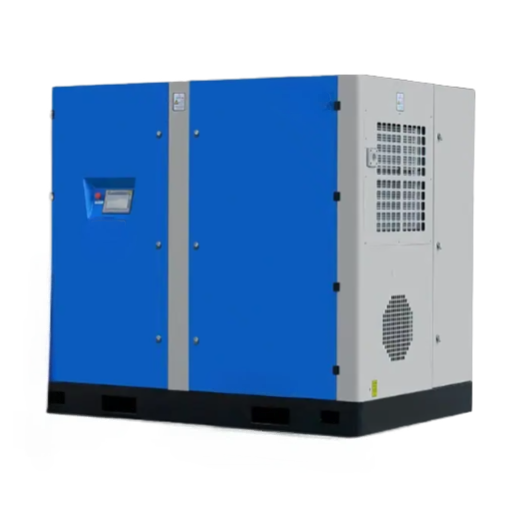
A factory can run without plenty of things for an hour. It cannot run without compressed air for five minutes.
At an automotive plant in Thailand, a paint-line supervisor named Priya spent a week chasing fish-eye defects on door panels. The compressors had been serviced, and the line filters were new. The defects kept coming.
Oil-injected screw compressor applications were the right choice for the plant’s assembly tools. The paint branch simply drew from the same system with no treatment of its own.
That story sums up what most application guides miss. The useful question isn’t whether oil-injected screw compressors are common. These applications cover most factory air, and industry estimates put oil-injected machines at roughly 62% of the screw compressor market. The useful question is narrower: where is trace oil harmless, where is it manageable with treatment, and where does it disqualify the technology?
This guide answers that with three tests, a process-by-process fit map, and the treatment train each application needs. If you already know your process and target air class, send us the details, and we’ll check the fit with you.
What Oil Injected Screw Compressor Applications Really Mean
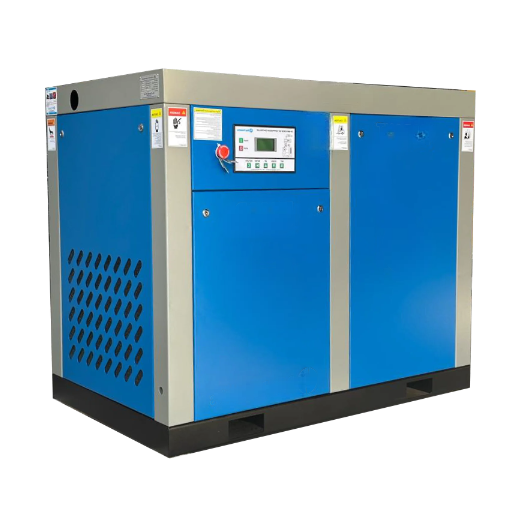
Oil-injected, oil-flooded, and oil-lubricated describe the same technology. Oil is injected into the compression chamber, where it lubricates the rotors, seals the gaps, and carries away heat. Most of that oil is separated and returned to the sump. A small amount leaves with the air.
Buyers sometimes search for oil-flooded screw compressor applications or oil-lubricated screw compressor applications. Both describe this same machine.
That carryover is normal. For a well-maintained lubricated rotary screw, it’s commonly cited at 2-5 ppm by weight, with older or poorly maintained machines reaching 10 ppm.
For the full oil circuit, see our complete guide to oil-injected rotary screw compressors and our explanation of how an oil-injected screw compressor works.
One naming point matters before anything else. Oil-free is a different architecture, not a filter option. You can add coalescers and carbon beds to an oil-injected machine. You cannot turn it into a certified oil-free compressor.
Test 1: Air Quality Class (ISO 8573-1)
ISO 8573-1 sets purity classes for particles, water, and oil. The oil classes decide fit: Class 1 at ≤0.01 mg/m³, Class 2 at ≤0.1, Class 3 at ≤1, and Class 4 at ≤5.
Class 0 isn’t zero oil. It’s a limit you and your supplier define, and it must be stricter than Class 1. The full table is in our guide to ISO 8573-1 compressed air purity classes.
A well-treated oil-injected system can reach Class 1. It cannot certify Class 0. That single sentence decides most of the applications in this article.
Test 2: Demand Profile
Screw compressors are built for continuous duty. Fixed-speed units suit stable loads. VSD units suit loads that swing. Neither fixes a genuinely intermittent duty cycle, where a piston compressor can be cheaper to own.
This test matters because the wrong control strategy wastes money even when the air quality is fine. An unloaded fixed-speed screw still draws roughly 25-35% of full-load power, so a machine sized for a peak that rarely happens runs all year badly.
Test 3: Cost of Contamination
Ask what happens if a trace of oil reaches the product, the finish, or the instrument. If the answer is a rejected batch, a repainted panel, or a failed audit, the technology is wrong no matter how efficient it looks on paper.
Run the three tests in order. Most factories find that oil-injected passes all three for utility air and fails the third test at one specific process. That’s the hybrid case, and it gets its own section below.
Where Oil Injected Screw Compressor Applications Fit Best
These are the processes where the air does work rather than touching product, and where standard treatment keeps carryover inside the acceptable band.
General Manufacturing and Machine Shops
Pneumatic tools, assembly stations, clamping, actuators, conveyors, blow-off, packaging machinery, and robotic end-effectors all run happily on oil-injected air. This is the strongest fit in the article. Demand is usually continuous or multi-shift, and Class 2-3 air is enough.
A refrigerated dryer plus a coalescing filter covers most shops. The usual cost driver isn’t oil quality; it’s leaks and pressure drop. The U.S. Department of Energy estimates that leaks waste 20-30% of compressor output in plants without a leak program, which is why a leak survey often beats a bigger machine.
Automotive Assembly and Paint
Assembly is a straightforward fit. Tools, clamps, lifts, robots, and conveyors run on Class 2-3 air from a central oil-injected system.
An oil-injected compressor for automotive painting is conditional. Oil aerosol and vapor cause fish-eyes, poor adhesion, and rework. The target is Class 1 oil at ≤0.01 mg/m³, reached with a 0.01 µm coalescing filter, activated carbon, and dry air.
Silicone-free filters and seals are essential in paint areas. Some vehicle manufacturers and paint suppliers specify oil-free air for the paint shop, so check the customer standard before you commit.
Priya’s plant fixed its defect rate by treating the paint branch as a separate air class, not by replacing the compressors. One central oil-injected system can serve both branches, but only if the paint branch carries the full treatment train.
Packaging and Material Handling
An air compressor for packaging industry lines typically serves actuators, conveyors, case erectors, labelers, cappers, palletizers, and vacuum handling. These are best-fit applications. Class 2-3 air with a dryer and filter is normally enough. Packaging lines often run around the clock, so continuous-duty reliability and service access matter more than a peak capacity number.
The boundary is product contact. Filling, blow molding, and any air that touches the product or primary package need Class 0 or a validated Class 1. For those points, oil-free is the safer choice.
Plastics and Injection Molding
An air compressor for injection molding handles part removal, ejection, clamping, hopper drying, conveying, and blow-off. That makes non-food, non-medical molding a strong fit. A common target is ISO 8573-1 Class 2.4.2, with Class 1.4.1 for parts that will be painted.
Demand is bursty. Molding machines run 30-90 second cycles with several air pulses per cycle, and peak demand often runs 2-3 times the average. That profile needs receiver storage. Vendor application guides size 8- 15 m³ of storage commonly for 20-50 machines, with a fixed-speed base unit and a VSD unit trimming the peaks.
Aisha, a maintenance manager at a 40-machine molding shop, learned this the expensive way. Her single fixed-speed compressor cycled hard all shift and tripped on overcurrent during fast cycles. Adding a receiver and a VSD trim unit solved it without buying a larger compressor. Food packaging, medical plastics, and PET blow molding sit outside this fit and need Class 0.
Textile, Printing, and Woodworking
An air compressor for textile industry use handles pneumatic handling, spinning, winding, and air-jet weaving. General utility air fits at Class 2-3, while air-jet weaving is conditional.
Oil can clog nozzles, foul reeds, and stain fabric, so ISO 8573-1 Class 2.4.2 is a common target. Where air contacts yarn directly, oil-free is preferred.
Printing uses air for pneumatic controls and sheet handling, usually at Class 2-3, with filtration to protect plates and printheads. Woodworking is a best fit for tools, clamping, spraying, and dust collection. Dust control matters more than oil carryover in a wood shop.
Metal Fabrication
Pneumatic tools, clamps, press feeding, plasma cutting, laser cutting, and painting all appear under one roof, and they don’t share a fit verdict.
Plasma cutting tolerates oil-injected air with a refrigerated dryer and a coalescer. Laser optics do not. They need very low oil and a pressure dew point around -40 °C, so oil-free is the safer choice. If your shop has both, split the branches.
Construction, Mining, and Heavy Duty
Portable diesel oil-injected screw compressors are the standard for drilling, sandblasting, pipeline testing, and remote sites. This is a best fit, with priorities on dust filtration, cooling, and service access. Treat it as a portable heavy-duty case rather than a central factory air system.
The Application Fit Map: Air Quality Class by Process
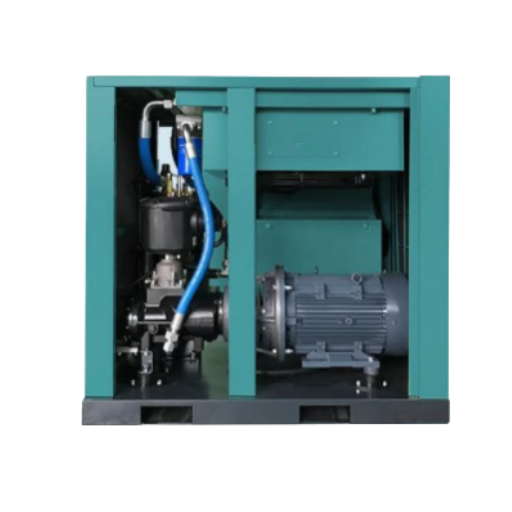
This fit map covers screw compressor applications by industry, and you can use it to screen a process before you size anything. “Conditional” means oil-injected can work with the stated treatment. It never means untreated oil-injected air is acceptable.
| Application or process | Typical ISO 8573-1 oil target | Oil-injected fit | Required treatment or note |
|---|---|---|---|
| General assembly, pneumatic tools, actuators | Class 3 (≤1 mg/m³) | Best fit | Refrigerated dryer + coalescing filter |
| Packaging machine utility air (non-contact) | Class 2-3 | Best fit | Dryer + filter; separate product-contact circuit |
| Automotive assembly tools and clamps | Class 2-3 | Best fit | Dryer + filter |
| Automotive paint and surface finishing | Class 1 (≤0.01 mg/m³) | Conditional | 0.01 µm coalescer + activated carbon + dryer; silicone-free parts |
| Injection molding (non-food, non-medical) | Class 2.4.2; Class 1.4.1 for pre-paint | Best fit | VSD + receiver; dryer + filter |
| Textile general utility | Class 2-3 | Best fit | Dryer + filter |
| Air-jet weaving (yarn contact) | Class 2.4.2 common; Class 1 preferred | Conditional | Tight filtration and monitoring; oil-free preferred |
| Plasma cutting | Class 1-2 oil, dry air | Conditional | Refrigerated dryer + coalescer |
| Laser cutting optics | Near Class 0; -40 °C dew point | No fit | Oil-free + adsorption dryer |
| Woodworking | Class 3 | Best fit | Dryer + filter; dust control |
| Food non-contact utility (actuators, valves) | Class 2-3 | Conditional | NSF H1 oil + filtration + separate circuit |
| Food direct contact, filling, ingredient conveying | Class 0 | No fit | Oil-free compressor |
| Pharmaceutical, medical, electronics | Class 0-1 | No fit | Oil-free compressor |
| PET blow molding | Class 0 | No fit | Oil-free high-pressure air |
| Construction, mining, portable duty | Class 3-4 | Best fit | Dust filtration; heavy-duty cooling |
The oil column isn’t the whole specification. ISO 8573-1 also classes particles and water, and a process can pass on oil while failing on dew point. Specify all three.
Where Oil Injected Screw Compressor Applications Do Not Fit
The oil-injected vs. oil-free applications boundary is sharp: some processes require certified oil-free air, and no amount of filtration changes the architecture. The main ones are food and beverage product contact, pharmaceutical and medical, electronics and semiconductor, laser cutting optics, and PET blow molding at around 40 bar.
Food deserves the most care because it’s where buyers most often get the answer wrong. Filling, packaging interiors, ingredient conveying, and any direct-contact air sit in the Class 0 category. Food safety schemes such as BRCGS, SQF, and FSSC 22000 treat product-contact compressed air as a contamination control point.
NSF H1 food-grade oil reduces the consequence of incidental contact. It does not make the air oil-free. If you need food-specific hardware, see our food-grade compressor solutions.
The reason is the reliability of the barrier, not the quality of the filter. Coalescers reach Class 1 at best, and carbon handles vapor but has a finite life.
High temperatures, saturated elements, bypass, and separator failures all pass oil downstream. Auditors and customers increasingly treat “oil-injected plus filters” in a product-contact role as a risk rather than a control.
The Hybrid That Most Factories Actually Need
Don’t force one technology across the whole plant. Daniel, an engineering manager at a food packaging plant, split his system after an audit finding.
The oil-injected compressor with H1 lubricant stayed on actuators, conveyors, and case handling. A small oil-free compressor with its own dryer and filters served filling and direct-contact air. Separate piping, no cross-connection, one clear boundary.
That is the model for most large factories: oil-injected base air, plus a small oil-free branch for the points that need it. The split costs less than an all-oil-free plant and removes the contamination risk. For the technology comparison itself, see oil-free vs oil-lubricated compressors.
How to Configure an Oil-Injected System for Your Application
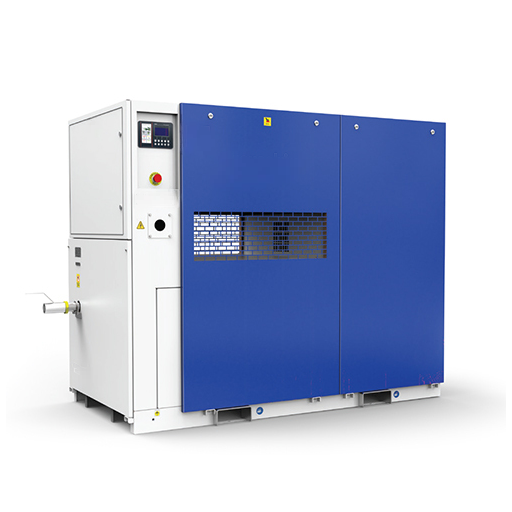
Fit gets you to the right technology. Configuration decides whether it performs.
Match the Control Strategy to the Demand Profile
For continuous, stable demand, run a fixed-speed base unit near full load and add VSD trim only if the load swings. For variable demand, lead with VSD and trim with fixed-speed. Avoid running a VSD below roughly 60-70% of design capacity, where its efficiency advantage fades.
For bursty demand, as in molding or blow-off, pair VSD with receiver storage and size for peak, not average. For low-hour intermittent demand, a screw may be the wrong machine entirely, and a piston compressor can be cheaper to own.
Do not oversize. An unloaded fixed-speed screw still draws roughly 25-35% of full-load power, and that idle draw compounds over a year.
Build the Treatment Train for the Target Class
Class 3-4 needs a refrigerated dryer and a coalescing filter. Class 2 adds a finer coalescer, protected by a prefilter. Class 1 needs a refrigerated or desiccant dryer, a 0.01 µm coalescer, and activated carbon. Class 0 needs an oil-free compressor.
Every filter adds pressure drop and energy cost, so place point-of-use filters only where the process needs them. Monitor differential pressure and dew point. A filter that is never changed is a false sense of security, and a separator that is passing oil will load everything downstream. Our guide to oil carryover in rotary screw compressors covers the diagnosis.
Size for Real Demand, Not the Nameplate
Inventory the loads that run at the same time and weight each by duty. Don’t add every tool at full flow. Add leakage at 20-30% of output if the plant has no leak program. Add 10-20% headroom for growth, but fix leaks before buying a larger machine.
Size storage to absorb peaks so the compressor doesn’t hunt. Specify pressure at the point of use, not at the compressor discharge. For the wider selection process, our guide to compressed air system design walks through the sequence.
To make the most appropriate choice, please read our article on how to choose an oil-injected screw compressor.
Common Application Mistakes
- Choosing by industry label instead of air-quality class.
- Running one central oil-injected system for utility and critical air with no branch treatment.
- Assuming a filter makes the system Class 0.
- Sizing for average demand in a bursty process.
- Ignoring ambient temperature effects on carryover, dryer performance, and filter life.
- Forgetting that leak load grows over time.
Looking for energy-saving options? See our guide on oil-injected screw compressor energy efficiency.
Frequently Asked Questions
What are oil-injected screw compressors used for?
Most oil-injected screw compressor applications involve air that does work rather than touches product: pneumatic tools, assembly, packaging machinery, plastics, textiles, woodworking, metal fabrication, and construction. They’re the default for general manufacturing because they’re efficient continuous-duty machines, and trace carryover is manageable with standard treatment.
Can an oil-injected compressor be used for food packaging?
For non-contact utility air, sometimes. Actuators and sealed conveying can run on oil-injected air with NSF H1 lubricant, filtration, and a separate circuit. Any air that contacts the product, the filling zone, or the package interior requires Class 0, which means oil-free.
What’s the difference between oil-injected and oil-free compressors?
Oil-injected machines inject oil into the compression chamber to lubricate, seal, and cool. Oil-free machines use different rotor coatings and designs that keep the chamber dry. It’s an architectural difference. Filtration can improve oil-injected air quality, but only an oil-free machine can certify Class 0.
What air quality class do I need for painting?
Class 1 oil at ≤0.01 mg/m³. Reach it with a 0.01 µm coalescing filter, activated carbon for vapor, and a dryer. Use silicone-free components in the paint area.
Are oil-injected compressors suitable for continuous use?
Yes. They’re designed for 100% duty and run best at steady load. Intermittent, low-hour duty is the poorer fit, and a piston compressor may cost less to own.
When should I choose oil-free instead?
When air contacts product, medicine, electronics, or optics, and when the process requires Class 0. The common cases are food and beverage product contact, pharmaceutical and medical, semiconductor, laser cutting, and PET blow molding.
Conclusion
The three tests decide fit faster than any industry list. Check the air quality class the process needs. Check whether the demand profile suits a continuous-duty screw. Check what a trace of oil would cost if it reached the product or the finish.
Oil-injected screw compressor applications are the workhorse for utility air across general manufacturing, packaging, plastics, textiles, woodworking, metal fabrication, and construction. They’re conditional where contamination affects finish or product, such as automotive paint, air-jet weaving, and plasma cutting. They’re the wrong choice for Class 0 product contact.
If your plant has both utility and critical air, split the system. Oil-injected base, oil-free branch, separate piping, and a treatment train matched to each class. That’s usually cheaper than an all-oil-free plant and safer than untreated shared air.
If you’d rather not work it out alone, contact our team with your process, required air class, and peak and average demand. We’ll confirm whether an oil-injected system fits and specify the treatment train to get you there.